Book Review: Eliot Jones, Midnight Superhero

Thank you again to Julie for another book review. You can read more of Julie’s writing at Balancing Mama. Interested in reviewing a book? Email me (ann@shinypebble.com). – Ann Z

Recently, I shared a book review for Velma Gratch and the Way Cool Butterfly. Now it is the boys’ turn! Here is another great children’s book featuring a bespectacled main character. The book is not about glasses at all, but about a fun and surprising super hero. The book is titled Eliot Jones, Midnight Superhero, written by Anne Cottringer.

Eliot Jones is a quiet boy. He does not make much noise throughout the day. But by night, when the clock strikes midnight, Eliot is a superhero! He scales mountains, hangs from helicopters, and helps the world to fight crime and control other dangerous situations.

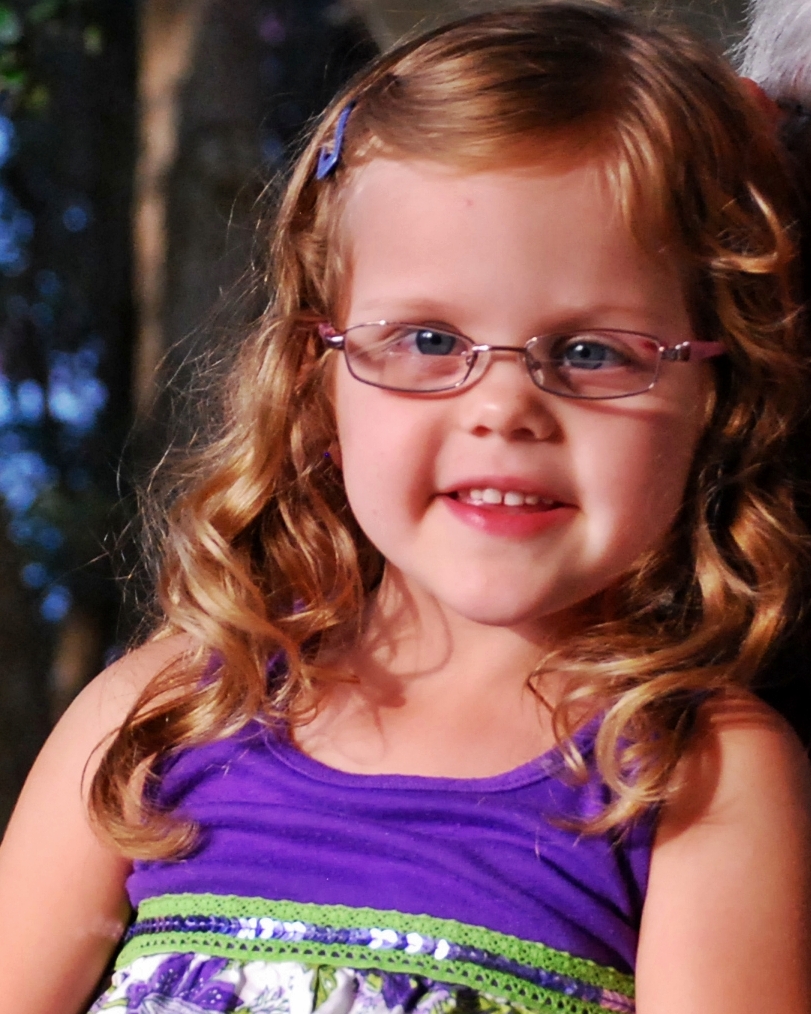
This book is fun and exciting – I have read it to my 4-year old Amelia many times already. The story includes grown-up phrases like “criminal mastermind” and “meteor-busting rocket launcher”, which she found hilarious. Kids love big words!

Eliot Jones, Midnight Superhero is available via both Amazon.com and BarnesandNoble.com.

 —  Julie is a part-time working mom, mother to 4-year-old Amelia, and the blogger behind BalancingMama.com.

Reader questions: a contact lens for amblyopia, and weaning off the patch

Lindsey wrote in about her 3 year old wondering if any parents have faced, or are facing a similar situation. Does anyone have experience with a large difference in prescription between the eyes, and either successful weaning from a patch or using a contact lens. – Ann Z

Elise has intermittant strabismus and has anisometropia (large difference between prescription in her eyes). Her right eye is +5 and her left eye is Plano (or no prescription)

We patch 2 hours a day and have been since may 2012. We fully recovered her vision (yay!) Then the doc cut back patching to every other day. This was unsuccessful and we’re back onto every day 2 hrs patching again…sigh. Her vision is fully recovered again however now her right eye more dramatically drifts up, which we hadn’t seen any signs of since before glasses. (I’m definitely interested in patching weaning experience stories if you know of anyone who has successfully worked their child off of the patch for good.)

Our doctor’s next step is getting Elise into wearing a single contact which is our most hopeful option at developing her stereoscopic vision (we don’t know how bad it is yet since she’s only 3 and can’t really tell us what she can/cant see yet). The contact lens sitting on her eye will drastically improve the image size difference between her two eyes which right now is a rather large difference due to her prescription. It’s definitely a journey to say the least!

Now What? A Mother’s Thoughts Post Strabismus Surgery

We are a couple months out from our second strabismus surgery with my two year old son, Joel. We have been working through eye issues since he was about six months old. I was getting into a groove with it all. The monthly doctors appointments, the patching, and strategizing how to keep the latest pair of Miraflex glasses in one piece and on his head.

But now we are moving into a new phase of his eye care. The post surgery phase. Sure we have been through this once before, but after the first surgery, it was obvious we were not done. His eyes were not aligned. This time we had better results. It is still not perfect (his eyes are drifting a little out versus drifting in like he had before), but his wonderful eye doctor is closely monitoring the situation.

So where do we go from here? Where does a concerned parent turn their attention when the surgery is done and results are looking positive?

I’m learning right along with you, but here is where I have started:

Make sure you are attending regular follow up appointments. Things might be looking good, but make sure you are attending your follow up appointments and still asking questions. Listen to your doctor and stay involved. Little eyes can change a lot during these post-surgery months and you want to be sure you’re staying on top of their care.

Don’t be afraid to ask. Ask your doctor what your child’s long term plan is. How frequent should your appointments be now? What are “warning signs” for you to look for? They have experience in similar cases and will be able to give you a roadmap for future care.

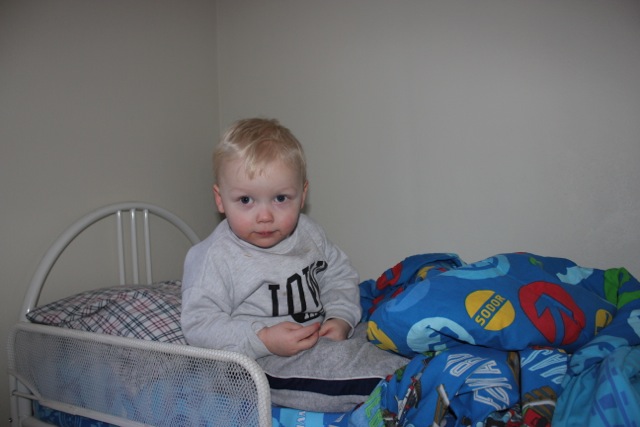
Joel enjoying his new toddler bed two months post Strabismus Surgery #2.

Dust off your other goals. Did you have any items you wanted to work on with your child, but put off for whatever reason due to his eye care? I will admit one for me was discipline. Joel was just turning two when he had his second surgery. He and his twin brother were right in that wonderful stage where their favorite word was “No” and everything they could get their hands on was being thrown across the room. Because we were going through surgery with Joel, I gave him an easier pass than I did his brother in disciplining these issues. However the issues have not gone away. I know now the best thing I can do for my son is provide the same structure for discipline his brothers are receiving.

Keep your networks! Stay tuned into the Little Four Eyes Facebook group, blog, and other resources that have been helpful for you. You never know when you’ll come across something that can help you with whatever stage your child is at right now.

What has worked for you? How did you cross into the next phase of eye care post-surgery? I’d love to hear your thoughts!

Marie McNary is a wife and mother of three energetic little boys. She likes dogs, cookies, and can be found blogging about her crazy life at Home in the Heartland.

Pictures (of various sorts)

  • I realized I was horribly behind in updating our photo gallery.  I’ve taken care of that, and we’re up to 159 fantastic pictures, there.  As always, if I somehow missed a picture you sent me, I am sorry.  Please let me know.  And if you’d like to have your child’s picture in the gallery, send (ann@shinypebble.com) the photo, or a link to it, along with any text you’d like included, and a quick sentence giving me permission to post it.
  • Speaking of photos, the Children’s Eye Foundation has published their 2013 Eyecare for Kids calendar.  The calendar features photos from its I Care for Eye Care photo contest that it holds each spring.  As always, there’s some great pictures of kids in glasses featured in it.  Proceeds from the sale of the calendar to go the Children’s Eye Foundation, you can also download the calendar in pdf format.
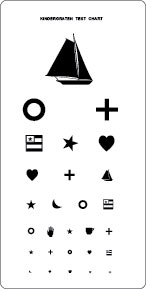
  • Speaking of the Children’s Eye Foundation, they recently posted an interesting link on facebook about an eye chart that is still commonly used in pediatricians’ offices that is not based on any research or studies – the kindergarten or sailboat chart shown here.  That post spawned quite a bit of conversation about eye charts that are commonly used.  The two charts with pictures that are approved by a variety* of groups here in the US are the LEA symbols (the square, circle, apple, and house) and the Allen symbols (the birthday cake, horse, tree, bird, telephone, hand, and jeep).  Also approved are the tumbling E chart (where you indicate which way the E is facing), and the H, O, T, V chart (which uses only the letters H, O, T, and you guessed it, V), as well as the familiar letter chart, once your child is good with letter identification.
  • and finally, speaking of facebook (I am the queen of topic transitions tonight!), we have a new spin off group called Little Four Eyes Marketplace a place to pass along, for free or not, glasses frames and other little ones’ eye and glasses related items.  And our original Little Four Eyes facebook group now has well over 2,000 members!  If you’re on facebook, please join us.

*The groups that have approved the charts mentioned are: the American Academy of Pediatrics, American Association of Certified Orthoptists, American Association for Pediatric Ophthalmology and Strabismus, and the American Academy of Ophthalmology.

Book review: Velma Gratch and the Way Cool Butterfly

Thank you, thank you, to Julie for her book review.  You can read more of Julie’s writing at Balancing Mama.  Interested in reviewing a book?  Email me (ann@shinypebble.com).  – Ann Z

With just a basic Internet search, you can find children’s books about glasses, but it is more difficult to find cute and fun bespectacled characters in books that are not about the glasses at all. It is important for glasses-wearing children to feel completely normal, and it is helpful for them to see characters in glasses living their own everyday lives as well.

I recently found a book featuring a smart and determined little girl, Velma Gratch. In her story, Velma Gratch and the Way Cool Butterfly
written by Alan Madison, Velma is a third child trailing behind her very well-remembered sisters. Velma wants to be remembered as well, but she initially goes about that the wrong way. However, on a school field trip one day, a Monarch butterfly lands on Velma’s finger – and it won’t leave! Velma goes day after day with her butterfly friend, becoming the talk of the school. Neither she – nor her butterfly – will ever be forgotten!

The story includes a few  big science words, so I would guess it is best for age 5+ . But all kids enjoy being read to – and they will definitely enjoy Kevin Hawkes’ adorable illustrations (where several characters wear glasses!).

—  Julie is a part-time working mom, mother to 4-year-old Amelia, and the blogger behind BalancingMama.com

Eye exams just got harder again

Zoe this fall

Zoe’s a pro at eye exams now.  I don’t think I could even hazard a guess at how many times she’s been to the eye doctor in her 6 short years.  Way more than a dozen times for sure, probably less than 50, though sometimes it feels like we’ve been there that often (I am very much aware that we have it far easier than if she’d had a more complicated eye condition).  The first handful of appointments were rough, she hated the drops and the waiting and the bright lights.  Plus she was 1, and it wasn’t easy to explain what was going on to a one year old, especially when it was all new to us, too.

But as the exams got more familiar, they got easier, too.  She still doesn’t like the drops or the lights, but now we know to bring books and toys to help with the waiting, and she’s pretty good at explaining what happens in the exam herself.  So I wasn’t worried when we went in for one of her regular check ups the other week, and didn’t really give the exam a second thought.  In retrospect, I should have been more thoughtful.

Continue reading “Eye exams just got harder again”

October 11, 2012 is World Sight Day

I posted this at Great Glasses Play Day, but I wanted to share it here, too.  Blindness prevention is near and dear to my heart, as I think of how lucky we are that Zoe’s vision issues were able to be treated early and well.  In honor of World Sight Day, I will be donating all proceeds from my Amazon.com store for the month of October to ORBIS International, one of the organizations listed as an IAPB member (Update: $23.35 will be donated to ORBIS in honor of World Site Day).  – Ann Z

Today is World Sight Day, a day devoted to raising awareness of blindness and visual impairment as public health issues.

The numbers are striking and sad:

  • an estimated 1.4 million children are needlessly blind
  • causes of childhood blindness include glaucoma, cataracts, retinopathy of prematurity, corneal scarring, and refractive errors.
  • in developing countries, 60% of blind children die within a year of going blind
  • an estimated 19 million children are visually impaired
  • 12 million of those children are visually impaired due to uncorrected refractive errors. Something that could be so easily and inexpensively treated with glasses.

But there’s good news, 80% of blindness worldwide is preventable, and sight restoration and blindness prevention are some of the most cost effective health care interventions.

You can read more about the global initiatives to end preventable blindness at Vision 2020, a joint program between the World Health Organization and the International Agency for the Prevention of Blindness.  The have information about how you can help as an individual or an eye care professional.

Little Four Eyes for Kids: Taking care of your glasses

This is second installment in the Little Four Eyes for Kids series.  The series is targeted at kids in preschool through kindergarten.  I’d love your feedback!

How do I take care of my glasses?

You’re glasses help you to see better, and they look pretty great, too.  But there are things you can do to help them!

Glasses can break or scratch easily.  If they get scratched, it can make it harder for you to see.  If they’re broken, you may have to go without glasses for a while until you can get them fixed.

There are special ways to take your glasses on and off, special places to keep your glasses, and special ways to wash your glasses.  It might sound like a lot, but it’s really easy!

Putting your glasses on and taking them off

Use both hands when you put your glasses on or take them off.  Use one hand on each of the ear pieces.   Try not to spread the ear pieces apart too much.

How should I clean my glasses?

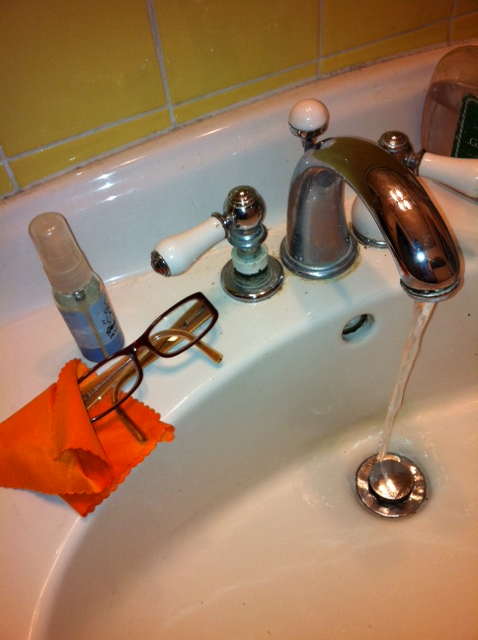
every thing you need to clean your glasses

Your glasses get dirty, just like your hands and face do.  And when they’re dirty, it can be hard to see.  Here’s a good way to clean your glasses:

  • Use water to rinse the lenses.  If your glasses are very dirty, you can use special lens cleaning spray.
  • Carefully wipe your glasses dry with a soft cloth.  Usually your glasses store will give you a special cloth for this.
  • Don’t touch the lenses with your fingers, or you’ll get them smudged and have to clean them again.

Where should I keep my glasses?

Your glasses should stay on your face most of the time, but there are still times when you need to take them off.

Talk to your parents, what are some times that you should take your glasses off?

First thing to do when you take your glasses off is to carefully fold them back up.  Now you have to find a place to put them!

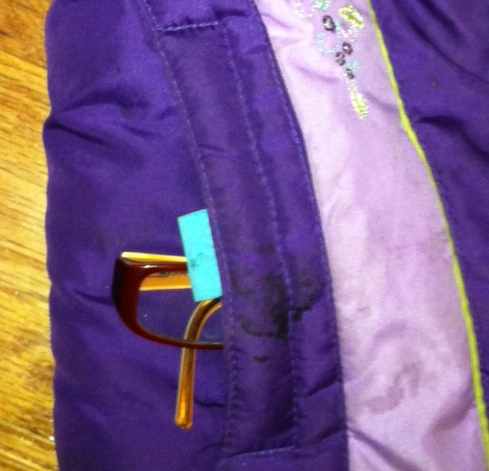
When you aren’t wearing your glasses, they should go somewhere safe, where they won’t be stepped on or sat on or lost.  If you set your glasses on a table or shelf, make sure the lenses are facing up.

The best places for your glasses are:

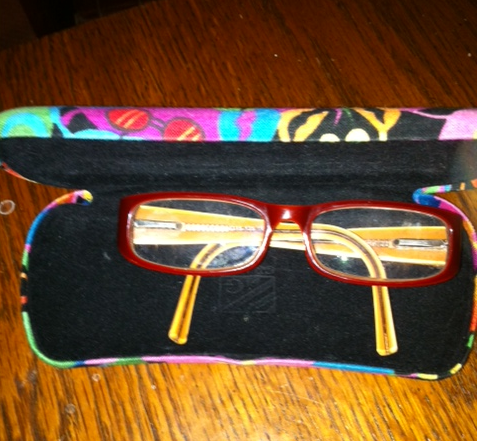
  • in a glasses case
  • on a glasses holder
  • in a special place that you have chosen, where they won’t get bumped or lost

Which of these pictures shows glasses in a safe place?

in a jacket pocket?
on a chair cushion?
In a glasses case?
playing with farm toys?

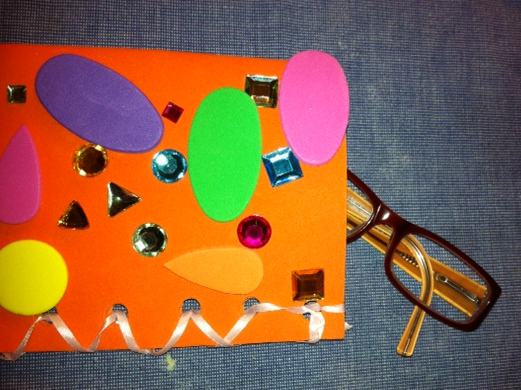
Make your own glasses case!

Glasses cases protect your glasses from scratches and falls.  It’s good to have more than one glasses case, that way you have them in a few places in your house like your bedroom (for sleeping) and the bathroom (for bath time).

Here’s how you can make and decorate your own glasses case:

You’ll need:

  • craft foam rectangle, 6 x 8 inches  (15 x 20 cm)
  • yarn or ribbon
  • single hole punch
  • foam stickers or fabric paint or markers to decorate

Instructions:

  • Fold the foam rectangle in half so it is 6 x 4 inches (15 x 10 cm)
  • Have an adult help you punch holes through one short side and the long side that isn’t folded (since it’s folded, you’ll punch holes through two layers of foam), so you can lace the sides shut.
  • Use the yarn or ribbon to lace the sides together.
  • Decorate the outside of your case with stickers, paint or markers.  Make sure any paint or markers are dry before you use your case.

(instructions from Activity Village)

Your Stories: Measure twice, cut once

Julie wrote previously about bifocals for young kids.  Here, she shares her story of her daughter’s strabismus and surgeries.  Her story is not yet finished, but I’m very grateful to Julie for sharing the story so far.  You can read more of Julie’s writings at her blog, BalancingMama.com. – Ann Z

Measure twice, cut once.

This is a common mantra of crafters and handymen. In those fields, an inch is an inch, a millimeter is a millimeter. You measure, you cut, and as long as you keep a steady hand, it all works out in the end.

Many of us would be a lot more relaxed right now if this were the case for strabismus surgery. With eye muscle surgery, you never quite know the outcome until post-op, often many weeks later. The physician performs surgery with the best measures possible, but there is absolutely no way to know for sure how the brain will react. Consequently, parents have no certainty of surgery success until the waiting game has come to an end.

In our case, strabismus surgery flipped our world around and left us worried, guilty, and still waiting (almost one year later) for answers.  Our sweet Amelia was diagnosed with intermittent exotropia last Fall. We noticed her eye(s) turning out when she was tired. She could keep her eyes straight while alert, but the natural placement of those baby blues was actually a bit outward. Outside of our home, the world could not tell she had an eye condition. We were left with a decision: Do we move forward with surgery to move the muscles or leave it alone and wait it out?

Initially, we decided to wait it out. But a couple weeks after that first appointment, our then three-year-old daughter cried out and threw herself on the ground while watching a movie. Shocked and worried, I ran over to her to find out what was happening. She screamed at me, “Mommy, I want my eye to stop moving!”

It was the first steep plunge on our roller coaster ride.

We scheduled her first eye muscle surgery for January 12th, 2012. The surgery was quick and recovery was fairly painless. But her eyes were crossed. We held our breath and waited… three weeks for the post op… a few more weeks until the official 8-week healing period. And unfortunately, those eyes never straightened. They were drastically worse than ever before. Crossed in instead of out, visible to most everyone for the majority of the day. By March, the ophthalmologist insisted on a second surgery.  The plan was to put the first muscles back where they started and to move the oblique muscles instead.  We were confident. We were ready to put an end to this journey.

Surgery #2 took place on March 29, 2012. Almost immediately, we saw a difference in her eyes. They were red and puffy from surgery, but appeared to be straight. We breathed an enormous sigh of relief.  That wasn’t so bad! It was all worth it. A few weeks post-op, the physician was thrilled with the results.  We scheduled a follow up for two months later, and had every indication that we would then move on to a simple annual check up. I blogged about my happiness on April 19th in a post titled A Promise.

The joy was short-lived. In May, six weeks to the day of surgery #2, I saw her eye turn in. The color drained from my face and an enormous lump formed in my throat. I begged God to say my own eyes were simply playing tricks on me.

Time would snap me back into reality.  As months have passed since May, Amelia’s eyes are back to turning in frequently. Most everyone notices. We are battling an intense parental guilt. Her eyes turned out before. They were not this bad!

What did we do?!?

As of today, she is in glasses. Her now esotropia is inconsistent. Unlike her initial exotropia that occurred every time her eye relaxed (a muscle issue), the crossing now happens when she focuses. It happens when she looks down, drinks through a straw, or looks at something sideways. We are giving bifocal glasses a 9-week test run to see if she responds favorably to them. Surgery #3 may be very likely, but we owe it to our little girl to try this instead. November 9th is the big day, the nine-week follow up after getting bifocals for the first time.

I do not write our story to scare anyone. 80% is still a pretty strong success rate. There is absolutely no way to predict a strabismus surgery outcome. Surgery was the right choice at the time, but it does not hurt any less when your sweet child falls into the 20%. It is no less heartbreaking to hear from a physician’s lips, “she is one of those rare cases”. It is not easy to let go of guilt when your own decision to move forward with surgery seemingly made her worse. There are so many unknowns when it comes to strabismus and eye muscle surgery. It is an anxiety-ridden waiting game.

Measure twice – or more.

Cut once – hopefully.

Then wait. Hope. Pray.

Our story is not over; we will continue to wait and fight for our baby girl to be comfortable with her vision again. Our tale has a happy ending somewhere. We just need to grasp on to some patience until it arrives.

“Everything will be alright in the end. If it is not right, it is not the end.”

— Julie is a part-time working mom, mother to 4-year-old Amelia, and the blogger behind BalancingMama.com.

mini-rant: pictures of babies or toddlers wearing adult glasses

All right, I’ll admit that this is kind of a minor pet peeve, but I’ve noticed it recently and it’s starting to really bug me.  I’m not a fan of pictures of babies and young kids wearing what are clearly adult glasses.  I get that a lot of parents take those pictures as a joke, and in that sense, it’s not really any different from pictures of kids wearing adult shoes or over-sized hats, and those are cute.  I get that.  That’s fine.  But why, oh why, if you’re writing a story about children’s eye health, and including information on children’s glasses, would you use a picture of a child wearing what are clearly glasses intended for adults?  Why?  No really, why?  There are so many fantastic pictures of young kids in glasses out there (like right here), and you only serve to make the idea of children in glasses cartoonish by including those pictures of kids in ill-fitting adult glasses.  Parents who need the information about their children’s vision are often already upset about the idea of their child wearing glasses, using a jokey picture of a child in glasses does not help at all!

A few offenders (and some of these have good information, which makes it all the more annoying)

  • Article in Today’s Parent on 3 common eye problems.
  • Kids in Australia article with tips on finding glasses that fit.  The article is about finding glasses that fit, for goodness sake!!!  Could you not find a decent photo anywhere that shows what that looks like?!?
  • How to know that your child might need glasses.  Even worse than the others, this features a picture of glasses that have tape around the nosepiece playing to the nerd stereotype, too.
  • Momaha article on how to know if your toddler has an eye problem.  These glasses are so big, someone has to hold them up for the poor child.
  • That same picture is also used in an article about a study finding that kids wearing contacts have better self esteem (well that’s certainly the case if the glasses fit so poorly your mom has to follow you around all day to hold them up!).  That second article is specifically trying to get parents to get contacts for their (older) children, so it’s less surprising that they used a jokey photo.

So to anyone writing articles or posts about kids’ vision…  I understand, you want a picture to go along with your article, and so you found a stock photo of a kid wearing glasses that are too big, and you think it’s cute.  But you know what?  There’s other stock photos out there that are just as cute that show kids wearing glasses that … wait for it …  fit well.  How about we use those?  How about we not treat childhood vision issues as a joke, okay?

(and no, I’m not going to include a picture of a baby wearing ginormous glasses).

Your stories: Bifocal Q&A

Many, many thanks to Julie for sharing what she’s learned from having her daughter in bifocals.  Julie is a part-time working mom, mother to 4-year-old Amelia, and the blogger behind BalancingMama.com.  – Ann Z
Our little princess has been wearing bifocals for only a few weeks now. We had two failed strabismus surgeries, and are giving glasses a try for a nine-week test. Recently, I had a bad day filled with guilt, worry, and impatience. I picked up the phone and called the pediatric ophthalmologist’s office.

I had too many questions, and not enough answers.

Q&A: Small children and bifocals for esotropia

Disclaimer: Nothing should replace your own relationship with a trusted physician. Asking your own questions is critical in your child’s eye health journey. The answers above are paraphrased from a telephone conversation with our nurse at an Atlanta, GA pediatric eye group.

Do child bifocals require the “line”?

The line is highly recommended for young children and those getting bifocals for the first time. Unlike adult bifocals, where the reading section is below the pupil, child bifocals for esotropia therapy are split at the pupil. The line is very helpful for children to better adjust to the different segments of their lenses. Progressive(no-line) bifocals have a gradual change from the top to bottom prescription, and young children have a more difficult time understanding that there are only two areas of their lenses.

How long does it take for a small child to get used to bifocals?

It can take several weeks for a child to use bifocal lenses correctly. They have to train themselves to look through the different lens segments in differing scenarios. Sometimes this means a new tilt to their head or change in posture. We do not expect a small child to use bifocal lenses correctly within the first week, sometimes more.

Should we, as parents, do anything to help a small child adjust to bifocals?

No. Aside from making sure they physically wear them, parents should let children adjust to bifocals on their own. Often we find that the more attention you bring to the bifocal, the harder a child tries to focus, which turns the eyes in and defeats the purpose. It takes time, but children will figure out the glasses on their own. Eventually using a bifocal lens will become second nature to them.

If the glasses “work”, what should we observe?

The goal of glasses in this case (accommodative esotropia) is to train the focus. Children are naturally far-sighted, so sometimes the eye crossing is due to the poor vision of things up close. We say the child is responsive to glasses if the eye movement is lessened with the glasses vs. same tests with the glasses removed. The prescription may be tweaked if crossing remains visible with glasses. The final goal is to have NO crossing with glasses on. Crossing will still occur with the glasses off.

Can glasses make her crossing worse?

No. Parents sometimes say the crossing is worse with glasses removed, but we have no evidence that eye turning is permanently worsened because of glasses. The turning is much more noticeable because the glasses straighten the eyes while worn.

What is the long-term outlook for glasses in this situation?

If the child proves to be responsive to bifocal glasses (eyes not turning in while worn), we continue with glasses. The glasses are not expected to be permanent, because the far-sightedness corrects itself as a child ages. This physician usually begins to wean patients off of glasses around age 8. Usually between ages 8-12, the glasses can be removed (unless near-sightedness or another typical adolescent eye issue occurs).

Little Four Eyes for Kids: How do glasses work?

This is my first attempt in the Little Four Eyes for Kids series.  The series is targeted at kids in preschool through kindergarten.  I’d love your feedback!

How do glasses work?

Glasses help people to see better.  Just like some people use a cane or crutches to walk better, and some people wear hearing aids to hear better, some people – including you! – wear glasses to see better.


Continue reading “Little Four Eyes for Kids: How do glasses work?”

Little Four Eyes for Kids

Stacy left a comment asking about ways to explain glasses to kids, and it reminding me of something I’d been meaning to try.  There are quite a few sites out there that explain vision to kids (Marie’s last post talks about one of them from Prevent Blindness Ohio), but I’ve had a really hard time finding sites or books that talk about why kids might need glasses.  So I thought I’d give it a try (please understand I don’t really have a background in this, my experience with explaining things to kids comes solely from my attempts to explain things to my girls, and I’m not always successful with that).  And then as I thought about how I might explain things, I realized just how big of a topic it is.

So I think I may try a series on explaining vision and glasses and patching to kids.  I’m planning on aiming at the kids in preschool through kindergarten, but hopefully it will be of interest to a broader range of ages.  The topics I’ve thought of covering are:

  • How do our eyes work?
  • Why do some kids need glasses?
  • How do glasses work?
  • How do I take care of my glasses?
  • What happens at an eye exam?
  • Why do some kids need to patch?

I’ll be posting the first “for Kids” post right after this: “How do glasses work?”

Are there other questions that I should try to cover?  Have any of you had luck explaining glasses or vision to your kids?

Wise About Eyes – A Resource for Eye and Vision Information

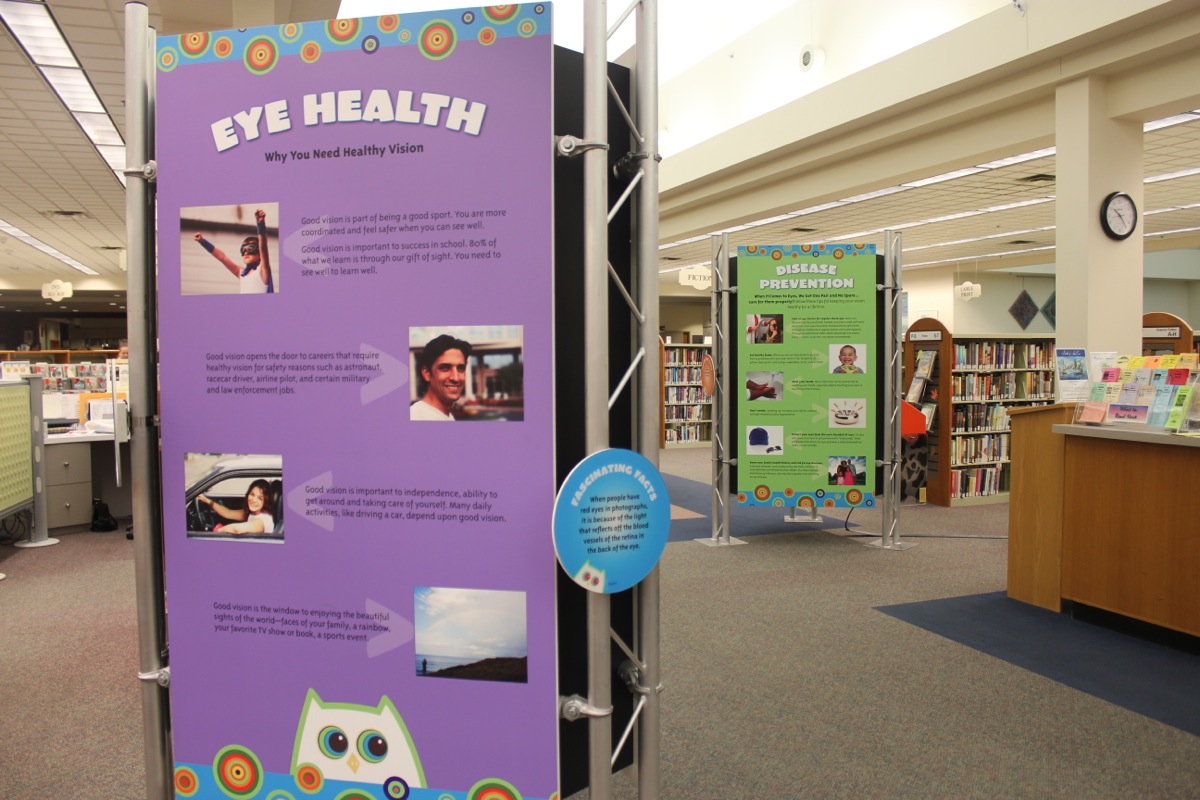
Our family recently found ourselves in the Cleveland, Ohio area visiting family. On a free morning, we headed over to a local library to take the kids to story time. One of the first things that caught my eye was a large owl with glasses. To my surprise and delight, this owl was only part of a “Wise About Eyes” exhibit to bring attention to children and their eyes.

There were displays that talked about the importance of taking care of your children’s eyes, how to take care of your eyes, and also information about eye disorders. There were interactive activities to show you how children with these conditions might see a little differently from others.

My interest was peaked and I had to investigate more online. It turns out the Ohio Department of Health, Bureau of Child and Family Health Services, and Save Our Sight Program have funded the “Wise About Eyes” initiative in conjunction with Prevent Blindness America.

Check out their website. It has fun things for kids, helpful information for parents and caregivers, as well as programs and resources for educators. It is a wealth of information – regardless of whether or not you live in the state of Ohio.

As a mother of three young children, it was very nice to see a fun and creative resource reminding parents to make eye care an essential part of your health routine.

More ways to help your child wear a patch

Patching is hard.  It a topic that shows up over an over on the facebook group, as parents try to figure out the best way to encourage their kids to keep the patch on.  And the stakes are high: one of the biggest predictors of success with patching is how well your child does at patching for the recommended time.  (We’ve had some fantastic posts here with a lot of tips and tricks, and Amblyopia Kids has some great advice, too).

Turns out, it’s not just parents that are interested in this question.  I recently ran across a series of articles by researchers in Europe (mostly, the Netherlands) that looked at a variety of methods to improve compliance in amblyopia treatment (references and links below).

The researchers looked at three different methods to help families with patching.

  • A calendar and stickers for the child.
  • A leaflet for the parents explaining amblyopia and it’s treatment
  • An educational cartoon designed for the child to explain amblyopia and the importance of patching

The children were 3 to 6 years old, and all had amblyopia and were prescribed patching as treatment.  The researchers were looked at how long each child patched each day, and whether there were any days that they didn’t patch at all – that was measured electronically with a monitor on the patch that can tell when the patch is being worn.

All three of the methods improved the amount of time, and the number of days patched, compared with children who used none of the methods.  And those children also saw better improvements in acuity and shorter treatment periods.  Among the three methods, children given the cartoon had the best results, with the parent’s leaflet being in second, and then the calendar and stickers.

So what does that mean for us?  The three methods that were studied are not particularly new or groundbreaking, and fortunately, they’re not particularly difficult to do at home.   It is clear that it is important that parents understand why they need to patch their child, but even more importantly, our children need to understand why they are patching as well.  I would advise all parents who need their children to wear a patch for amblyopia to educate themselves on the importance of treatment, to set up a rewards chart for their child, but most importantly, to help their child understand why they are patching.

I wish I could find the cartoon they used in the study, it’s described as

 … a cartoon story, without text, as most of the children treated for amblyopia are too young to read. The cartoon depicts the orthoptic examination of a preschool child, subsequent patching therapy, and the reasons for therapy seen from the perspective of the child. As no animal figures were included, the children were more able to identify themselves with the child depicted in the story. The cartoons could not be linked to a certain ethnic or cultural group. (Loudon et al, 2006 [full text])

While I couldn’t find the cartoon described above, I think this speaks to the need for more books about amblyopia and it’s treatment.  If you look at our page of books, there’s very few out there that talk about patching at all, and not all of those talk about the reasons for treatment.  So here’s my call to arms!  All you aspiring children’s book writers, especially those of you with kids who have amblyopia…  Write!  Please!  We need more books for our kids!

This is not the cartoon used in the study, but when I found it, I knew I had to include it. It was published in 1968 by the US Department of Health, Education, and Welfare. Click on the image to get to the full cartoon, part of the Government Comics Collection hosted by the University of Nebraska-Lincoln

References

S. E. Loudon, M. Fronius, C. W. Looman, M. Awan, B. Simonsz, P. J. van der Maas and H. J. Simonsz, 2006. “Predictors and a remedy for noncompliance with amblyopia therapy in children measured with the occlusion dose monitor,” Investigative Ophthalmology & Visual Science, vol. 47, 4393-4400. [full text]

A. M. Tjiam, G. Holtslag, H. M. Van Minderhout, B. Simonsz-Toth, M. H. Vermeulen-Jong, G. J. Borsboom, S. E. Loudon and H. J. Simonsz, 2012. “Randomised comparison of three tools for improving compliance with occlusion therapy: an educational cartoon story, a reward calendar, and an information leaflet for parents,” Graefe’s Archive for Clinical and Experimental Ophthalmology. [abstract]

A. M. Tjiam, G. Holtslag, E. Vukovic, W. L. Asjes-Tydeman, S. E. Loudon, G. J. Borsboom, H. J. de Koning and H. J. Simonsz, 2012. “An Educational Cartoon Accelerates Amblyopia Therapy and Improves Compliance, Especially among Children of Immigrants,” Ophthalmology. [abstract]