I just love this new post by children’s optician, Danielle Crull from A Child’s Eyes. She walks through the possible frame count for a young child as she learns more about his situation and needs and slowly figures out which frames might work for him. It’s a great look at the thinking that goes in to finding just the right frame, and it illustrates how vital a great optician can be. Here’s an excerpt:
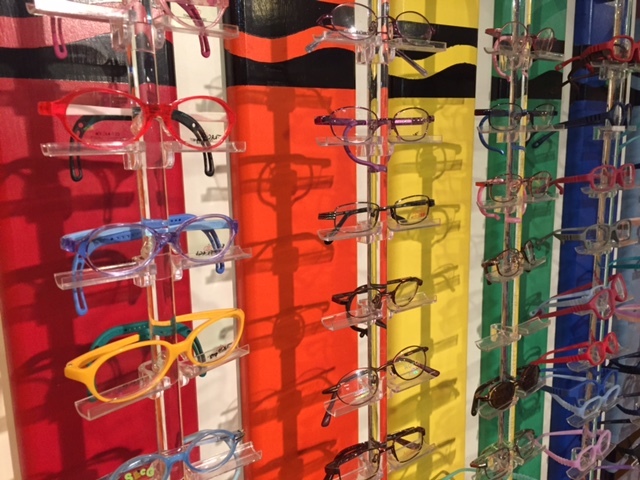
[visual description: a display of children’s glasses frames against a brightly-colored wall]
Possible Frame count (Optician Thoughts)
Possible Frame Count = 650
(Someone’s here, must be a mommy, she’s holding a little guy’s hand and coming inside the door…He looks to be about 4 years old and she has a paper in her hand.)
. . .
Possible Frame Count = 200
“Hello, how are you?” (he seems pretty happy, guess the doctor visit wasn’t too bad)
. . .
(oh, wow, what a cutie…He has Superman on his shirt…wide head, maybe a size 44, maybe even 46)
. . . Possible Frame Count = 125
“Great, looks like Johnny has a prescription that is a little high and he will want to and need to wear them all the time. He’s going to love them!” (superman..mmm…I know I have one of those toys around here somewhere)
. . .
“I have a Superman Mr. Potato Head…want to see it? He even has a cape!” (cool, now I can get him to look up, pupillary distance…smaller than average, maybe 25/25…cute little ears, beautiful blue eyes, mmm…what frames do I have with a small bridge?)
. . .
Possible Frame Count = 50
“What’s your favorite color? Is it blue like Superman? Or Red like Ironman maybe?” (okay, blue glasses…size 44 or 46, I have to put cables on them, they need a small bridge…oh wait! I forgot to look at his eye lashes)
. . .
Possible Frame Count = 20
“Let’s put these glasses on and look in the mirror, I bet you look like Clark Kent.” (okay, that didn’t work…where did that extra hand come from, I swear kids sprout them at will.)
. . .
Read the whole thing over at the beSpectacled blog at A Child’s Eyes, it’s well worth it!
I’ve put together a printable guide (as a pdf) with some of the information and advice that’s been published in some of our posts here about fit, warranties, and lens options. In particular, this pulls from the guide to finding glasses that fit and the post about lens options.
The guide is meant to be printed (or downloaded on to your phone or mobile device) and taken with you to optical shops when you go to purchase glasses for your child. This is not a replacement for a good optician! A good optician will be able to help you find the best options for your child and their needs. But this guide will hopefully help you assess the fit of frames for your child and to make sense of some of the options that you’ll be presented with. Click the image below to get the guide.
One of the common questions we see is what options are available for thinner lenses. I’m going to be up front that the answer is complex. A good optician is essential here and will help you understand how all these pieces fit together. In fact, this answer is based largely on a comment on the Little Four Eyes facebook group written by Wesley Scott, an SC licensed, American Board of Opticianry master-certified optician who was initially trained by the US Army to make glasses in an ophthalmic lens lab and who currently works for an optical lab software company. All that is to say that he knows a lot about ophthalmic lenses. Many thanks to Wesley for letting me adapt this to a post. That said, any inaccuracies in this post are entirely my fault as I try my best to simplify a complex question.
These glasses are a +7.00 in the right eye and +8.00 in the left eye.
[photo of a pair of wire-rimmed glasses from the top showing the thickness of the lenses and a girl wearing the glasses]
There are a few things that can affect the thickness of lenses:
the prescription
the material of the lens
the curve of the lens
the size of the frames, and how they compare to the patient’s face. Remember, you want a frame where the patient’s eyes are well centered in the lens.
Prescription:
The higher the prescription number (whether it’s plus or minus), the thicker the lenses are going to be at some point.
Lenses that correct hyperopia (+ prescriptions) will have the thickest point in the middle of the lens.
Lenses that correct myopia (- prescription) will have the thickest point on the edges furthest from the middle
Shape of the glasses:
The larger the lenses are in glasses, the thicker they are going to be (this is especially true for glasses for myopia). Again, you should talk with an optician about specifics of which frames will work best, but in general, smaller oval-shaped glasses will mean thinner lenses.
Materials
Polycarbonate is customarily used for kids’ glasses because it has been around a long time. Trivex is a relatively newer material for lenses. Both are highly impact resistant and provide full UVA/UVB protection, which means both are good choices for children. Trivex lenses will be thicker than Polycarbonate for the same prescription. On the other hand, Trivex is a lighter material than Polycarbonate. Because Trivex lenses are thicker, there’s not much difference in weight between the two for the same prescription. Trivex is somewhat clearer than Polycarbonate.
There are also high-index materials. “Index” here refers to the “index of refraction” which describes how much light bends when passing through the material, the important thing to note is that the higher the index, the thinner the material. Hi-Index 1.67 lenses are not as impact resistant as Polycarbonate or Trivex, but they are more impact resistant than plastic lenses (CR-39) or glass lenses. In fact, before there was Polycarbonate or Trivex, glass and plastic lenses were used for children’s lenses. In very high plus prescription, 1.67 will still be impact resistant, and much thinner than Polycarbonate or Trivex, and so may be a more appropriate choice (again, talk with your optician).
Lens curve
The way the lenses are curved will also make a difference. Traditionally curved lenses will have a steep curve for higher prescriptions. There is a newer technology in lens curve though, called aspheric lenses. Aspheric lenses will provide full strength correction but with a flatter curve. Aspheric lenses are especially recommended for high hyperopic prescriptions.
Other lens options
There are other options that an optical shop may or may not recommend for your child. These are optional and will not impact the thickness of the lenses (but will impact the final cost):
Scratch-resistant coating: Some lens materials (Polycarbonate in particular) are soft and prone to being scratched easily. A scratch-resistant coating will help prevent some scratches. Please note the word “some”! Lenses with scratch-resistant coatings are not scratch proof and can still be scratched.
Anti-reflective coating: Also known as “anti-glare coating”. This coating will reduce the reflection of light from the outside of the lenses (that’s what causes glare on lenses).
Photochromic coating: Often referred to as “Transitions” which is a brand name of this type of coating. Photochromatic lenses will darken in the sunlight.
Unfortunately, we see more than a few young children in the facebook group with glasses that are completely inappropriately sized for them.
[photo of a baby wearing very large glasses]Megan’s son Mason (pictured above) is 10 months old. She took him to an optical shop and was told that the glasses he’s wearing were a perfect fit and the smallest glasses available. Both are not true. Those glasses are far too large for little Mason. They are way too far down his nose and his eyes are not at all centered in the lenses (you can read more about how to know if glasses fit well here).
She went back to the shop and the good news that a different optician there helped her to find smaller frames that fit him better, but it required multiple trips to a shop that was an hour away, and she would not have had to make those trips at all had the optician fit her son with the correct size to begin with. We should be able to rely on professionals at optical shops to help us find good-fitting glasses for our children.
[photo of same baby in glasses that fit well]After reading about Megan’s story, I wanted to talk to a children’s optician about what parents can do to make sure they find optical shops that will do a good job fitting their child and what to do if you end up with glasses that don’t fit.
An interview with an optician about finding good glasses that fit your child
Little Four Eyes: Thank you so much for joining us, Danielle. Can you start by reminding us about why fit is so important for children?
Danielle: A good fit is important for several reasons. Firstly, a good fit will provide the best vision. When the glasses slide down, they effectively increase the prescription in a plus lens and effectively decrease the prescription in a minus lens. This may not be too much of a big deal in lower prescriptions, but in a higher prescription it can make a significant difference. So if they do not fit well, your child may not be looking through a properly powered lens. Secondly, good fit=comfort! If the glasses do not fit well in any way, either slipping down or too tight, your child will be less likely to want to wear them. Eventually, he or she will associate their glasses with discomfort or with a feeling of annoyance. Thirdly, if your child overcomes the discomfort or the annoyance, they will simply develop a bad habit of wearing the glasses down on his nose. This, of course, leads to not looking through the center of the prescription and as mentioned before changes in the effective power of the lens. Habits are so hard to break. Sometimes it takes years for me to get a child to actually wear his or hers glasses properly once they have developed bad habits from a poor fitting.
L4E: What should a parent look for in an optical shop? Are there things to look for on their website or questions to ask on the phone that would let a parent know that the shop will be able to accommodate and fit a young child?
Danielle: Absolutely, you should ask around, and ask questions of the optician. I think the real telltale sign of experience with children is the selection they offer. If you go into an optical shop and they have only a few frames or want to order from a catalog, just turn around and walk out. No child can be properly fit from a catalog! Ask about size availability on a frame. Most frames will come in several sizes, make sure they are actually measuring and fitting your child. Some places just want to get rid of that toddler frame that’s been sitting on their frame board for two years. So they are motivated to tell you they fit just fine. There is nothing wrong with asking them to order the smaller size in and then bringing your child back to try them on before committing to having the lenses cut and put into them.
If you’re calling on the phone, don’t ask how many children’s frames they have. Ask them how many toddler, infant or preschooler frames they have. If the practice doesn’t fit many young children, they may say they have a 100 frames but that would include frames fitting everything from a 5 year old to a teenager. Ask about the education of the opticians. Some states require licenses and others have no requirements. If you’re in a state with no requirements then find out if the optician or opticians have a National Certification through the American Board of Opticianry. When you bring your child to the doctor you assume they have met some sort of educational requirement, often they display their license on the wall. Unfortunately, you cannot assume the same from an optician. Opticians are regulated on a state by state basis. Ask if they have a toy area. I know this may seem insignificant, but it will definitely tell you how many little ones come in their office.
Fitting children is not the same as fitting an adult. Children are measured differently, frames often need modified to fit children, even bifocals sit differently. Children have unique medical issues which require special fitting and children require special lenses that hold up to the impact resistance of a child’s activity. So finding a place that knows your child’s unique needs is very important. Glasses for a young child often require a lot of maintenance…your child’s optician should be able to give you expert advice, cheerfully repair and adjust as needed. Consider your optician another key person in helping your child develop healthy vision, they are not just a salesperson (well, at least they are not supposed to be). The doctor can prescribe any prescription he or she wants to, but if your child will not wear it because it doesn’t fit well, your child will not succeed in developing good vision. The role of your optician is very important.
L4E: What sort of preparation should a parent do before bringing their child in to pick out glasses?
Danielle: If your child is very young, make sure you arrive at a good time. For instance, don’t go at nap time or when they are hungry or sick. We want this to be a good positive experience. Remember you will be coming back often for adjustments and you don’t want your child to have such a bad experience that they cry pulling into the parking lot. Bring something from home that they are comfortable with, stuffed animal or blanket. Take some time to normalize your child to glasses. For instance, start by pointing out glasses. Show your little one that other people wear glasses, maybe mommy and daddy wear glasses. Make glasses for their favorite dolly or stuffed animal. This type of thing is so helpful for 2-4 year olds. If you don’t do it before you go in, you can still do it before you pick up their glasses, so fitting will be easier.
I think to help prepare yourselves as parents. It’s helpful to have an idea of a direction you want to go in. Think about how important durability is for you. Do you want something stylish? Do you want something that blends when worn on the face? It’s okay to think about the cosmetics. Often I see parents come in and they haven’t talked about this. If one parent has a different opinion from the other, you spend valuable time arguing/deciding in front of your child. This just makes the experience uncomfortable and drawn out. I recommend discussing lens options with the optician, they are there to guide you and let you know what is available.
L4E:Are there any “rules of thumb” that can help a parent figure out what size to start with? Are there certain sizes that are standard for certain ages?
Danielle:Fitting is always a “face on” decision. The glasses must be on for an optician to know if they will fit. The stamped on measurements are only a guideline. The one rule that you can definitely look at as a parent is whether or not your child’s eyes are centered in the glasses. This is universally recommended for a good fit and to make sure your child has the best fitting lenses. Frames that are too large will lead to lenses that are heavier and thicker than they need to be. The front is only the beginning. Always consider what it looks like behind the ears. If it is too long or too short, it will need to be modified. I recommend cable adapters for the youngest patients. Ask your optician if they will put them on. If you decide to go with a standard temples, then it should be molded and fit to just past the halfway point of the ear. If it’s too short, the glasses will not stay on properly. If they are too long the glasses will either fall off or be adjusted so tight that they cause red marks behind the ears. Don’t be afraid to ask the optician to adjust the sample glasses, so you can get a better idea of how they will fit. If the glasses look to big, they probably are.
L4E: Let’s say another parent runs in to the same problem that Megan did. They purchase glasses for their child and when the glasses come in, they realize that the fit is just not right at all, what should the parent do?
Danielle: Well, hopefully, some of this advice will keep that from happening. If you are uncomfortable in any way, it is best to keep looking. But if you find yourself in the position of having glasses that do not fit well, then please go back to the optician and express your concerns. Your child should not be wearing glasses that are too big or that your child will “grow into.” Glasses should fit well now and grow with your child for a while. I do frequent growth adjustments in the first year. But the goal absolutely is that they fit well over the entire time. I know from my early on experience, that often chain locations do not give the optician the resources to order frames in different sizes and colors. I also know that some smaller places don’t want to invest in children’s frames because they sell them so infrequently. This, of course, is not yours or your child’s fault. This optician should have ordered something smaller and if they were unable to do that should have apologized and sent these parents away to find something somewhere else. My hope is that some of this information will help you walk in a little bit more empowered to make good decisions WITH your optician and also help you feel comfortable walking away when you need to.
Thank you again to Danielle for taking the time to share her expertise!
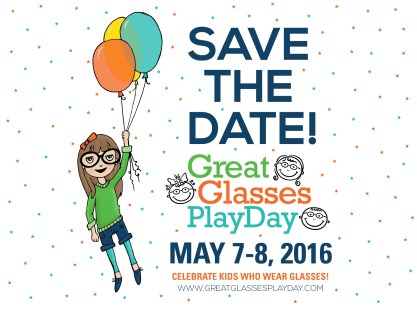
The 5th annual Great Glasses Play Day is almost here. It’s a day to celebrate kids in glasses, eye patches, and contacts; a time to raise awareness of the importance of children’s vision issues; and a day to connect with others for support. But this year, the day is being spread across a week. We have in person events scheduled on the weekends of May 7-8 and May 14-15. Check out the list of 2016 Great Glasses Play Day events to see if there’s one near you!
We also have a lot of ways to celebrate online! Each day from May 9-13, we’ll have a different theme or question. Post on facebook, twitter, or instagram to share your story and help raise awareness. Each day, we’ll choose one participant at random and send them a selection of fantastic books about glasses, including “Grady Gets Glasses”, “Princesses Wear Glasses”, “Red’s Big Day”, and “Glasses: a board book.”
[infographic describing online celebrations for the Great Glasses Play Day. Saturday: share photos of your child rocking their glasses. Monday: share what led you to get your child’s eyes checked. Tuesday: share why your child wears glasses, an eye patch, or contacts. Wednesday: share an image of your child’s favorite thing to see. Thursday: share a photo or video of your child’s first day in glasses, an eye patch, or contacts. Friday: fill in the blank: you know you have a young child in glasses, an eye patch, or contacts when ___.]
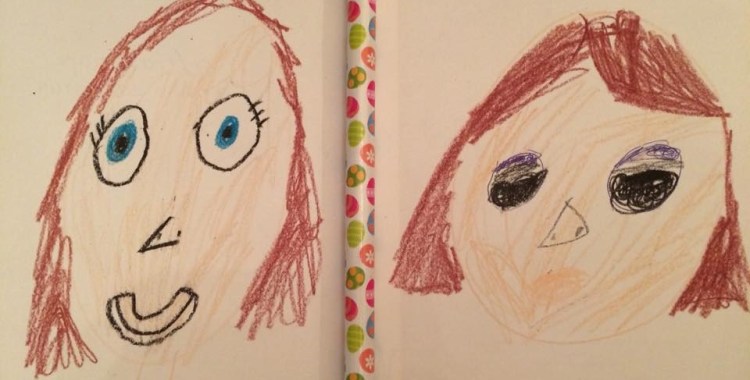
This is for all those parents out there who wonder what their child sees. I absolutely adore this picture drawn by Allison R. She’s eight and has been in glasses since she was six months old. She’s farsighted with a +6 in one eye and +6.5 in the other.
This picture is a drawing of her mother showing how Allison see’s with her glasses on (left) vs with them off (right).
Check out these two great ways to celebrate our children and children’s vision this spring:
#IPatch : An online patching party during the whole month of March!
This month, join the online patching party, #IPatch! Check out the IPatch calendar to find fun activities for each day. Post photos on facebook, twitter, or instagram using the #IPatch tag.
Great Glasses Play Day : Support and celebration for families of children in glasses, patches, and contacts, May 7-8!
The Great Glasses Play Day is an annual event for families with children in glasses, patches, and contacts to get together at local events.
The events are organized by volunteer parents like you and can be as big or small as you’d like. The Great Glasses Play Day is signing up organizers for this year’s event. Take a look, and follow the Great Glasses Play Day on facebook to get more information on local events.
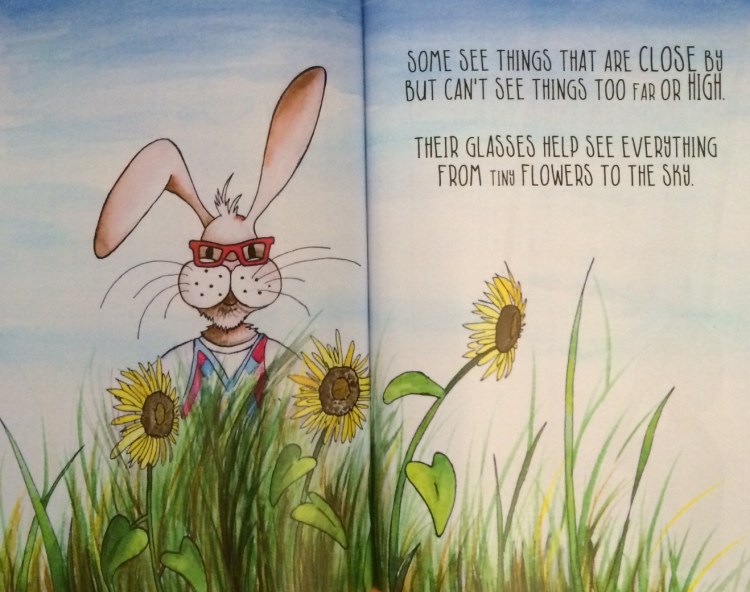
“Grady Gets Glasses” is a new picture book written by Dede Rittman. Rittman was a 10th grade English teacher for many years, she also wore glasses as a young child. This is her first book.
Grady is rabbit who is sporting some pretty sweet red glasses. The book is narrated by Grady, who talks about vision, eyes, and glasses, all in a fun rhyme. The pages are illustrated with lovely, bright drawings that fill the full page by Lauren Givens Wood.
At 32 pages, the book covers quite a bit of ground. Grady explains what glasses are, how to take care of them, and even gives a brief explanation of nearsightedness and farsightedness.
The book does a lovely job of portraying glasses as a positive thing:
Your glasses help you see your house
and lots of fun things too –
Gray elephants, a small white mouse,
striped tigers at the zoo.
The book doesn’t tell the story of how Grady learned he would need glasses, however, I’m told that a second book is in the works that will cover that part of the story.
“Grady Gets Glasses” provides a great introduction to glasses for kid. It would be a good choice to read in school as well. It is available for purchase from GradyGetsGlasses.com.
Correction: The original review incorrectly said that the illustrations were by Dede Rittman. The illustrations were done by Lauren Givens Wood. The review has been updated to reflect this.
Disclaimer: Author Dede Rittman provided a copy of her book for this review. No other compensation was received. This review reflects my honest opinion of the book.
Edit: The giveaway is now closed. Thanks to everyone who entered! Congratulations to the winners: Sabrina, Anne W, Anne C, Becky, Meghan, BellyBailout, Elizabeth, Arely, Beth, and cheesecakeguru!
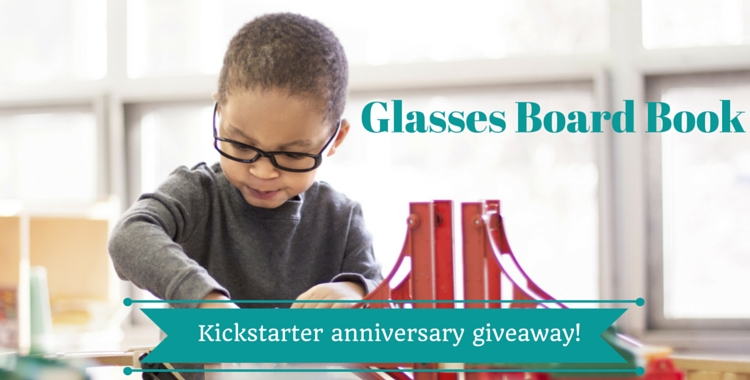
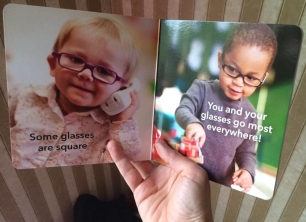
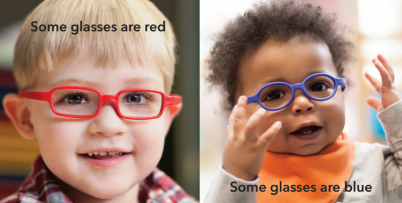
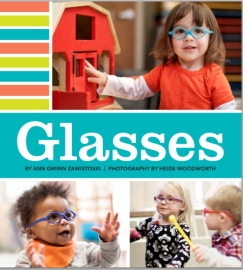
Most readers know that I ran a Kickstarter to help fund the creation of my book, Glasses. Two years ago today, that Kickstarter funded, and the book was released the next summer. The book would never have come about without the help of so many people. So in honor of the 2 year anniversary of that Kickstarter, and to say thank you to everyone for helping it become a reality, I’m giving away 10 copies of the book!
that’s my hand…holding my book!
For your family, or to share with others
If you already have a copy of the book, or if your child has outgrown picture board books, you can still enter! If your name is picked I will happily send the book to a library or school or daycare center of your choice.
Rules
The drawing for the book will be this Thursday, Nov. 26. To enter, simply leave a comment with you (or your child’s) favorite thing to see – make sure to list your email address when you comment so that I can contact you if your name is drawn.
This giveaway is open to anyone in the world. It will close on Thursday, Nov. 26, and will be updated with winners on Friday, Nov. 27.
That phrase pops up pretty often in the facebook group: it’s a common complaint heard by parent from kids using it as a reason to not wear their glasses. There was a recent blog post by a mother who was asking Disney to add a princess in glasses (here, and reprised here), and there’s even a petition and a Facebook page created towards that cause. I understand where that complaint comes from: kids love to put themselves in stories and see themselves as the hero of a tale.
I want to offer this post as a rebuttal against that claim that princesses don’t wear glasses.
The links and products below are things I’ve found, or things brought to my attention by the many members of the facebook group. No company asked me to post them here, though I get a small commission from books purchased through Amazon links. A huge thank you and shout out to the facebook group for the fantastic photos, too!
Books
We’re going to start out with the books about princesses in glasses:
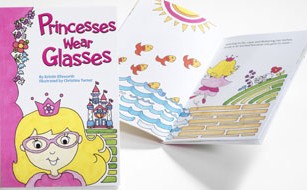
“Princesses Wear Glasses” (review ) is by Kristin Ellsworth and written because her daughter didn’t want to wear her glasses because “princesses don’t wear glasses.” You can even get the book customized with your child’s name and coloring. Princess Annie is brave and adventurous and goes off to find a dragon.
“Princess Peepers” and “Princess Peepers Picks a Pet” by Pam Calvert and Tuesday Mourning (review). There’s two books in this series. Princess Peepers wants to fit in with the other princesses and doesn’t want to wear her glasses in the first book but pretty quickly realizes why she needs them. The second book is my favorite, where she goes looking for the perfect pet, but when she loses her glasses, the pet she finds is a bit of a surprise.
“The Princess Who Wore Glasses” (review) by Lauren Hertzfeld Katz is about Princess Liana. She’s a princess who loves nature and exploring. But when her parents realize that she can’t see the birds in the trees, they call in their court wizard. He conjures up magic glasses to give her better vision.
“Princess Palooza” is not really about a princess who wears glasses. It’s a fun picture book about lots of girls dressing up as many different kinds of princesses and going off to play at the playground. One of the girls is wearing glasses.
I have not seen the TV show “Sofia the First”, but apparently, there is a princess who is a student at Royal Prep Princess Zooey who wears glasses. She is described as “kind, honest, funny, and nice.” She appears in the episodes “Scrambled Pets” and “Princess Adventure Club.” Here’s hoping she shows up in more episodes in the future, too!
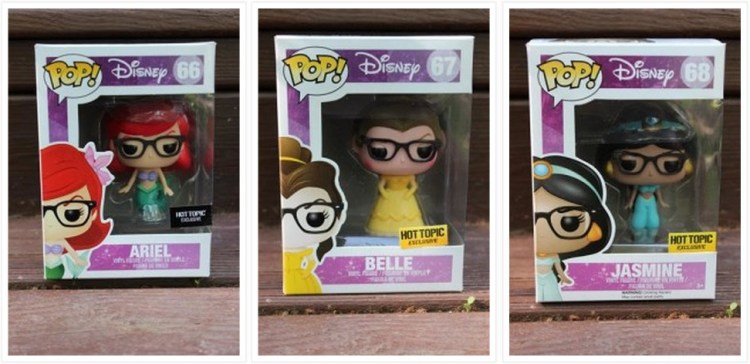
Hipster princesses
Funco and Hot Topic recently teamed up to make a series of super cute figurines that feature Ariel, Jasmine, and Belle wearing glasses. And there’s talk that Cinderella might join them as well. This article talks more about them and the memes that led to their creations, but no matter what’s behind them, I think they’re adorable! The princess figurines can be found at Hot Topic or online (sometimes they’re listed as “hipster”, sometimes as “nerd”).
Eye Power Kids Wear has a great t-shirt of a princess in glasses calling out, “to the rescue!” She’s based on the character in Ellsworth’s book “Princesses Wear Glasses.”
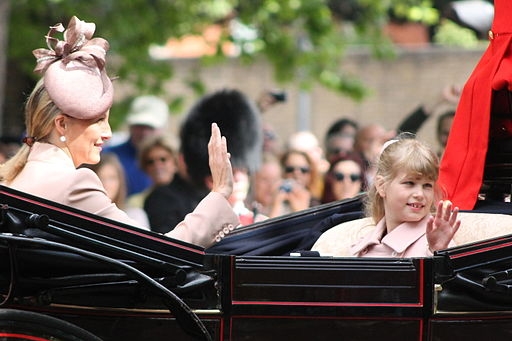
I went looking for pictures of modern princesses who wear glasses, and didn’t find very many, but then I ran across this article about Lady Louise, the 11 year old granddaughter of the Queen of England. Lady Louis had strabismus in her early childhood, and while her vision is now good and she doesn’t wear glasses, that experience led her mother, the Countess of Essex, to become a patron of the International Agency for the Prevention of Blindness and a global ambassador for Vision 2020, an initiative aiming to eliminate avoidable blindness over the next five years.
Princess – hero
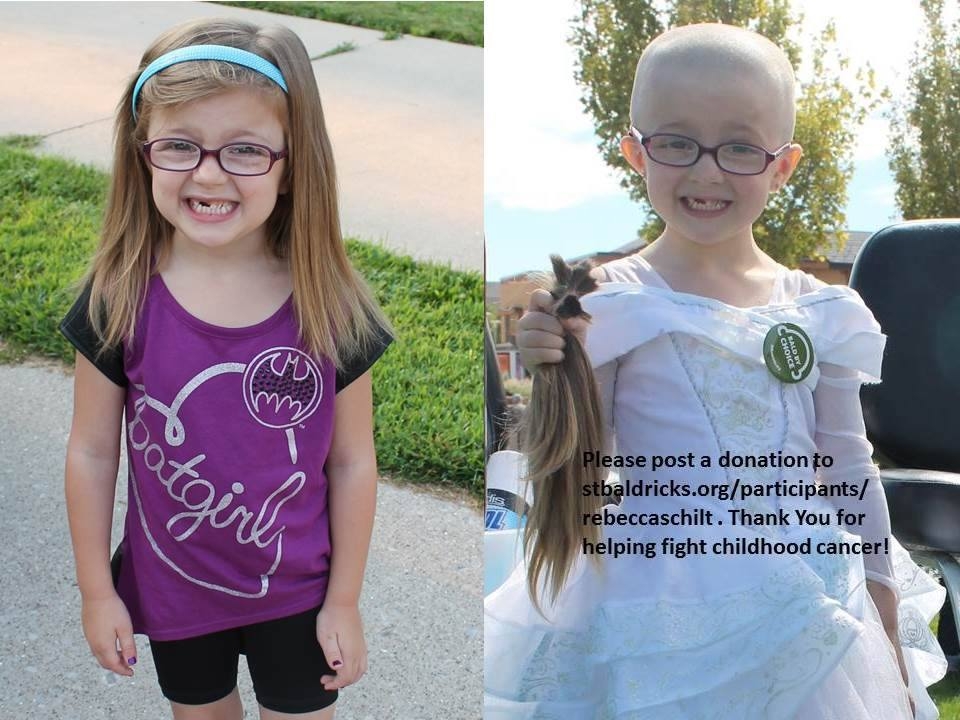
Speaking of royalty helping others, I had to share this photo of Rebecca, who recently cut her hair to raise money for childhood cancer research (as of this blog post, she was still accepting donations)! A real-life superhero princess!
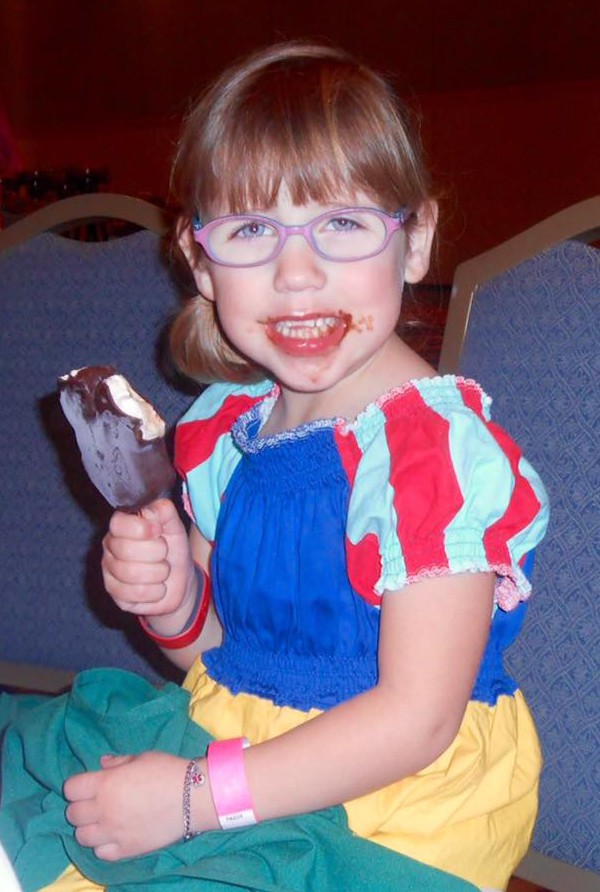
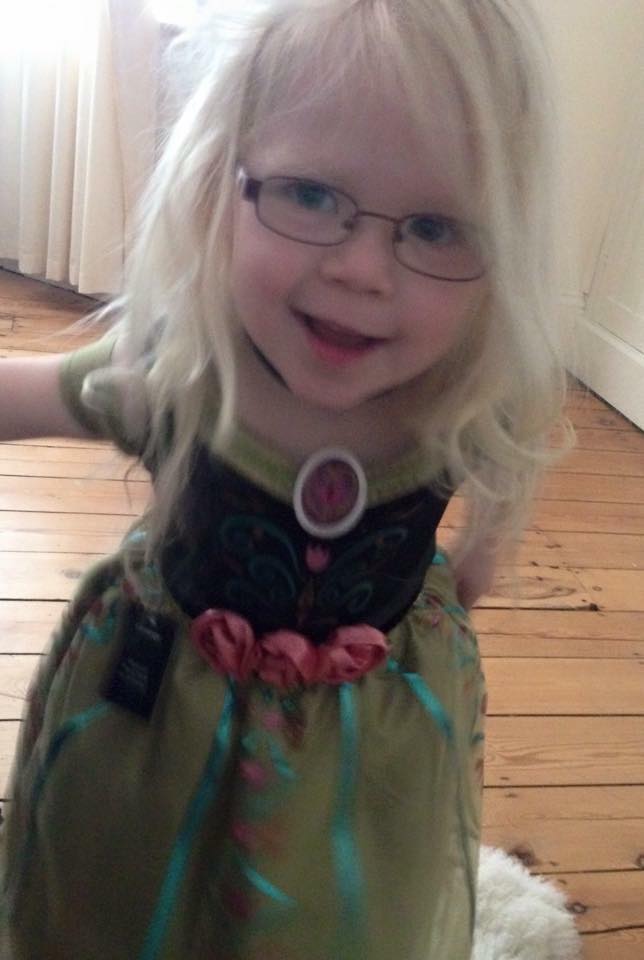
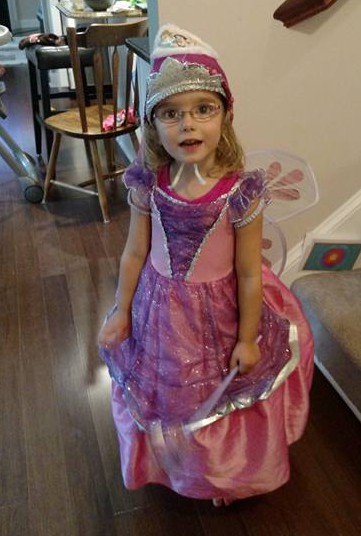
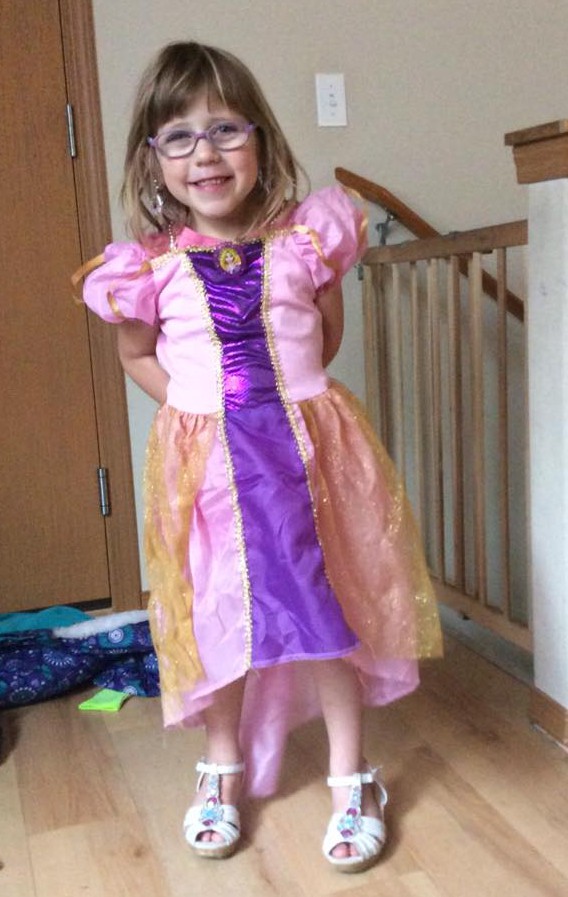
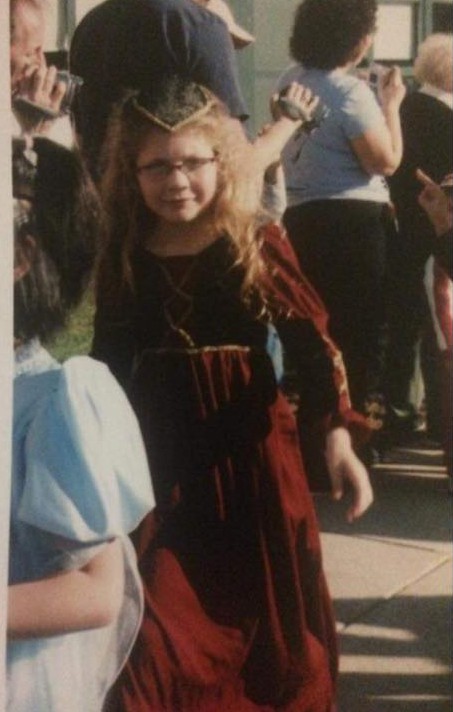
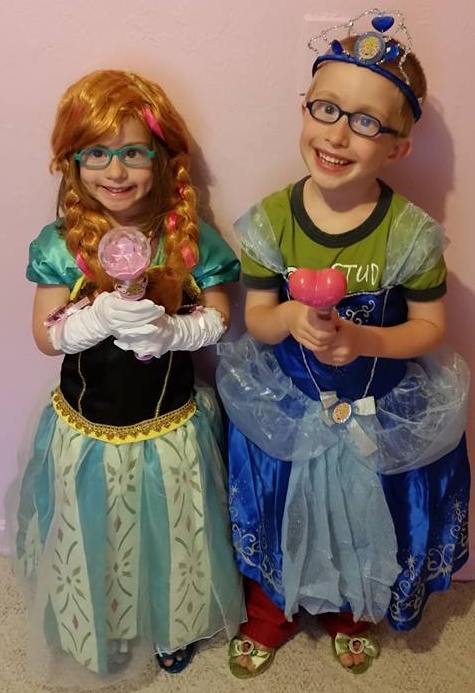
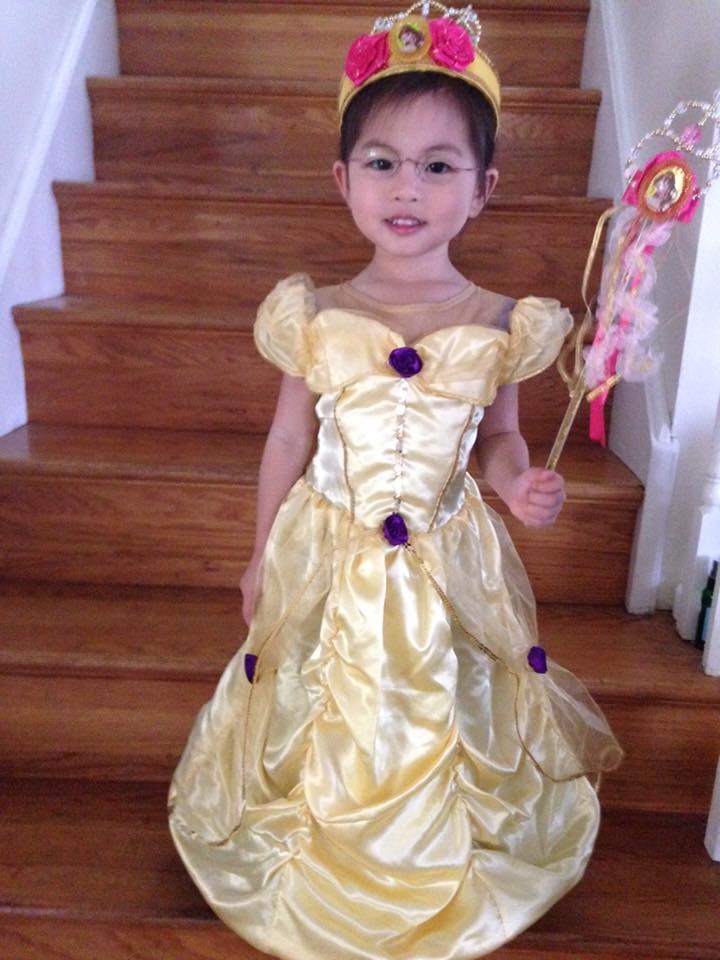
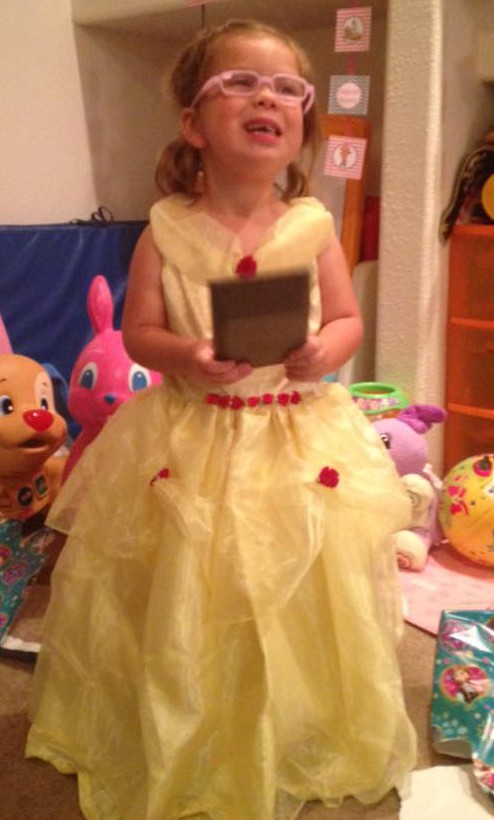
Princesses in glasses photo gallery
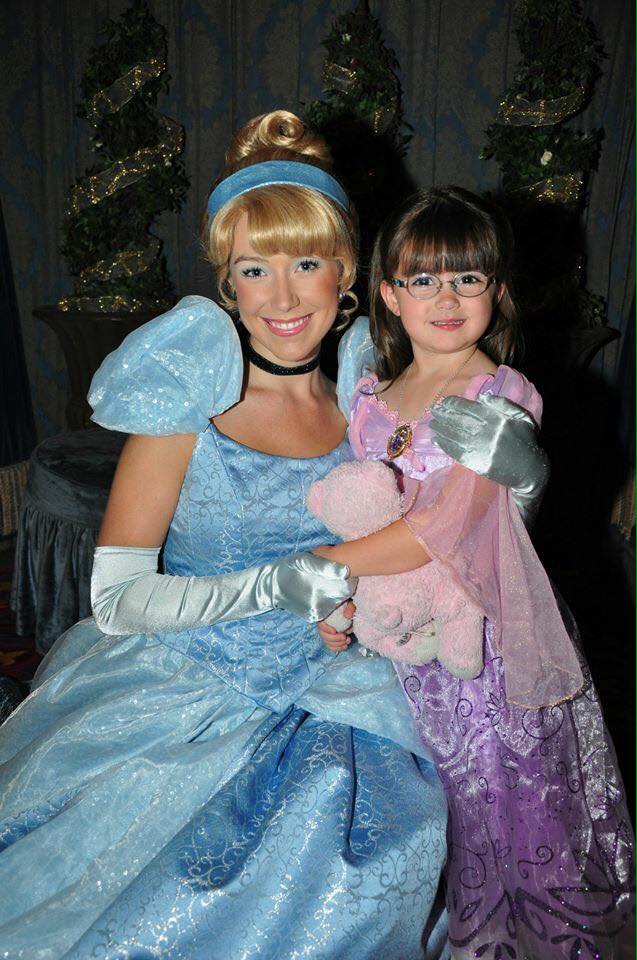
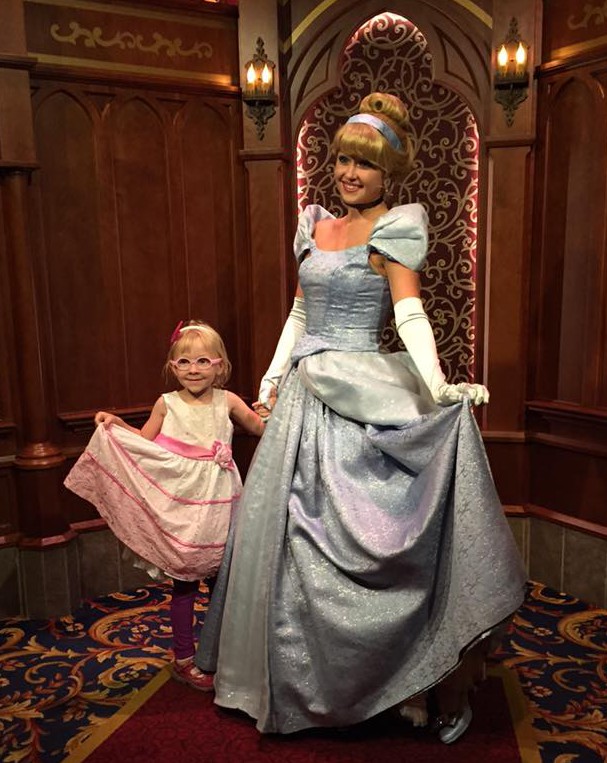
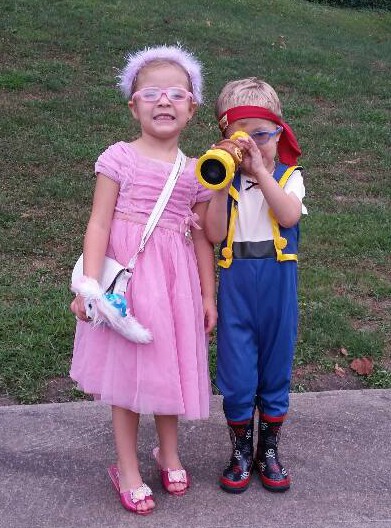
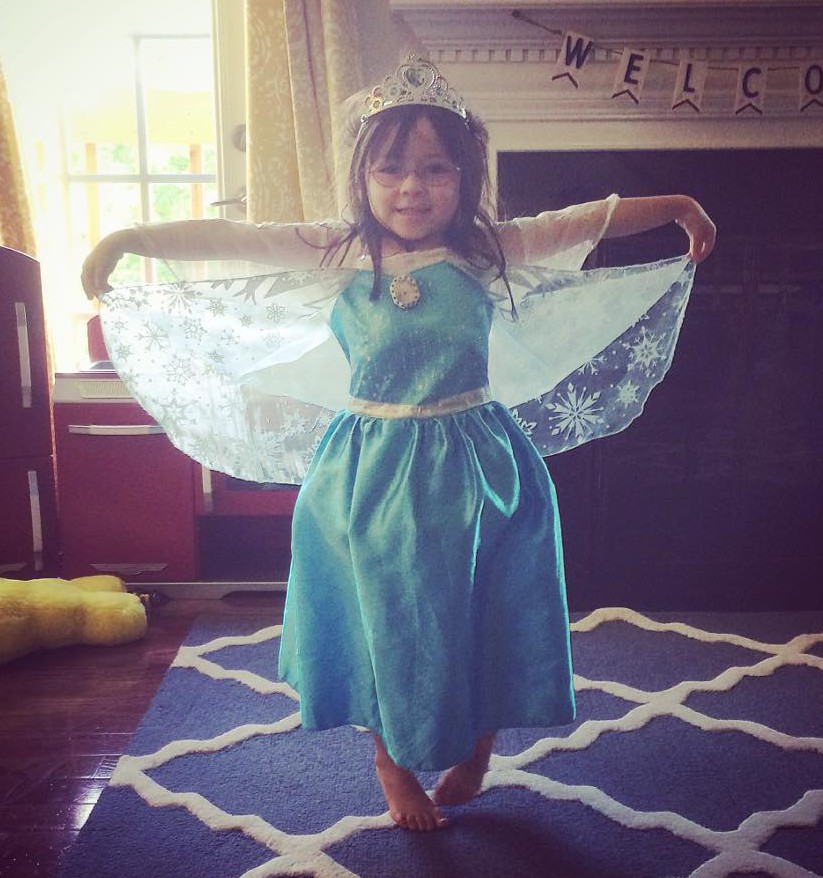
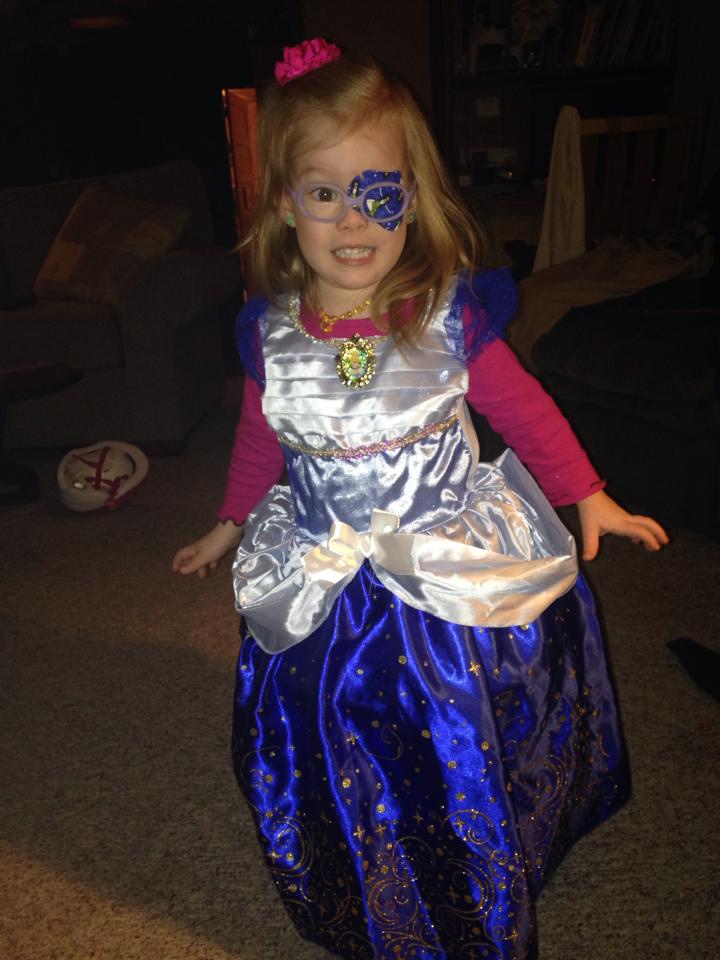
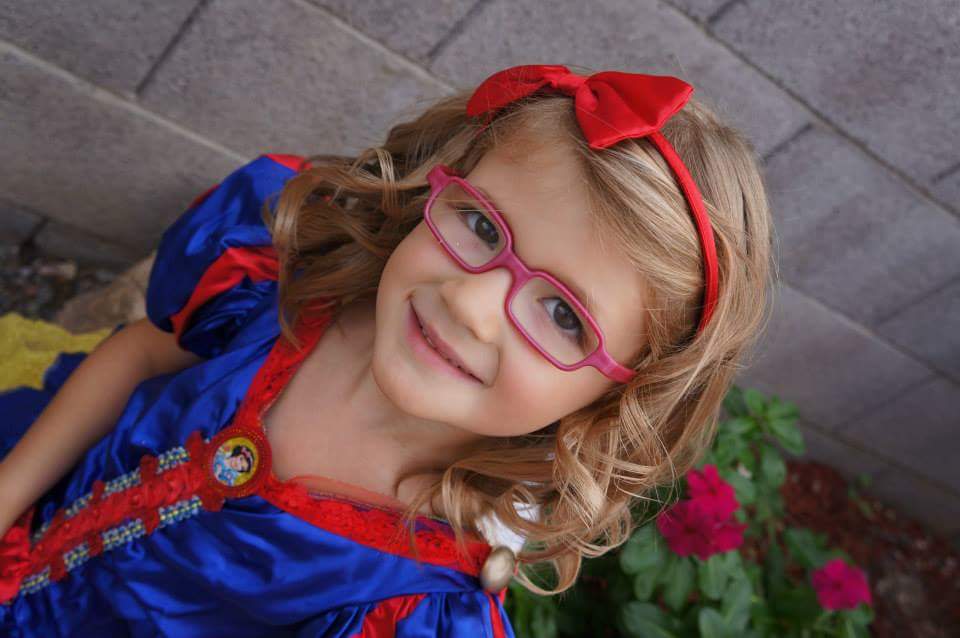
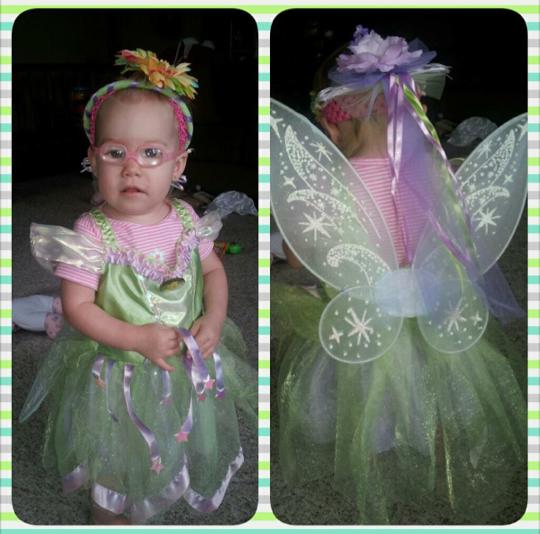
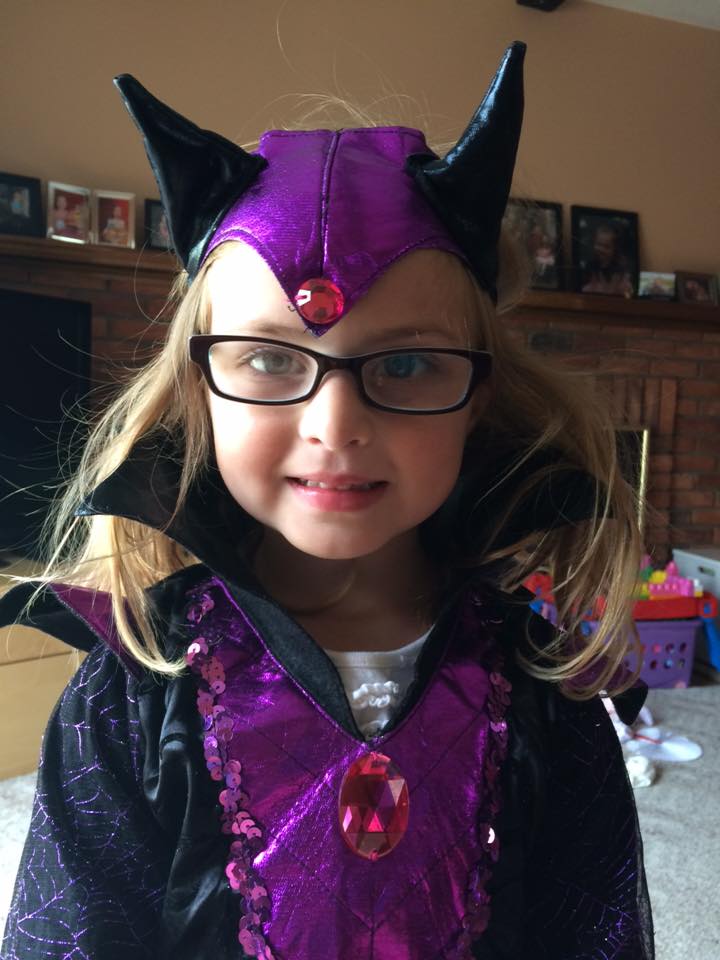
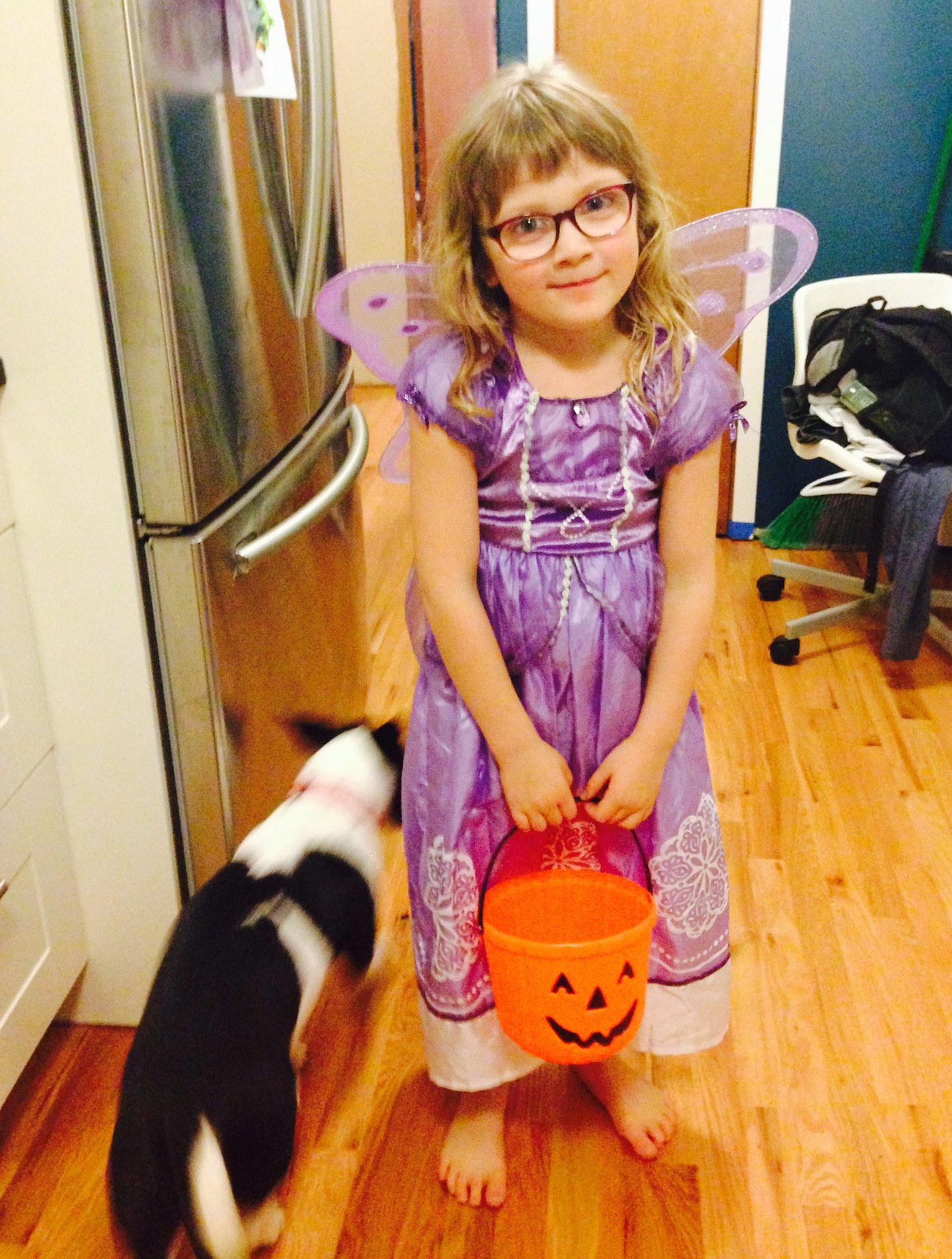
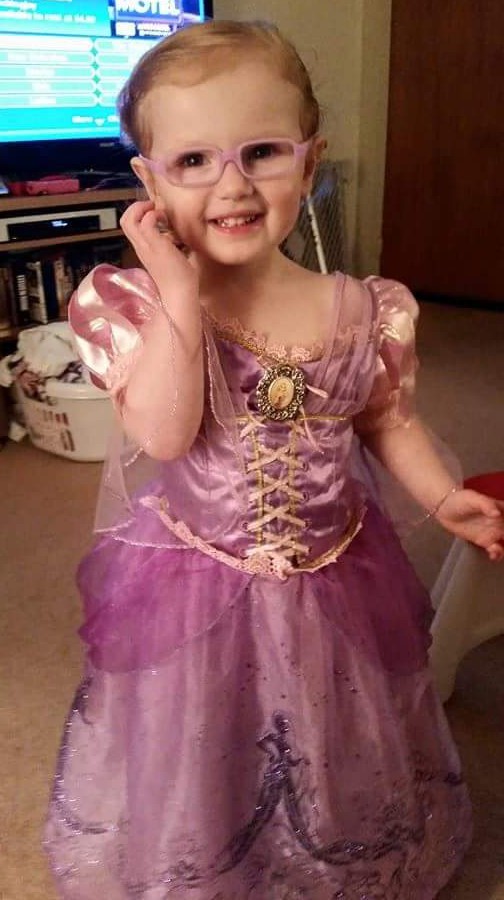
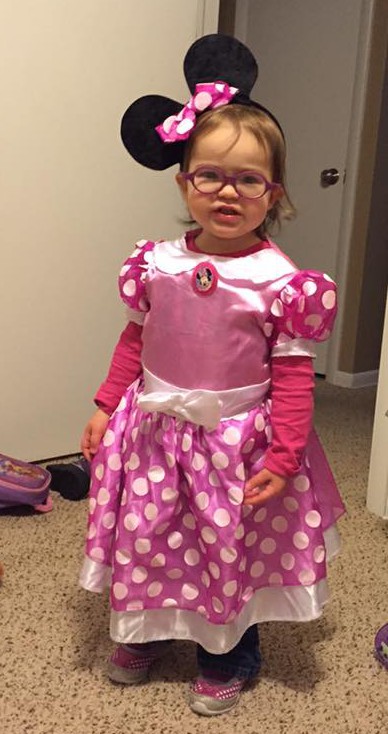
If what you’re looking for is more pictures of princesses in glasses, well I’ve got those, too! (If you have a photo of a princess in glasses that you’d like to add to this gallery, please send it to ann@shinypebble.com). Click on a photo to see a larger version.
Today is World Sight Day, an annual day for raising awareness of from the International Agency for the Prevention of Blindness.
The theme for this year’s World Sight Day is Eye Care for All. Regular readers of this site know that eye care is so, so important for diagnosing and treating vision issues, and that getting children the best vision possible is essential. 80% of visual impairment world wide could be prevented or cured with eye care. An estimated 19 million children are visually impaired. Of these, 12 million children are visually impaired due to refractive errors, a condition that could be easily diagnosed and corrected (from the World Health Organization)











 The links and products below are things I’ve found, or things brought to my attention by the many members of the facebook group. No company asked me to post them here, though I get a small commission from books purchased through Amazon links. A huge thank you and shout out to the facebook group for the fantastic photos, too!


 ” by Pam Calvert and Tuesday Mourning (








 For Little Eyes