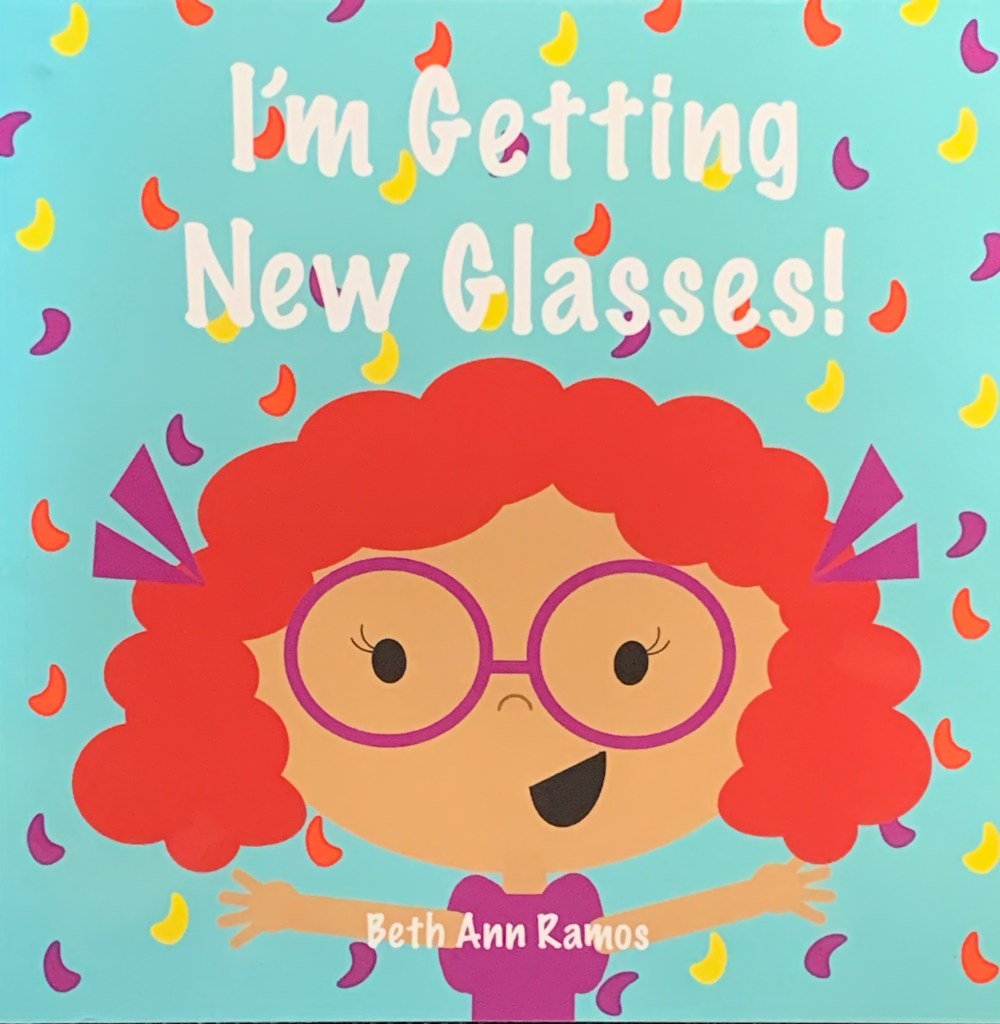
“I’m Getting New Glasses!” is a new picture book written and illustrated by Beth Ann Ramos. Ramos is an author, illustrator, and health advocate. This is her first book.
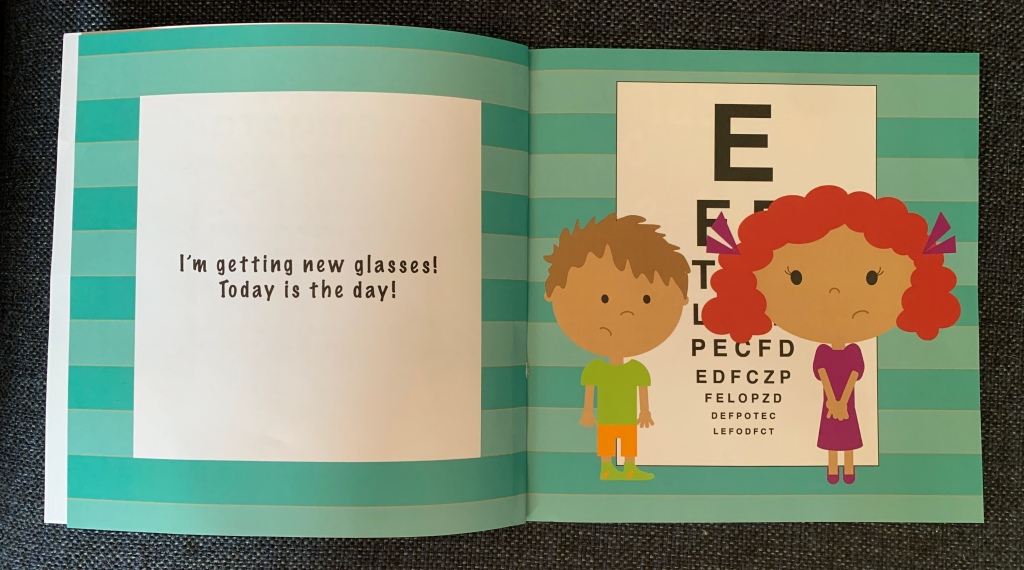
The book tells the story of Olive and her brother Andy as they go to pick out Olive’s glasses. Olive is nervous at first, but the siblings quickly find that trying on glasses can be a lot of fun. The story is told in a rhyme with cheerful illustrations of kids wearing glasses against colorful backgrounds. I love that the book acknowledges that getting glasses can be a little scary, but it doesn’t dwell on that part and instead focuses on the positive aspects of glasses and how they can be a great way to express yourself.
This would be a perfect book to read before going to pick out glasses. It could start conversations about what your child might want to look for in glasses. It would also be a great book to have at an optical shop with a great selection of children’s frames.
If your child loves coloring, Ramos’ website includes a page for “Fun Stuff” which has a coloring sheet featuring Olive and her glasses. The coloring sheet is from forthcoming book “When I take care of me,” so it sounds like there will be more adventures of Olive and Andy to come.
Disclaimer: Author/Illustrator Beth Ann Ramos provided a copy of her book for this review. No other compensation was received. This review reflects my honest opinion of the book. This page contains affiliate links to purchase the book. I receive a small commission when you purchase items following those links. That money goes towards the maintenance of this site.
I’ve put together a glossary of terms that have to do with children and vision issues. They include parts of the eye, vision issues and conditions, parts of glasses, other treatments, and parts of the glasses prescription. I’ve tried to keep the definitions relatively understandable for people without medical degrees. I’ve also linked to other posts about the topic and to other websites with more information. Please let me know if there are other terms I should add.
You can get to the glossary under the “Frequently Asked Questions” menu or by clicking on the image below.
In case you missed my first post, I’m Kyla from Homemade Hometown— mom to Arthur, who was born with unilateral PHPV/PFV microphthalmia.
After discovering Arthur’s condition and existing cataract, the next step was to schedule his lensectomy to remove his cataract. We discussed the surgery process and possible unknowns before going in, which involved a lengthy appointment and dilated examination.
I’ve never had a dilated exam to compare, but doing one with a small month-old infant was probably easier than examining a toddler. The ophthalmologist had an exam table and swaddles to keep him contained. It still wasn’t easy and I ended up having to leave the room while tearing up and my husband stayed with Arthur. I took it pretty hard with the loud baby cries—he wasn’t in pain—but the combination of postpartum hormones and hearing my little newborn cry just did me in. In fact, 6 months later, I still leave the room at each examination. Don’t be embarrassed if you need to, too.
We never had previous experience with surgery scheduling, and the whole process struck us by surprise. I ended up calling the office to check on any movement on a weekly basis. The month of waiting for surgery took me back to my time during late-pregnancy—pacing around and nesting, making sure every little detail was as prepared as possible. Once we finally had a date confirmed (it took long to coordinate between our ophthalmologist and retina specialist) we found out that it’s standard with surgery scheduling to not know the operating time until the day before surgery. The youngest babies usually are operated on first in the morning. We didn’t get in until mid-day.
After the examination we discussed the surgery details and met the retina specialist that our ophthalmologist wanted to keep on call through the duration of the surgery. With such a large and dense cataract, the doctor couldn’t get any look at the retina. Since she didn’t know exactly what she was dealing with until she could get inside the eye, she made sure to explain the chance of pulling in the retina specialist to tend to any abnormalities such as a detached retina. We also discussed the common conditions of PHPV/PFV in that the stalk in the eye may still be fully formed and need to be removed.
There was a lot of unknown, but the one thing we did know was that surgery was imperative between 6 and 8 weeks of age in order to create the brain connection to the eye to establish vision. We trusted our ophthalmologist, did extensive research, and planned for tentative surgery.
Surgery preparation involved bathing the night before and hours of fasting—which is tough for a little baby trying to pack on the pounds and earn his Michelin Man rolls. The scheduler asked us to arrive two hours earlier than the scheduled operation time and we were dreading the idea of waking and fussing with a fasting newborn. It was only a small fraction of what we weren’t looking forward to, though.
Despite all of the preparations, conversations, and appointments, nothing makes you feel ready to send your child off to surgery. There was a long debate over if it was worth doing anything at all—we didn’t want to put him under anesthesia and cause him any pain. After a few long-winded, late-night conversations, we made the individual choice that we felt we needed to give Arthur every chance we could to establish his vision. We were going to fight for his sight.
In the For Little Eyes facebook group, the question of whether glasses fit a child well comes up often, and Melony has become known as one of our experts, based in large part on her own experiences finding glasses that fit on a variety of ages of kids. Melony was gracious enough to write up a fantastic guide on finding glasses that fit your child well. – Ann Z
Download our new printable guide to finding glasses that fit your child, based on the information in this post, so you can print it and take it with you when you shop for glasses!
Finding glasses that fit your child
You may have just got some startling information about your child’s vision or you may have had one or more children in glasses for some time, but have never had a clear understanding about how to choose frames so have had to rely on the knowledge of optical staff. Either way, a good understanding of how glasses should fit is something every parent of a child in glasses should have. Sadly, it can be hard to find an optical shop with staff trained especially in regards to fitting children.
I was blessed to have an amazing first optician and much of what I know about glasses he taught me. I was so sad when he left our ophthalmologist’s office for the mission field. The rest of the information comes from lots of in the trenches experience because I am blessed with not only one or even two children in glasses, but FIVE. This means countless frame try-ons and lots of frame purchases. I hope to give you some good basic tips for Do’s and Don’t when shopping for frames.
Note: if you ordered frames today after a long stressful vision appointment and are not feeling comfortable with your purchase please call and place a hold on the order until you can do a bit of research and make an educated decision. I know you are incredibly anxious to get your sweet child the glasses they need but please don’t rush. Children are amazingly adaptable and yours has been managing all of this time. A few more weeks to make sure you get frames that will be perfect are worth the wait.
I use three criteria when shopping for frames FIT, FUNCTION, and FASHION in that order.
FIT
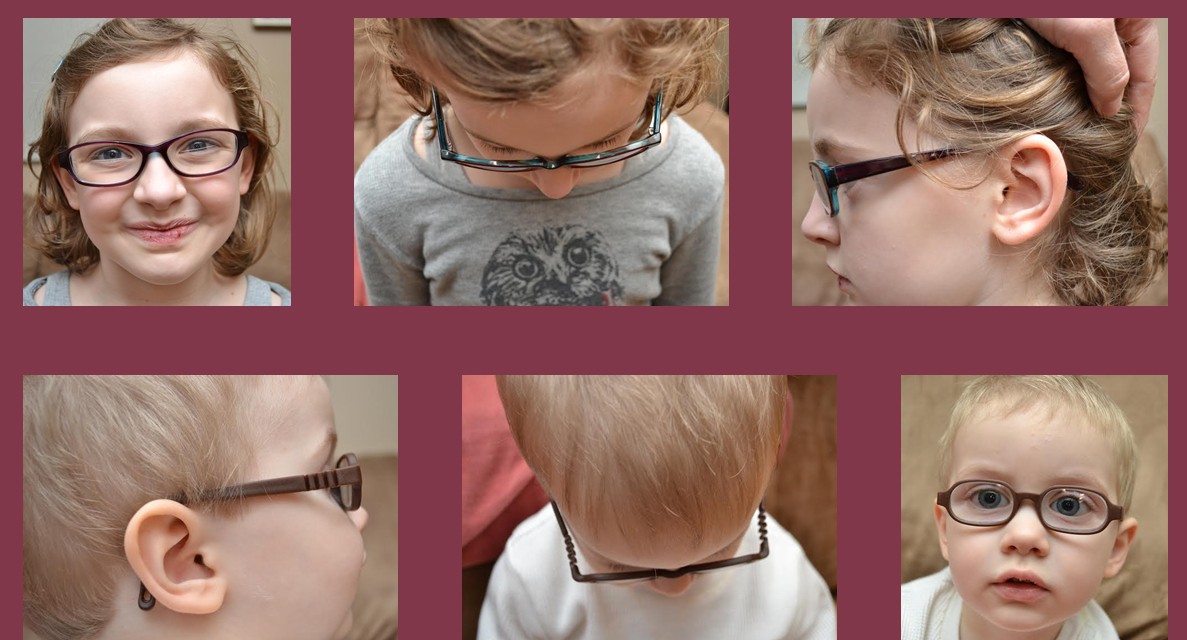
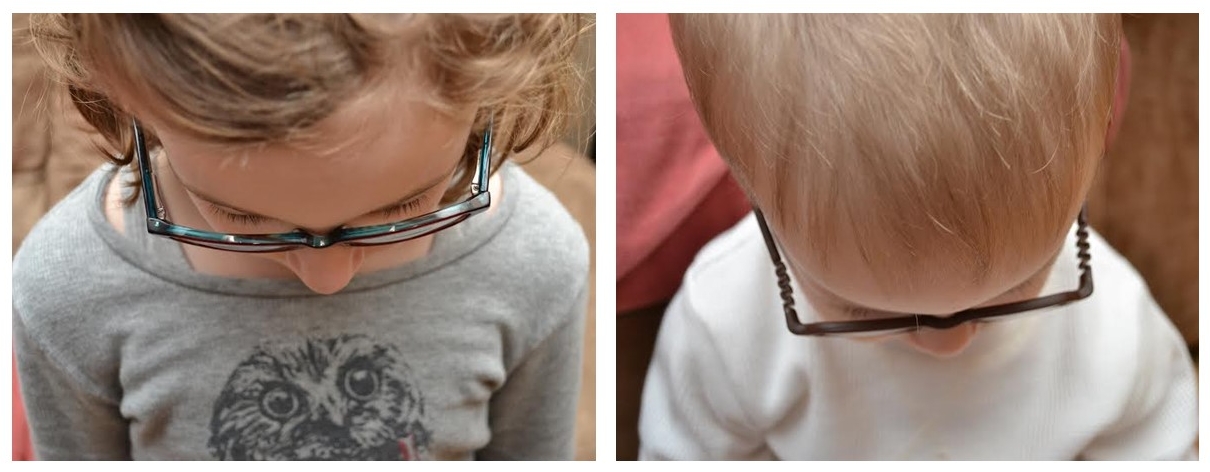
Fit is crucial. Glasses that fit well stay put, encouraging your child to look through the appropriate part of the lens. They are more comfortable, which encourages compliance, and frankly they look more attractive. Glasses need to fit your child today so we never want to size up for growth. Bigger is definitely not better when it comes to frames. They slip and slide out of place drawing attention from your child and begging to be ripped off and chucked on the floor. Bigger frames mean bigger lenses. Big lenses are heavy and cause the frames to slide down their nose. Frames that fit don’t move even while laying down or rough play.
When trying on samples, this is how I help our children choose great frames and it has served us well: First, find the measurement of a frame that fits well. Frames have three measurements, usually marked inside of the frame and typically appear in the format: XX-XX-XXX. These number are in millimeters and represent the lens width, bridge width, and temple(arm) length.
The size of a frame is often listed on the inside of the temple as XX-XX-XXX. That represents the lens width, the bridge width, and the temple length, in millimeters.
The lens width is the first measurement and describes the width of one lens in millimeters. The first step we use when trying to find if frames fit is to check lens widths. When you place a frame on your child, bend down to look directly into their face to get the best idea of fit. You are trying to center their eye both horizontally and vertically.
Your child’s eyes should be centered vertically and horizontally in the lenses
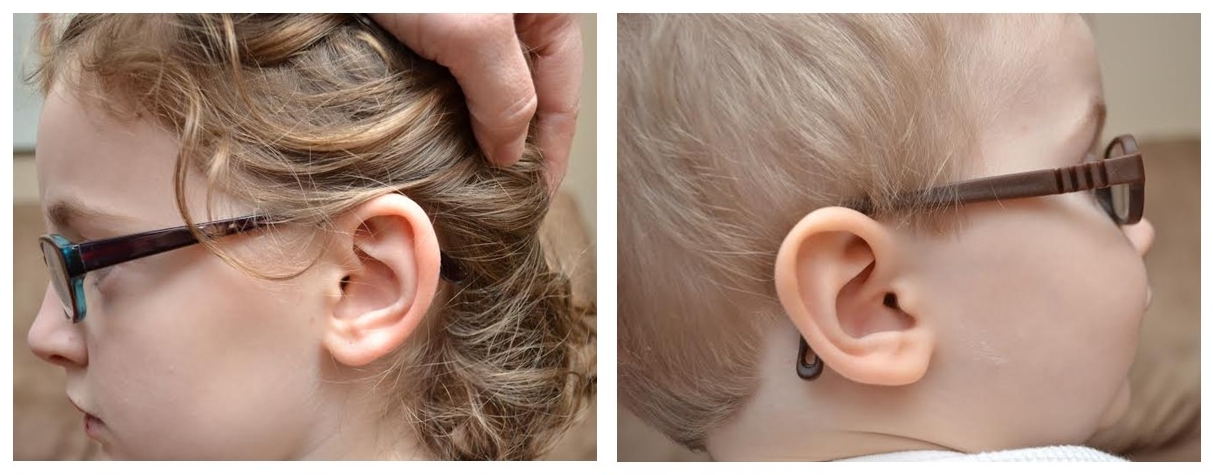
Looking at your child’s frame width the sides of the glasses should not be touching their face until they reach the ear or have a large gap between the frame and the side of the face. There should be no taper in or out on their path to the ear. From the hinge to the earpiece the temples should travel a straight parallel path along the side of their head. If the temples are angling into the ear go down in lens width, bowing out go up. Off the shelf frames are scaled so they are designed that if the lens width fits the other measurements should be appropriate too. This is not always the case but it gives you a starting point.
For reference, infants and small children may only grow one or two millimeters in lens width over a year and it can be less for older children. Once you find a frame that fits in lens width take a note of that measurement and find other frames that are the same size with a 1mm difference in either direction. It is important to understand that lens width translates differently in different frame mediums particularly for flexible frames like Miraflexand chunkier plastic frames.
The bridge is the portion of the frame that spans between the lenses over the nose. Frames are designed to be proportioned but faces vary and so the shape of the lens impacts the bridge width. More rectangular frames tend to have a narrower bridge to accommodate for the width of the lens. This means that children with wider nose bridges and infants may not be able to get a good fit with a rectangle. Nose pads should fit snugly but comfortably against the nose with no pinching or gaps. Frames with nose pads offer some adjustability, but solid plastic or flexible frames do not so they should fit the nose perfectly.
Last you want to look at the temples. The length of the temple is also important. If the temples extend too far past the ear it is a good indicator that the frames are too large. Your child should be able to sit and lie back without the earpiece bumping the surface and shifting the frames. Bent ear pieces should not extend past the bottom of the ear.
FUNCTION
That brings us to function. There are a variety of frame types but the three basic types are wire, flexible, and plastic. Fit is a huge factor in function because glasses that fit well function well. But there are other considerations. If you have a tiny squishy baby (been there) or an active young child that needs glasses, you will likely want something flexible and as close to indestructible as you can get, like Miraflex or Solo Bambini. An older child active in sports may need a second pair of glasses that are sports goggles like RecSpecs. A child who requires an exact bifocal line may do much better wearing a wire frame with nose pads because it gives you the best adjustability.
FASHION
Last on my list is fashion. Glasses that fit and function well for your child are the most important thing. That doesn’t mean they won’t be adorable. They will! And glasses that fit well will look much better on your child than a pair that does not fit. There are not nearly as many frame choices for children as there are for adults. Depending on your child’s size, your geographical location, and your budget the selection may be even more restricted. This can make finding great frames a challenge but not impossible. In fact there is an increasing number of online retailers that offer tryon kits for home. Having concerns about your child’s appearance is expected. Wearing glasses will change their appearance, in my humble opinion they will be even more adorable. Be sure not to get caught up in the fashion of the frames if it is to the detriment of fit and function. You will have many more opportunities to shop for frames and as your child gets older the selection will expand.
As a fellow parent of children in glasses and consumer I implore you to insist on good service from your optical shop. You are paying for a product and service. They have a professional responsibility to provide your child with functional frames that fit. If you have been misguided and encouraged to buy ill-fitted frames please insist on accountability from the shop and a replacement at their cost. Shopping for frames is challenging whether it is your first or 50th time but it does get easier.
Below you will find a collection of photos generously provided by members of the Little Four Eye Facebook group. These are all actual frames that were dispensed by various optical shops with comments as to how well they fit.
This slideshow requires JavaScript.
Melony Dever lives in Maryland with her husband and their five bespectacled children.
There’s a cliche of “looking through your eyes” as a way of trying to see the world as someone else might. It’s usually not meant literally, of course, but it reflects our desire to understand how others see things. That’s certainly true when you learn that your child has a vision problem. It’s very common to wonder how your child had been seeing.
Very young children don’t have the words to tell us what they want for dinner, let alone how they see. Even older, more verbal kids have difficulty explaining how things look. It wasn’t until Zoe was 4 that she started telling me that things were fuzzy without her glasses. But the first time I really understood how she saw was after a trip to the science museum where she visited a human development exhibit. They had glasses you could put on that approximated how babies’ vision develops in their first few months. “Mom, babies see really blurry they’re first month. Then at 2 months, they see the way I see without my glasses. By a year, they see how I see with glasses.” Finally, I could put on glasses and see the world the way Zoe does without her glasses.
If you can’t make it to a human development exhibit, there are quite a few online vision simulators that claim to let you see how another person sees, most are based on a person’s glasses prescription. Of course, there are a lot of problems with even the best of these. In fact:
A glasses prescription will not tell you exactly how a person sees
Similar to how a drug prescription will not tell you everything about how a person functions without those drugs, a glasses prescription can’t tell you everything about how a person sees without their glasses. A glasses prescription willtell you what shape the lenses on a pair of glasses or contacts should be in order to have the best possible corrected vision. This is based on how much the shape of the eye differs from what it should be to see clearly (something called the refractive error). Some (not all) of the reasons why someone may see differently than their glasses prescription implies include:
Hyperopic children can often compensate for much of their hyperopia, allowing them to see relatively clearly. This does cause eye strain and can pull the eyes out of alignment, which is why glasses are still important.
Amblyopia is when a person does not see clearly even when glasses or contacts are correcting for the full refractive error. Generally this is due to the brain suppressing the vision from one or both eyes. It can be caused by the eyes not lining up, an eye having an injury, or one eye having a much stronger refractive error than the other.
There may be other problems in the visual system (either in the eye structures, the optic nerve, or the brain) that is causing vision problems.
One very simplified way of looking at it is imagining the visual system as a camera. The lens of the camera may not be in focus, that’s the part that glasses can fix that. But there are a lot of other components of the camera that may not be functioning correctly, and any one of them can lead to unclear vision.
Visual Acuity
The measurement that best describes how clearly a person sees is their visual acuity. It is usually expressed as two numbers, like 20/20 or 6/6. The first number tells you the distance at which the measurement was taken (20 or 10 is in feet, 6 or 3 is in meters). The second number tells you how far away a person with good vision could be to see what you see clearly.
For example, the visual acuity of my left eye without glasses is around 20/200. That means that what I see clearly at 20 feet away, a person with good vision would see clearly at 200 feet away. (I do not see terribly well in that eye). There’s a conversion chart here that converts between metric and US measurements as well as giving reading performance for those acuities.
If you’d like to see what a specific visual acuity looks like, there are a couple of options:
Wolfram Alphawill show you a simulation of any acuity you type in. Simply type in the visual acuity with the word “vision”: in this case “20/200 vision” (if you don’t include the word “vision” it’ll just calculate the fraction for you).
Wolfram Alpha’s simulation of 20/200 visual acuity. I typed “20/200 vision” in the search box to get this.
Fork in the Road Low Vision Simulators are vision simulators that you can purchase and wear to see the effects of different eye diseases. Their cataract simulators demonstrate reduced visual acuity. On their website, you can see examples of the blur simulation for 20/80 (6/24), 20/200 (6/60), 20/400 (6/120), and 20/800 (6/240). Scroll through the page to see the different acuities.
Vision Simulators based on Prescription
As I mentioned, vision simulators based on a glasses prescription are flawed at best. Even the very good ones will only show you an approximation of how someone with no other vision issues would see with that prescription. That said, the simulators can give you a feel for how strong a prescription is, and how different refractive errors effect vision.
Eyeland Web Tools – there are different simulators for different refractive errors. Many children have a spherical (hyperopia or myopia) component as well as an astigmatism component. I like that these allow you to see how those different components affect vision.
Sehschärfen Simulator – this site is in German, but is still pretty straight forward to use. One of the features is that it changes the simulation based on a person’s age, so that the effects of hyperopia (farsightedness / longsightedness) are reduced for young children. This means if your child has a + prescription, you may think from this simulator that your child shouldn’t need glasses. This simulator will not show you how much eye strain a child will have due to hyperopia.
Enter your child’s age in the “Alter” box
Enter the spherical and cylinder amounts
Click “Berechnen”
The top image is the simulated vision, the bottom image is what would be considered “normal” vision.
Other visual simulations of eye diseases
Fork in the Road sells vision simulators for many eye diseases resulting in low vision. This includes cataracts (linked above), glaucoma, and more.
Inclusive Design Kit from the University of Cambridge also has a simulator for many vision problems.
Causes of Color includes a vision simulator for various types of color blindness and cataracts.
Edited on 26-Jan-10 to correct the errors that Dr. Bonilla-Warford pointed out (thanks Nate!) – Ann Z
Glasses prescriptions can be confusing – lots of numbers and abbreviations that aren’t necessarily easy to figure out, or at least, they weren’t when I first tried to understand Zoe’s prescription. And in fact, I thought I understood what all the numbers meant, but after doing more research for this post, I found it to be far more complex than I’d originally thought. (On that note, if any eye doctor types read this and catch any mistakes, please, please let me know and I’ll correct them).
Before we get too far into what a prescription is, I thought it might be worthwhile to mention what a prescription isn’t. It will not tell you:
what your child’s diagnosis is. You can tell whether glasses will correct for nearsightedness or farsightedness, but that doesn’t tell you what the cause of the vision problem is.
your child’s visual acuity, that is, how well your child sees (either with glasses or without them).
if your child has strabismus, it will not tell you how much his or her eyes are turning in or out.
how well your child’s eyes work together, and whether or not he or she has stereoscopic vision.
how advanced your child’s cataracts or glaucoma is, and how that affects their vision.
anything that is not related to how glasses or contacts should be made in order to correct your child’s refractive errors (that is, due to the shape of the eye not being able to focus light correctly).
Okay, so back to the eyeglasses prescription then, and what it can tell you. Prescriptions have a lot of different components, and I’ve seen them written a number of different ways, but they do have common elements at the core. I’ll go into more detail on each piece, but I tried to put together something of a “cheat sheet” here:
Which eye are we talking about?
Since we’re nearly always looking at prescriptions for two eyes, you’ll nearly always see two sets of numbers, one for the left eye, and one for the right. I’ve seen some prescriptions that label them “left” and “right” or “l” and “r”, which even I can figure out on my own. But more often, I’ve seen “O.D.” and “O.S.”. These are abbreviations for the Latin words for left eye and right eye. For the record:
O.D. : right eye
O.S. : left eye
O.U. (which I’ve never seen before, but found this information so figured I’d include it) : both eyes
Sphere
Sphere, often abbreviated as “sph” is the spherical refractive error, or nearsightedness or farsightedness. The first part of this number will be a plus or minus sign:
+ : farsighted, or longsighted prescription: hyperopia.
– : nearsighted, or shortsighted prescription: myopia.
0, Pl, or Plano : no error
How strong is the spherical prescription?
The number is in “diopters” but we don’t need to know too much about that (read about it on Wikipedia here), it’s a measure of how much the curvature of the eye is off from normal. Basically, the higher the number (ignoring the plus or minus), the stronger the prescription.
Myopia (-)
0.00 to -3.00 : mild myopia
-3.00 to -6.00 : moderate myopia
-6.00 and higher : high myopia
Hyperopia (+)
0.00 to +2.25 : mild hyperopia
+2.25 to +5.00 : moderate hyperopia
+5.00 and higher : high hyperopia
Cylinder
Cylinder is the measure of astigmatism. Astigmatism is when there’s an irregular shape to the cornea, often described as an oval shape (if you’re in the US, think the shape of a football, if you’re other places, think the shape of a rugby ball). It causes blurriness at any distance. There are two measurements that go along with astigmatism, the first, cylinder, is a measure of how severe the astigmatism is.
How strong is the cylinder prescription?
Like the spherical error, the cylinder number is measured in diopters. The thing you want to pay attention to is the number. The higher the number after the plus or minus, the more severe the astigmatism.
0.00 to 1.00 : mild astigmatism
1.00 to 2.00 : moderate astigmatism
2.00 to 3.00 : severe astigmatism
3.00 and higher : extreme astigmatism
Note: The cylinder may be written as a plus or a minus, but that doesn’t actually make any difference in how bad the prescription is, ophthalmologists use a “+”, optometrists use a “-“. You can use an online cylinder conversion tool or convert on your own by 1) adding the cylinder power to the sphere power; 2) Changing the sign of the cylinder:- if +, then use -, if – use plus; 3) Add 90 degrees to the axis if it’s less than 90 or subtract 90 if it’s greater than 90.
Axis
The axis tells you which way the astigmatism is oriented on your child’s eye
If you think of astigmatism as an oval shape, it makes sense that the oval might be turned any direction. The axis number then, tells you the orientation of the astigmatism. The number is in degrees, it doesn’t have anything to do with how severe the astigmatism is, just how it is situated on your child’s eye.
Add
If your child needs bifocals, you will likely see a number here. This tells you how the prescription should be changed for close up. Let’s say your child has a regular glasses prescription of +3.00, if the add number is +1.00, then the near distance prescription will be +3.00 + 1.00, which equals +4.00 (3+1=4). In the same vein, if your child is nearsighted, say -4.00, but has an add of +2.00, then the near distance part of the bifocals will have a prescription of -4.00 + 2.00, which equals -2.00.
Sometimes, you don’t have an “Add” part of the prescription, and instead you’ll just see a prescriptions for distance vision and a separate prescription for near vision.
But what does that mean for how my child sees?
If you’re wondering what your child’s prescription means in terms of how they can see, there are a couple of places online where you can plug them in to see how blurry things appear. Keep in mind that an eyeglasses prescription is not the final word in how well a child sees. For instance, it will not tell you how your child’s weak eye is seeing if your child has amblyopia, or how your child might be seeing if he or she has cataracts or glaucoma.
Our guide pulls together the most important advice and information for parents with young kids in glasses in an easy to read 2 pg guide.
Updated November 23, 2015
This post is for anyone who just found out their young child (baby, toddler, or preschooler) will need glasses and did what I did – hit the Internet hard and did some serious googling. Learning that your child will need glasses, and possibly have other vision issues is a really difficult thing. It can be quite lonely, as most of us had never known any other kids as young as ours who needed glasses. Luckily for us, the Internet has made distance irrelevant, and we’ve been able to connect with other parents going through the same issues. I’m hoping this guide can provide a bit of comfort and help at least with the glasses aspect.
Feeling upset, worried, and guilty
I’ve heard from so many parents that they were overwhelmed and upset at the news. I know I was, and it didn’t help that I was angry at myself for being upset, too – I wear glasses, and have for most of my life, so it didn’t seem right that it would upset me to learn Zoe would need them. Plus I was filled with worry: worry about buying new glasses, worry that Zoe would have life-long vision problems, worry that I wouldn’t be able to keep them on her, worry that she would forever be known as the “girl in glasses.” Don’t try to suppress your worries, but do know that it gets better, and know that you’re doing the right thing for them in helping them develop good vision.
Many parents end up feeling guilty: that they didn’t notice early enough, or that they might be somehow responsible for their child’s vision problems. There is already enough guilt in this world, and in this case you can let it go. The signs can be very difficult to catch, especially with young children who are not yet, or only just becoming verbal. They’ve never known any difference in how they see, so they are not likely to complain. The vision problems are almost always the result of genetics, natural variations, or premature birth. In other words, not your fault. At all.
You will be taking your child to their eye doctor a lot in the next few years. You’ll probably be there at least every 6 months, and quite possibly more often than that. Because of this, it is vital to find a doctor that you trust and who works well with your child. While many of us are very happy with the first doctor we visit, many have gone to 2, 3 or even 4 doctors to find one who will work for them.
You may also want to bring another adult with you, especially to the first few appointments. That way one person can watch and comfort your child, while the other person focuses on the information from the doctor. You’ll be getting a lot of information and you want to be able to focus on it, but your child is likely to be upset by the appointment, especially if they have their eyes dilated.
There are more and more options for glasses for young kids, but they’re not always available at every store. Ask around at different eye glasses shops to find out what kind of selection they have, and what their experience is fitting frames to small faces. You will be in for adjustments a lot, so you want to be sure they’re used to seeing small children. Also ask about warranties, for both the frames and the lenses. The frames can get bent, or broken. The lenses will get scratched quite quickly. And your child’s prescription may change multiple times in a year. Find out if the glasses place will cover frames breaking, lenses being scratched and prescription changes.
If you’re thinking about purchasing frames and lenses online, read this first.
Take a look at the photo gallery, where most pictures include information on the brand of frames.
Getting the glasses to stay on
Many places will tell you that once your child realizes that they see better with their glasses, they’ll be much more likely to leave them on, and even ask for them first thing in the morning. And that’s true, but the trick is getting through that initial stage when they don’t want these funny things sitting on their face. Every child is different, some will take to their glasses immediately, while others fight tooth and nail for months. We recently did a poll on how long it takes kids to wear their glasses reliably, about 65% were wearing them well in a week or less, but more than 15% of the kids take longer than a month before they’ll wear them reliably. Odds are your child will surprise you and take to their glasses quickly, but if they don’t, know that you’r not alone in your struggles.
While there are a lot of strategies to get your child to leave their glasses on, the key seems to be to stay calm and positive (which is easier said than done) and consistent about keeping them on (ok, this is also easier said than done). When your child takes them off, put them back on with a smile, but don’t make a big deal about it. If they are really fighting or upset, set the glasses to the side for a few minutes until your child calms down and try again. You’ll also want to have activities on hand when you put those glasses on. Boredom and glasses do not mix!
You might also want to check out some of the books that are out there about kids in glasses. For some kids, reading books about a specific situation can really help them understand what’s going on.
Check out the Collected Wisdom section on getting your kids to wear glasses. (It’s a collection of strategies that have worked for the readers of this blog).
You will get comments about your child’s glasses. It’s uncommon to see a young child in glasses, but glasses are common enough that I think people feel comfortable asking about them. Luckily, the comments are nearly always positive ones, though you’ll become practiced at answering the questions of how you knew your child needed glasses, and how doctors can figure out the prescription for children so young. As for other kids, your child probably won’t have to put up with mean comments from kids just yet. You’re more likely to have to deal with other kids trying to take the glasses out of curiosity, or asking their own parents if they can have glasses. There has also been some research that found that most school-age kids don’t believe that glasses make other kids less attractive or less athletic, only that they’re likely to think kids with glasses are more honest (read the post about that study). There has also been some research that finds (surprise, surprise), that having a child in glasses is much harder on parents than it is on kids. Of course this doesn’t mean your child will immune from being teased about their glasses, but it sounds as though the unattractive, unathletic, nerd stereotype is perhaps fading.
Final thoughts
No one who has been here will tell you that this is easy, but you are not alone in this. Remember that you are doing the absolute best thing for your child and his or her vision by getting them treated early. We hope you’ll stick around and read a few of the stories here and introduce yourself and join in. We’ve all learned so much from each other. Best of luck all around.
Check out the In the beginning… categories for more stories from parents about finding out their child needs glasses.
Join our facebook group. Really. It’s an amazing group of parents going through the same thing you are. There’s a lot of support and helpful information shared in that group.
Have more questions? Check out our Frequently Asked Questions page for more specific questions and answers.
…
I selected this post to be featured on my blog’s page at Medical Blogs.
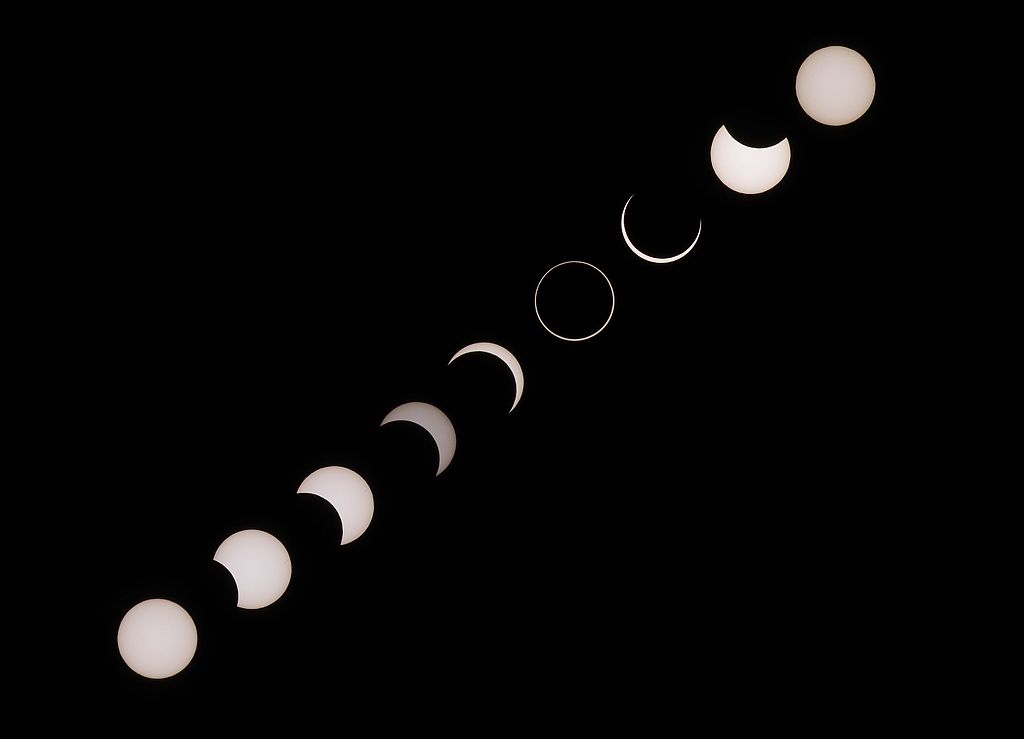
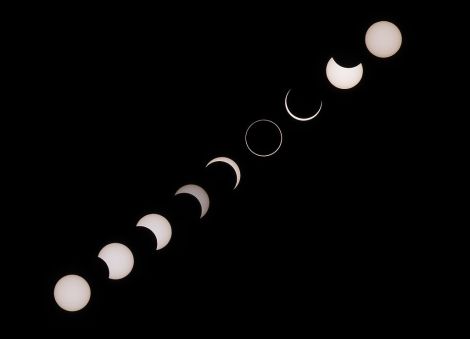
For those of us in North America, Monday, April 8, 2024 will offer a rare chance to see a solar eclipse across the continent. While some a total eclipse, if the weather cooperates, everyone on the continent will see at least a partial eclipse.
Eclipses are relatively rare and fascinating events. I still remember vividly seeing a partial eclipse in 1984 when I was 9. It made me think about the world and the universe a little differently. I’ve loved eclipses ever since, and though I’ve never seen a full eclipse, I always try to get outside to observe partial eclipses.
This brings us to the question of how to best view an eclipse, or more specifically how to help our children observe the eclipse. Looking directly at the sun without protection, even during an eclipse (maybe especially during an eclipse) is dangerous and can easily damage your vision. Given how important we all know vision is, and how much we’ve invested in our children’s vision, I wanted to share some information about safely viewing the eclipse.
I talked with Dr. Nate Bonilla-Warford a pediatric optometrist in Tampa, FL ], in 2017 before another full eclipse, about his thoughts on children viewing the eclipse. He said:
“An eclipse is an exciting event for the entire family. As long as you and your children are prepared ahead of time with proper viewing equipment, practice, and instruction to never look directly at the sun, there is very low risk of eye problems. If you are concerned about vision problems after the eclipse, vision your eye doctor.”
There are safe and not-safe ways to view the eclipse
As mentioned before, looking at the sun without protection will damage your child’s eyes (and your eyes). Usually, the brightness of the sun will trigger a reflex that keeps you from looking directly at it, however, during the eclipse, the sun will be less bright and it may feel more comfortable to look at the sun. The backs of our eyes do not have pain sensors, so there’s no feedback telling you to look away if damage is occurring. And damage, known as solar retinopathy, does occur from looking directly at the sun.
For any eclipse viewing, make sure that you supervise your child and that you emphasize to them how important it is that they not look directly at the sun. You know your child best, if they are likely to try to stare at the sun, maybe directly observing the eclipse outside isn’t the right activity for them. Luckily, there’s some great ways to observe the eclipse without looking at the sun.
Looking at the sun during an eclipse – safely!
If you and your child want to observe the eclipse by looking at the sun, you must use solar safe viewing glasses (“eclipse glasses”) before and after totality.
“You can view the eclipse directly without proper eye protection only when the Moon completely obscures the Sun’s bright face – during the brief and spectacular period known as totality. (You’ll know it’s safe when you can no longer see any part of the Sun through eclipse glasses or a solar viewer.).
“As soon as you see even a little bit of the bright Sun reappear after totality, immediately put your eclipse glasses back on or use a handheld solar viewer to look at the Sun.”
First, it is critical to make sure that the glasses you have are compliant with the ISO 12312-2 international safety standard. If they are the right kind of glasses, you will not be able to see through them at all when you aren’t looking at the sun. The American Astronomical Society has a list of suppliers of safe eclipse glasses
For kids who wear glasses, the eclipse glasses should go over their regular glasses. It may be easiest for them to just hold the glasses up to their eyes rather than try to wear them over their glasses. Practice this out before the eclipse.
You can cut out a paper plate around the glasses to make them easier for your child to hold up to their eyes and make it less likely that they’ll peek around at the sun. Find instructions from NASA here.
Some of the best ways of observing the eclipse don’t involve looking directly at the sun at all.
Pinhole projectors
Making a pinhole projector is easy and it lets you see the changes in the sun during the eclipse safely as you are looking at a projection of the sun.
NASA has a page with instructions and printable pdfs to use to make different pinhole projectors at home.
University of Illinois has instructions to make a couple of different types of viewers, from cereal box or a cardboard tube.
Looking at shadows cast by trees
I’m including this mostly because it blew my mind as a kid. The sun shining through leaves on the trees makes a natural pinhole projector – you can see the shape of the eclipse in the shadows.
Visit your local observatory. If you live near an observatory, many will have public events (though they’ll probably be very crowded) and many will have other solar viewers that let you view the eclipse safely, often in much greater detail than you’d be able to see on your own. Plus, there will be astronomers and teachers there to give you more information during the event.
Posted with permission from the For Little Eyes Facebook group:
My 5th grade daughter was inspired by her little brother Gus when choosing the topic for her STEM Fair project. If your child has ever had to patch or practice another form of occlusion therapy, she would greatly appreciate your help in completing this brief survey. I will be posting to multiple groups, so please only respond once for each patching child. Thank you!
You can help by filling out this short survey on skin sensitivity and patching
I was recently contacted by a researcher from the University of Southhampton who is researching barriers and facilitators of patching or occlusion therapy. She is doing a survey of anyone who has helped a child patch or who wore a patch themselves. She writes:
Amblyopia, also known as lazy eye, is the most common cause of preventable visual impairment in children, and yet the treatment does not work for half of children. We are hoping to understand further the challenges experienced with patching treatment and are launching a survey looking into the barriers and facilitators to occlusion therapy. By getting some learned experience from a wide range of people involved in patching- patients, parents, teachers, healthcare professionals, we hope to improve visual outcomes for children.
We would also like to get a clearer understanding of whether new advances in the field, such as apps that can detect whether a child is wearing their patch and give them rewards within the game, would be useful for people in everyday life.
To be able to make change and influence the treatment outcomes of occlusion therapy in the future, we need your help. If you have any previous experience of patching, or helping someone else to patch, we would love to hear from you. Please complete our survey linked below.
Finding glasses that fit your child can be difficult – parents often are given little to know guidance on how to find glasses that fit a young child’s face (check out our guide on finding glasses that fit). Add to that the fact that many optical shops do not carry much of a selection for small children and may not have staff with much experience fitting kids. It is not uncommon for kids to end up with glasses that don’t fit well, and that can lead to less effective vision correction, uncomfortable frames, and kids who are less likely to wear their glasses.
One of the parents in the For Little Eyes facebook group, Amanda Bettencourt, is looking to compile data about the experiences of US parents whose child(ren) needed glasses under the age of 8. To that end, she’s written a survey to collect parents’ experiences and thoughts. She plans to use this data to better understand the issues around finding glasses that fit well, and to use it to advocate for better processes and education.
For Little Eyes and Eye Power Kids Wear are joining in to offer a giveaway for participants. Participants can enter to win one of three 3-month subscriptions to Eye Power Kids Wear’s Eye Adventure Team Letters! These are fun once a month letters with information topics around vision and eyes.
The survey should take 5-10 minutes to complete. If you would like to enter the giveaway, you’ll be asked for your email address, but that address will not be shared with anyone else. Please share this survey with other parents who have young children in glasses.
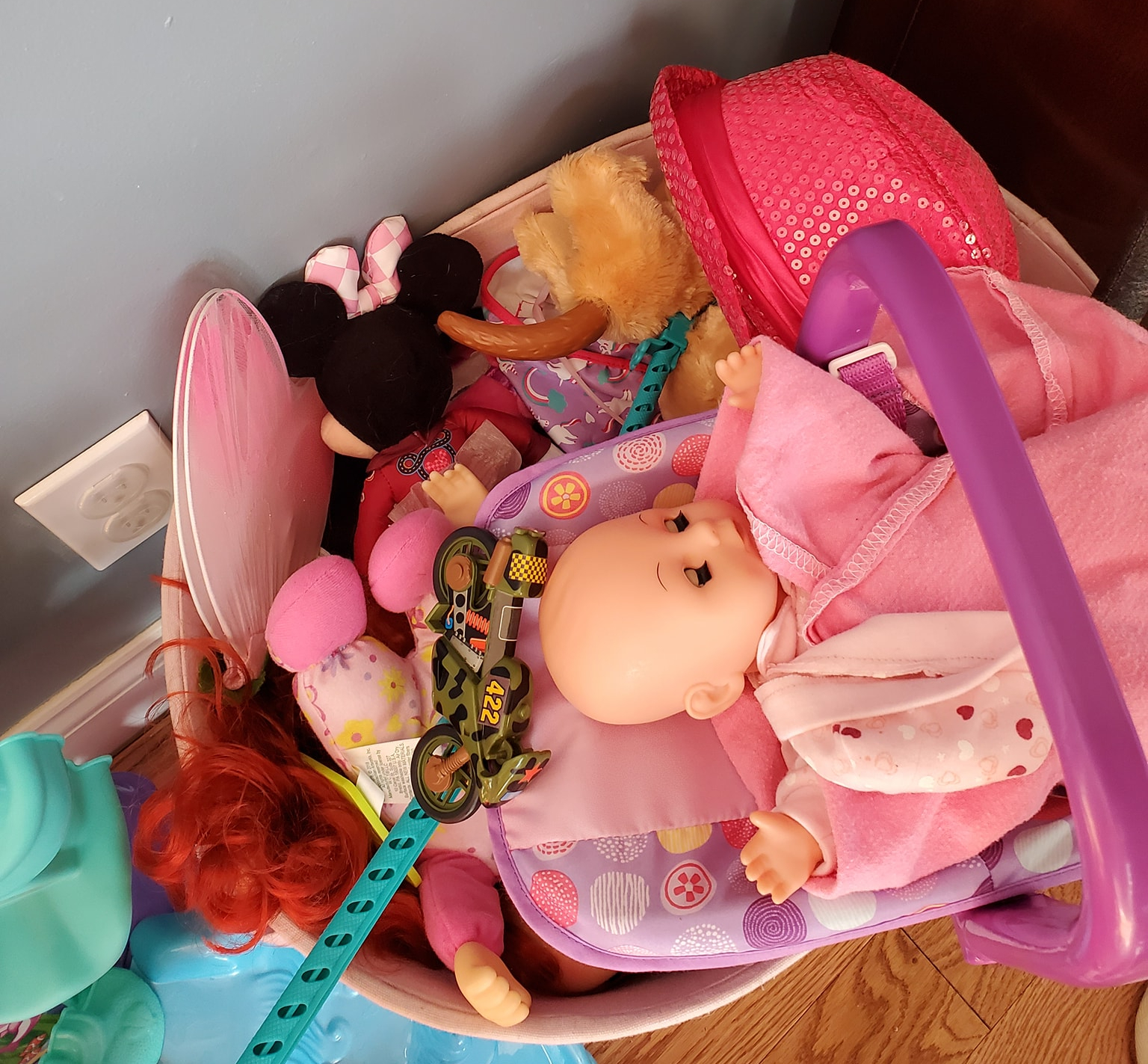
It’s time for the favorite game of all parents of young kids in glasses. That’s right! Find the hidden glasses in the toy bin!
This picture was shared by Amanda Nauroth, who notes that she searched her kitchen, dining room and daughter’s play room. This was — of course — the last place she looked, and nearly missed them.
Can you find the glasses in the bin? I’ll give you a hint, they’re pink 🙂
photo credit: Amanda Nauroth, used with permission
…
…
give up?
Here’s the same photo with arrows pointing out the pale pink frames, just barely visible.
photo credit: Amanda Nauroth, used with permission
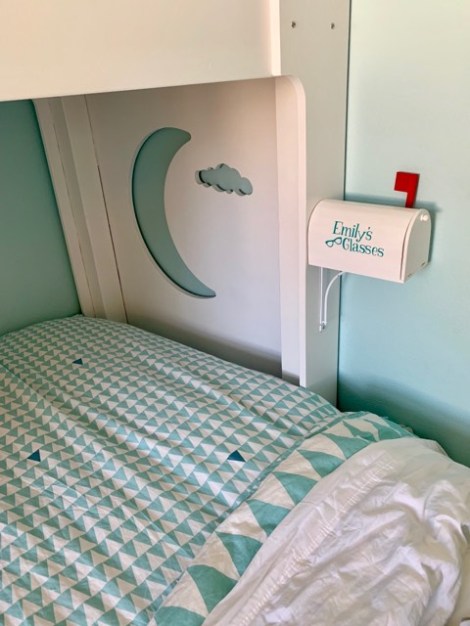
Alex Chalmer’s 4-year old daughter, Emily, had a great idea for a way to keep her glasses safe at night. Alex found a wood mailbox, painted it to match Emily’s room, and lined the inside with felt. The decal is a custom decal by Julie at Fox and Flamingo.
photo of a child’s bedroom with a painted mailbox attached to the bed that says: “Emily’s glasses.” Photo by Alex Chalmer, used with permission.
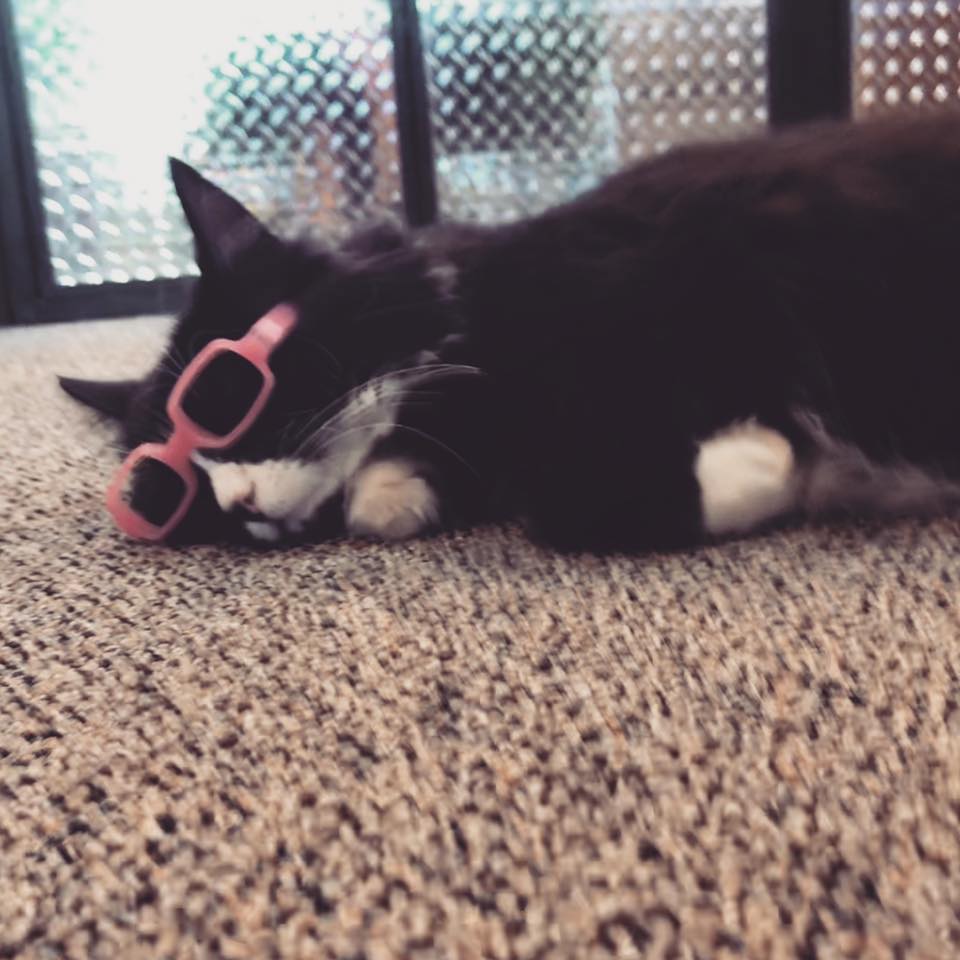
When you’re so tired that you fall asleep with your glasses on
Many thanks to A Child’s Eyes for sharing this photo of Truffles the Kitty. Truffles works at A Child’s Eyes where she wears glasses to help kids feel better about wearing glasses. You can follow Truffles on Instagram, @Truffles_the_Kitty.
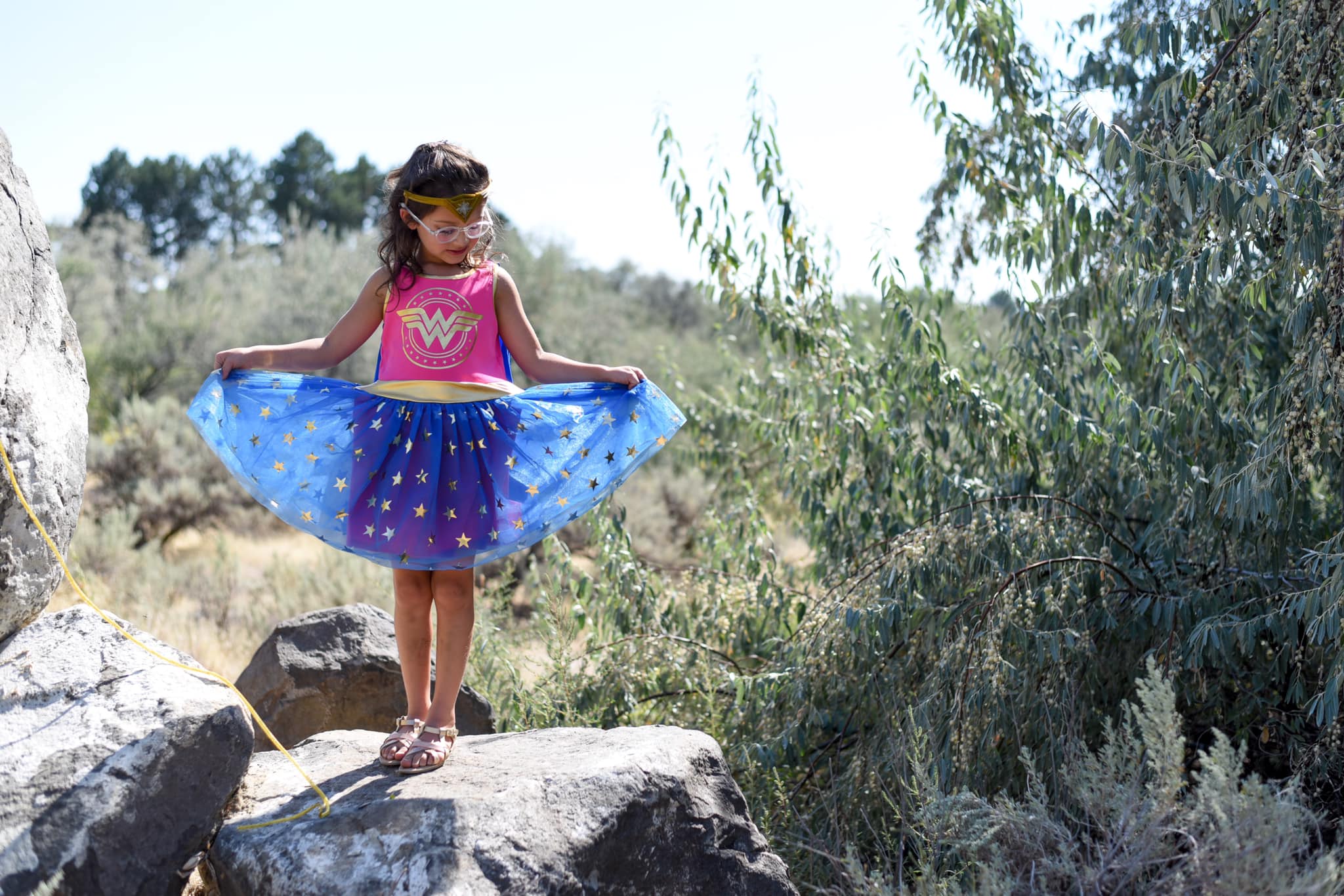
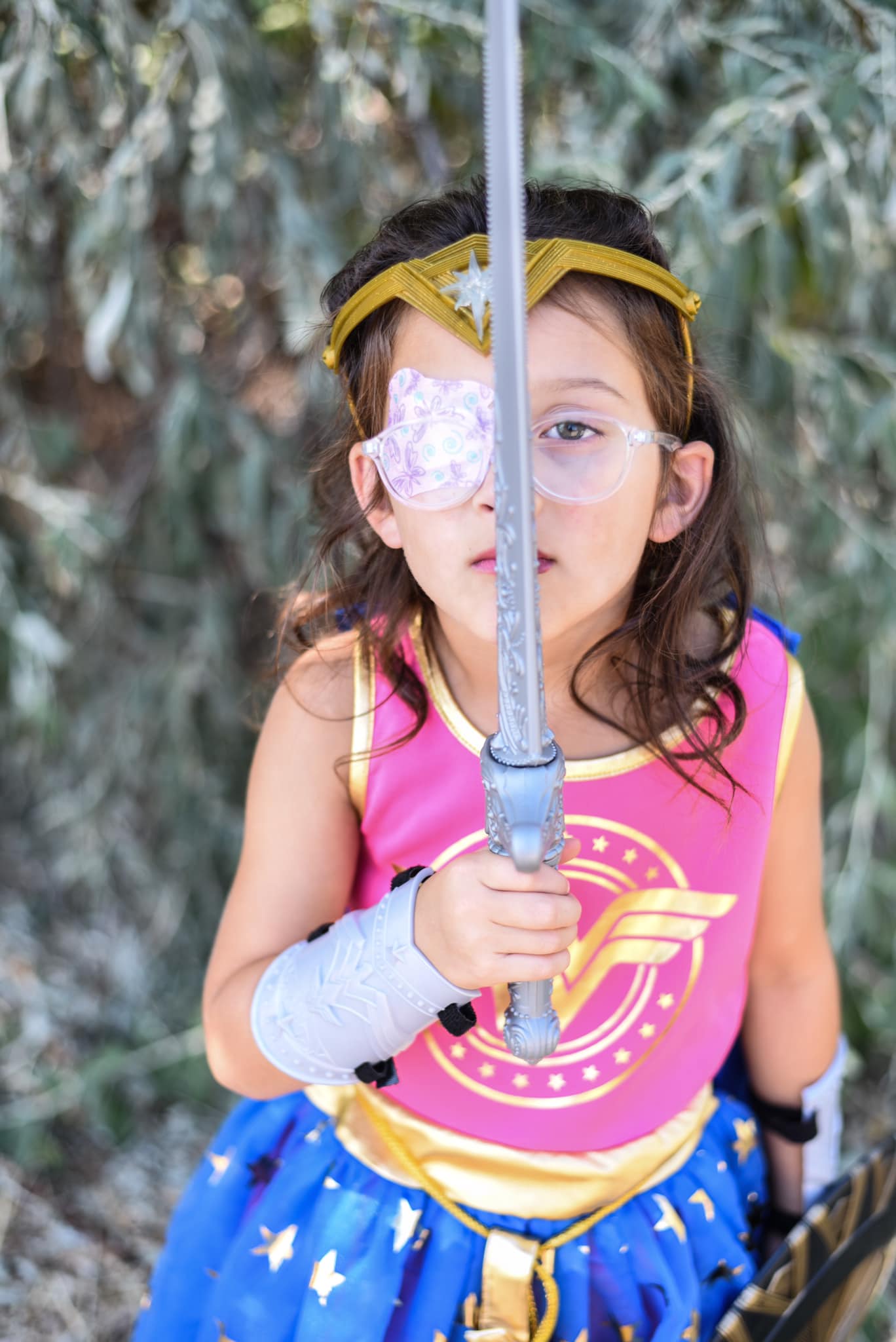
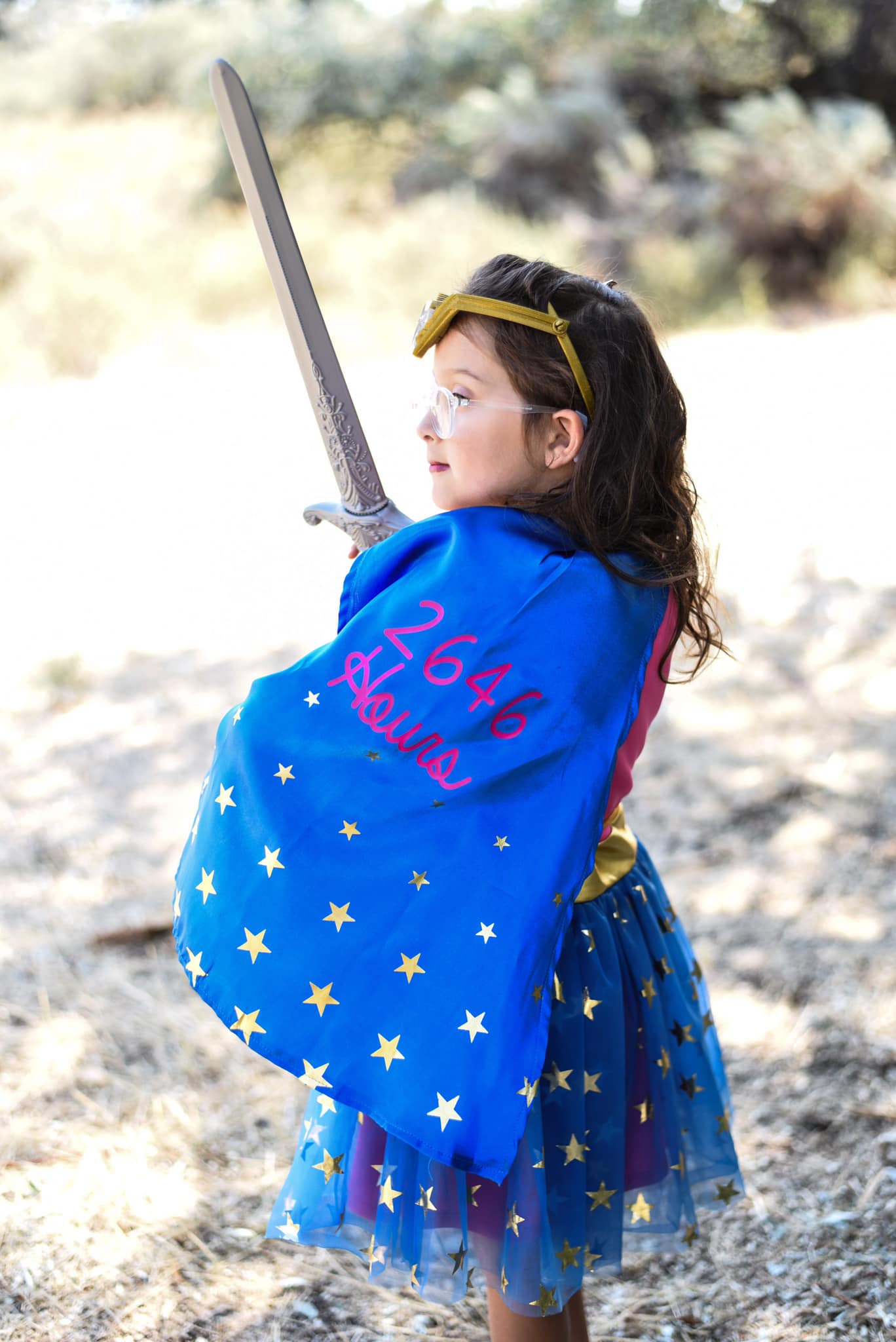
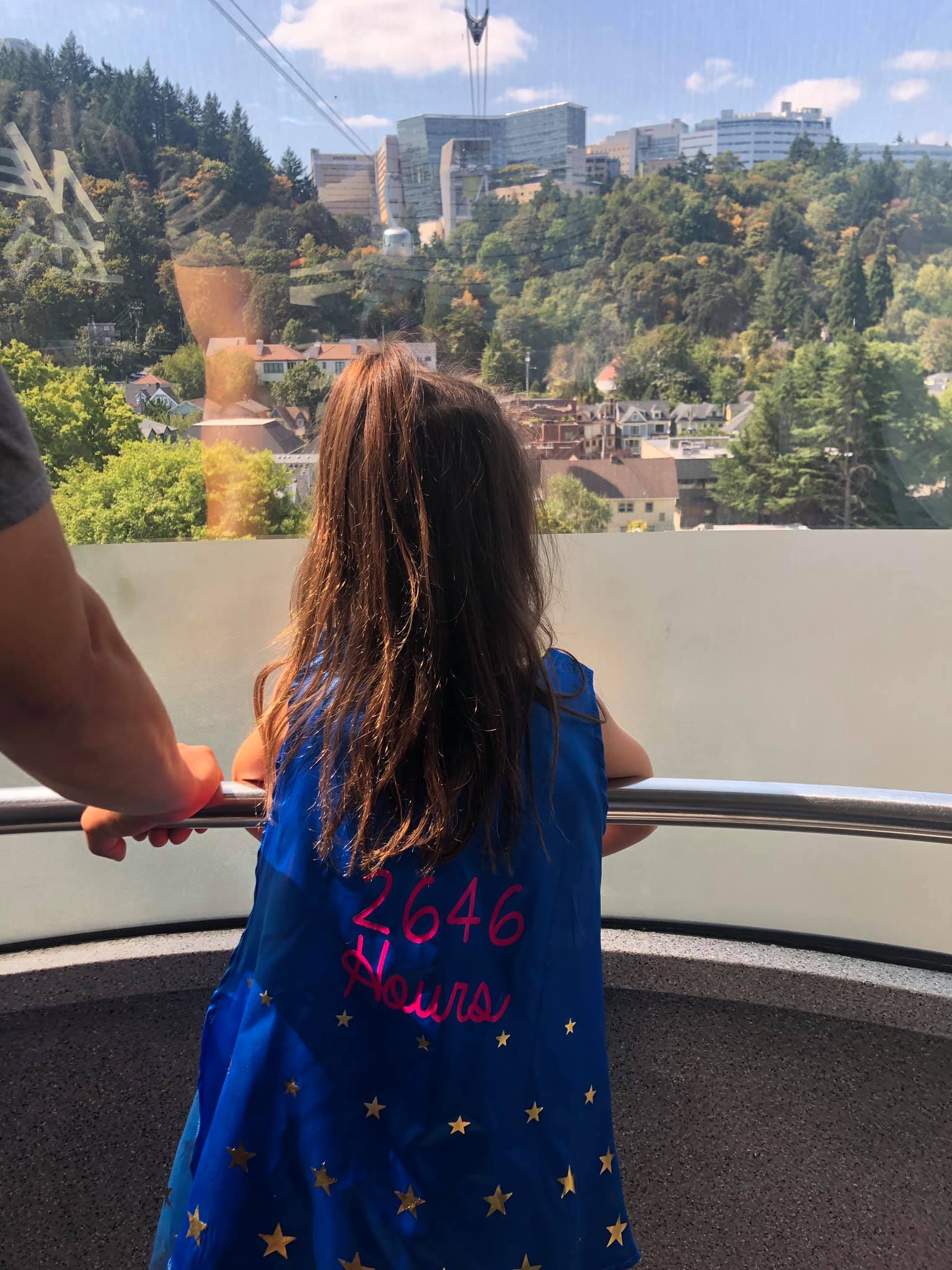
Jessie Lynn shared this story and her amazing photo shoot of her daughter’s last day of patching on the facebook group. Many thanks to her for giving permission to share it here as well! -Ann Z
After 2646 hours of patching, 3 surgeries, and too many drops to count, our girl is finally done! Follow up visits to happen, but vision in her injured eye is 20/25 and holding steady for a year now! HUGE thank you to OHSU Casey Eye Institute and Dr Lorri Wilson for her amazing care! Pictures are from her literal last time of taking off her patch ! (Photo credits: Jessie Arambul Photography)
— Jessie Lynn
The story
I asked Jessie for a little more background on her daughter’s story, here’s what she sent:
When she had just turned 3, my daughter pulled on an exercise tube that had a handle tied to a deck railing. It snapped at the handle and the metal part connecting the handle to the rubber snapped back and hit her in the eye. She ended up with a total hyphema of the left eye (a hyphema is when blood collects in the front of the eye, usually due to injury). Our eye doctor sent us to OHSU Doernbecher ER that night. Her pressure was 33 in that eye (normal is in the range of 12-22). They were able to get the pressure down and referred us to Casey Eye and to Dr. Wilson.
The hyphema dissolved and she seemed ok. But over the next 2 weeks she developed a total cataract of her left eye and was almost completely blind in that eye. We went back to Dr Wilson and she scheduled surgery for 3 days later. They placed an IOL implant and we had a month of too many drops to count. We also started patching as the two weeks she couldn’t see out of that eye had greatly hurt her vision . She started wearing her glasses with a bifocal at this time as well. After about a year of good progress her vision started regressing again, and Dr Wilson noticed the back of her natural lens had clouded. They did a laser surgery to open up a small hole at the back of it. However, her scar tissue was so thick that it didn’t work well and we had to go back for a third surgery about 8 months later. We were patching 4 hours daily this entire time. After the last surgery she achieved 20/25 vision at her first appointment. We had 3 more months of 4 hour patching, then we started reducing by an hour every 3 months. Until Friday when Dr. Wilson declared her patch free! We will still have to go back and more sure there is no regression, however she feels it seems unlikely. So we are definitely ecstatic at this point!
Many thanks to Jan who shared this in the For Little Eyes facebook group. She gave permission for me to share it here. – Ann Z
A wears glasses for strabismus, amblyopia, and farsightedness. Jan writes, “We had a great experience today! This guy just turned two and has only had glasses for about five months. As you can see we have lizards in our yard….. While he was playing in the pool today he saw a lizard on the wall across the yard and asked for his ‘gosses’ to see the ‘izard’!!! Although he adjusted to the glasses fairly quickly it was exciting to know he understands what they do!!!”
[image description: a 2-year old wearing glasses looks very intently at a lizard] Photo shared with permission.
Many thanks to EK Books for sending a copy of their new book for me to review. The link to the book on Amazon is an affiliate links. That means that I receive a small commission if you order from there after following the link. – Ann Z
Summary of the book
The Boy in the Big Blue Glasses by Susanne Gervay and Marjorie Crosby-Fairall is a picture book that tells the story of Sammy as he gets his first pair of glasses. Sammy doesn’t want to wear his glasses, they hurt his ears, but worse than that, they seem to make people not recognize him anymore. His family and teachers all say some version of, “who’s that handsome boy in glasses?” when they see him.
[Image description: page from the book with a teacher looking concerned at Sammy, a young boy in a superhero cape and glasses. Sammy looks sad as he walks away. Text on the page reads, “My parents make me wear my glasses to school. Miss May, my teacher stares at me. She can’t recognize me either. ‘Who’s this handsome boy?’ I don’t even tell her it’s me, Sam. No one sees who I am anymore.”]
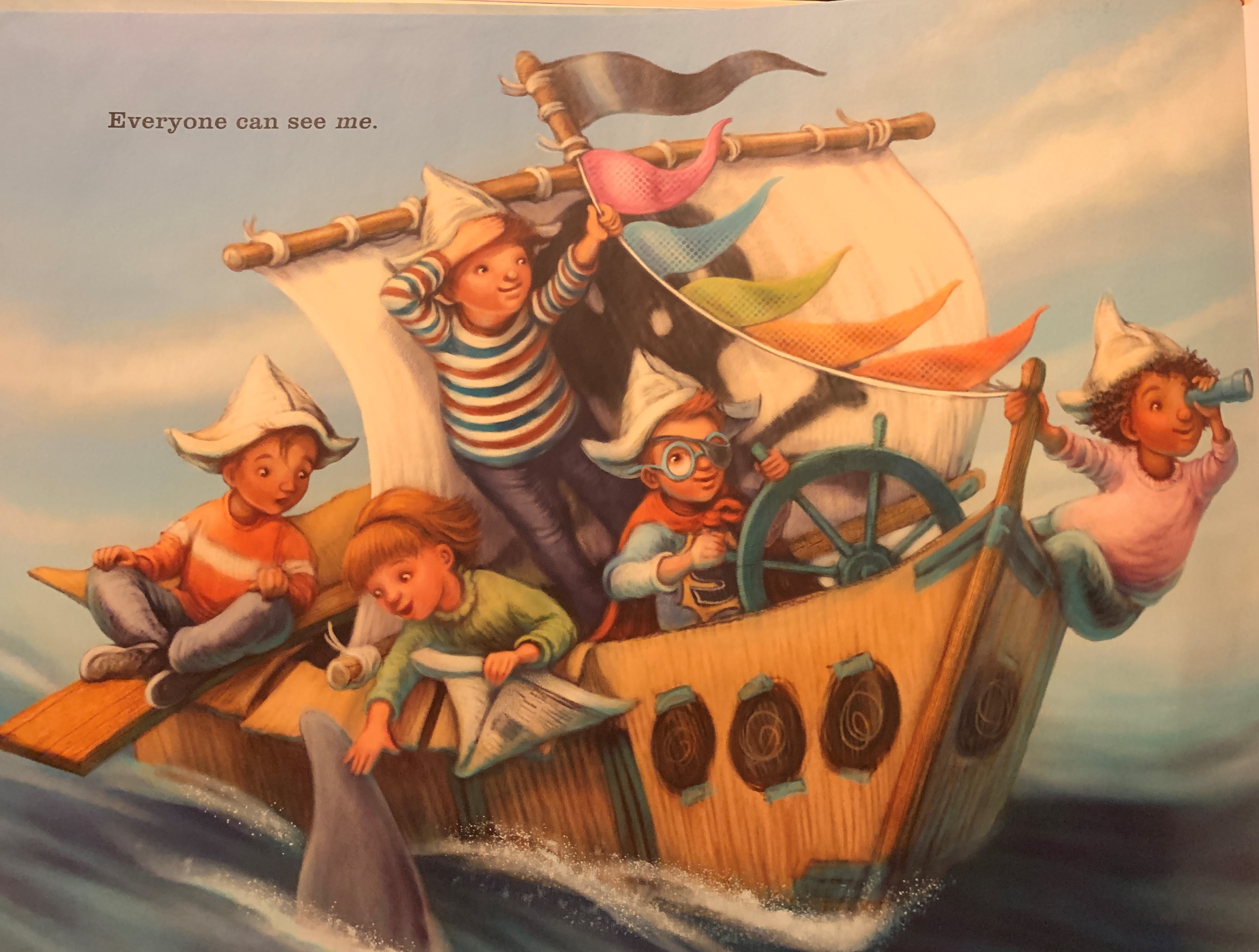
Sammy just wants people to see him for who he is and not focus on his glasses. He tries hiding his glasses, but his parents and teacher find them and make him wear them. He sits by himself at school, and takes off his glasses to clean them, when he notices how strange and blurry things look without his glasses. That leads him to making funny faces, and the whole classroom gets in on the fun and call him by name, “Sam, Sam, Sam. You’re so funny!” That’s all Sam wanted, to be seen as who he is. The final page of the book shows Sammy playing playing pirate ship with his friends, with the text, “Everyone can see me.”
Review
This book touches really sweetly on many of the very real, difficult feelings that kids can have when it comes to getting glasses that can be hard for them to explain to others. It talks about how well-meaning comments from others don’t always have the intended effect. The adults in the book are not mean or ill-intentioned, but their comments about how they don’t recognize that handsome boy in glasses only add to Sam’s feelings of being different and his fear that no one will know who he is. Zoe never had that fear with glasses (she got them so young, it wasn’t an issue), but she did voice that fear when she was 4 years old and had to wear a patch in public. I also liked the small detail in the book that Sam’s glasses hurt his ears at first, but when they were adjusted, they stopped hurting.
The illustrations are beautiful, especially those that show Sam and his friends’ imaginations when they play. Often a scene from one page bleeds over onto the facing page, giving more space for details of those scenes.
[image description: Page from the book. Five children are riding on a ship with colorful flags. One girl is petting a dolphin. The text on the page reads, “Everyone can see me.”]
The books is listed as being for ages 3 – 8, and I agree with that age range. The text and layout and bright illustrations make it a good choice for reading out loud. I think this book could be a good one to read in a classroom to open up discussions on how things can make us feel different and also, how we can see our friends for who they are.
Give away
As with most reviews I write, I am giving away my review copy of the book. To enter, leave a comment about your child’s favorite game to play with friends. I will randomly select a commenter to receive the copy on Monday, August 5, 2019. Make sure you leave your email address in the email address field when you comment so that I can contact you if you’re selected.
Comments on this site are moderated, so don’t be alarmed if your comment doesn’t show up immediately, I’ll be checking and making sure to approve your comments.
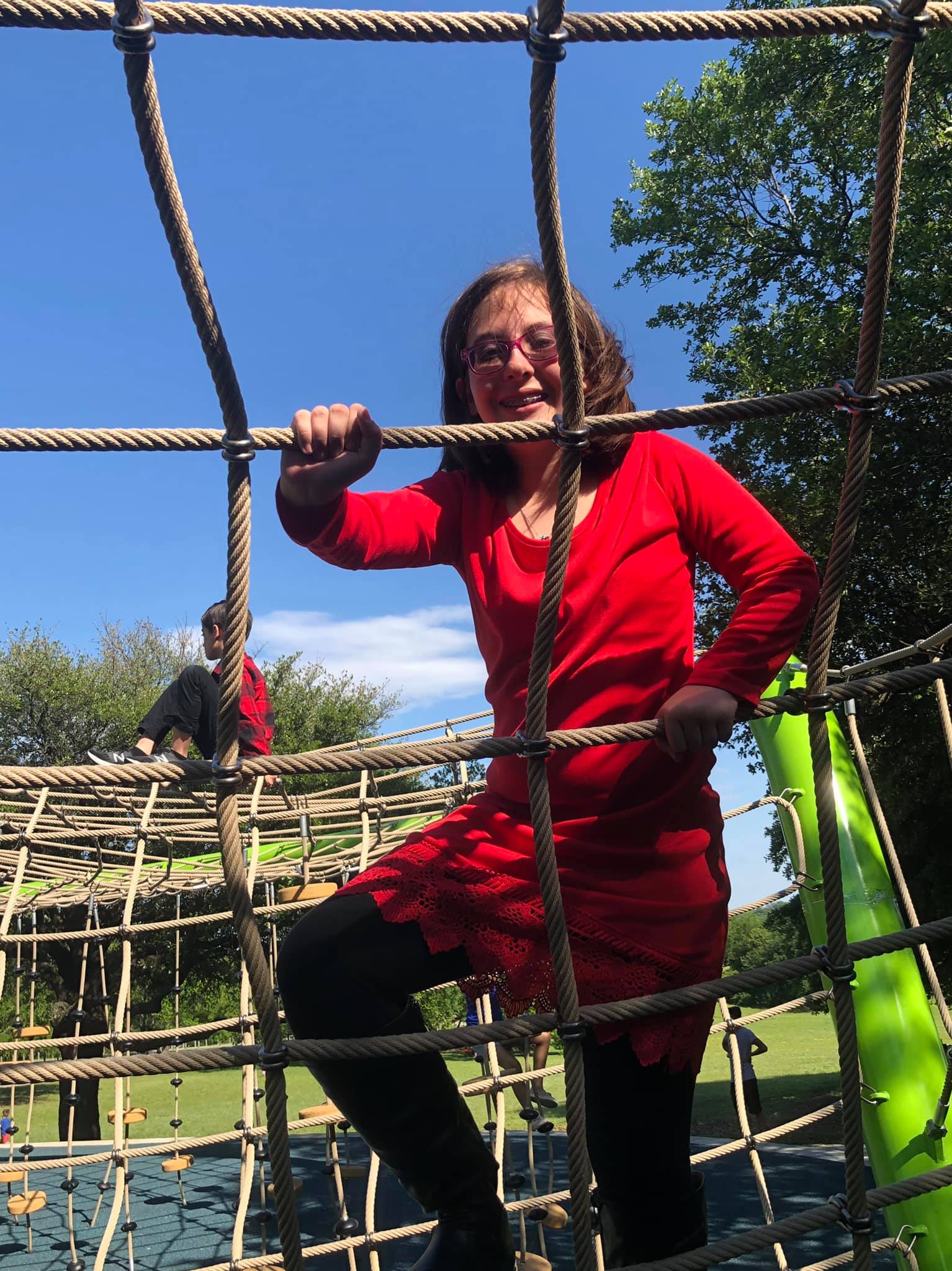
Many, many thanks to Amber O. for sharing this beautiful story. Her daughter has nystagmus and optic nerve hypoplasia – Ann Z
⚠️WARNING ⚠️Mom Brag/Soap box Post:
Background: Meg is a 7th grader that has low vision, her glasses help but do not give her perfect vision.
7th grader Meg in a red dress and red glasses climbing on a playground structure
A few days ago in one of Meg’s classes a substitute teacher asked her to move away from her front seat (this is a written accommodation in every class). She advocated for herself(as she has done whole life proudly), explaining why she needed to sit in the front. The sub still would not listen. That’s when her entire class stood up and advocated for her. Informing the teacher why she should be allowed to sit up front.
I always hear complaints of teenagers being selfish and rude but I’m not seeing it (this being one example this year). I did ask her if she got made fun of in school, she said that no one makes fun of her except her close group of friends but “they have permission to tease me.” This is the generation that is holds our future, teens who advocate for their friends in need despite the whiplash are superheroes in my book.
I’m not sure of the end result of where she ended up in the class. My girl finished the day knowing that she has an army of classmates that has her back and I know that my girl can advocate for herself with no shame. Advocacy is such an important tool to teach kids whether they have disabilities or not. Teaching kids to recognize equality in every aspect of learning or living. Teaching kids to see all humans are treated with the same compassion as the next despite how they look, talk, learn or move. Teaching kids compassion and advocacy forms better humans than teaching kids only book knowledge.
Many thanks to Dr. Jason Cheng for sending a copy of this book for me to review. Links to the book on Amazon are affiliate links. That means that I receive a small commission if you order from there after following the links. – Ann Z
Summary of the book
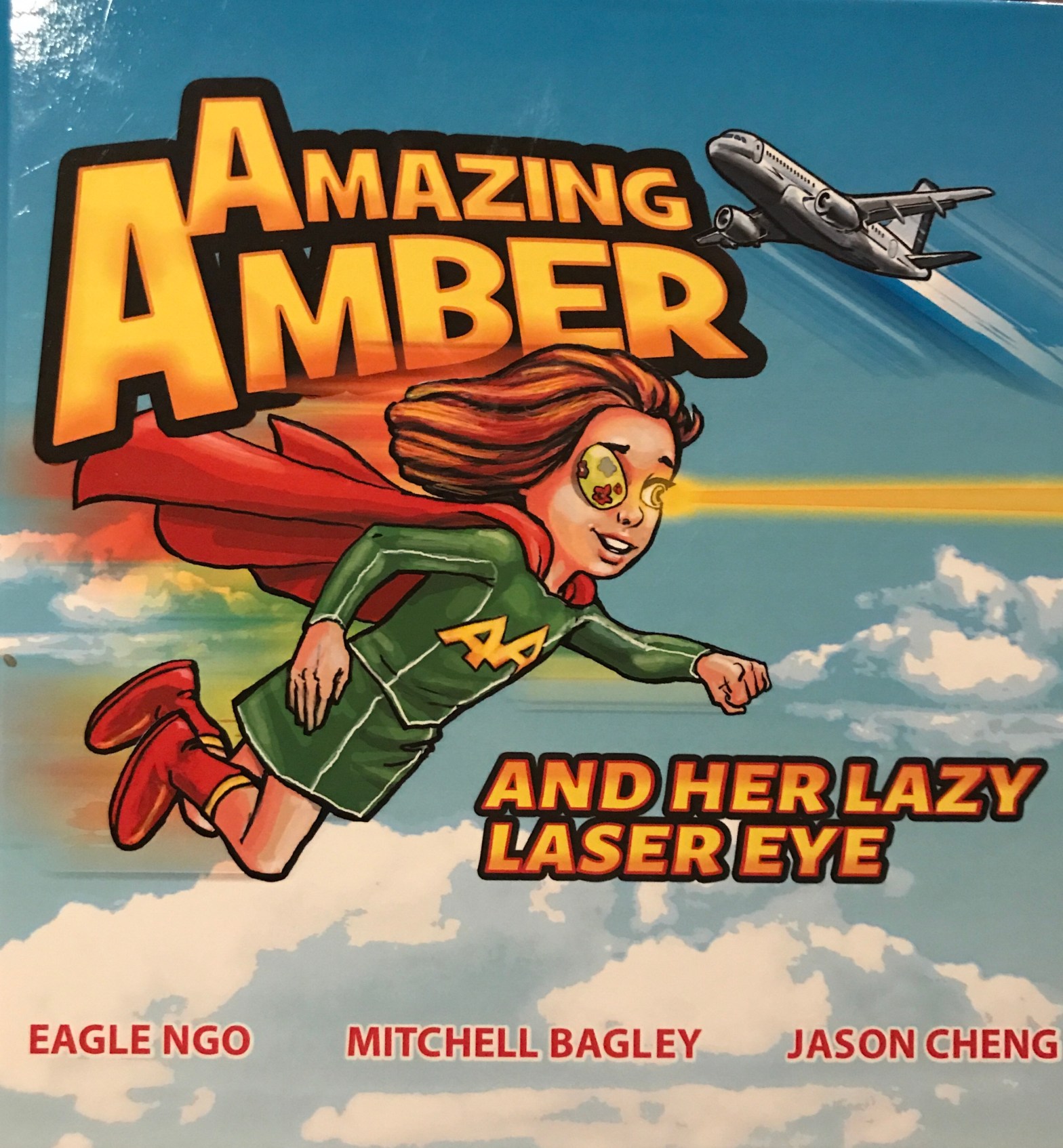
Amazing Amber and her Lazy Laser Eye is a new children’s book featuring a superhero named Amber, who just happens to need to do a bit of patching to defeat a pie-throwing villain.
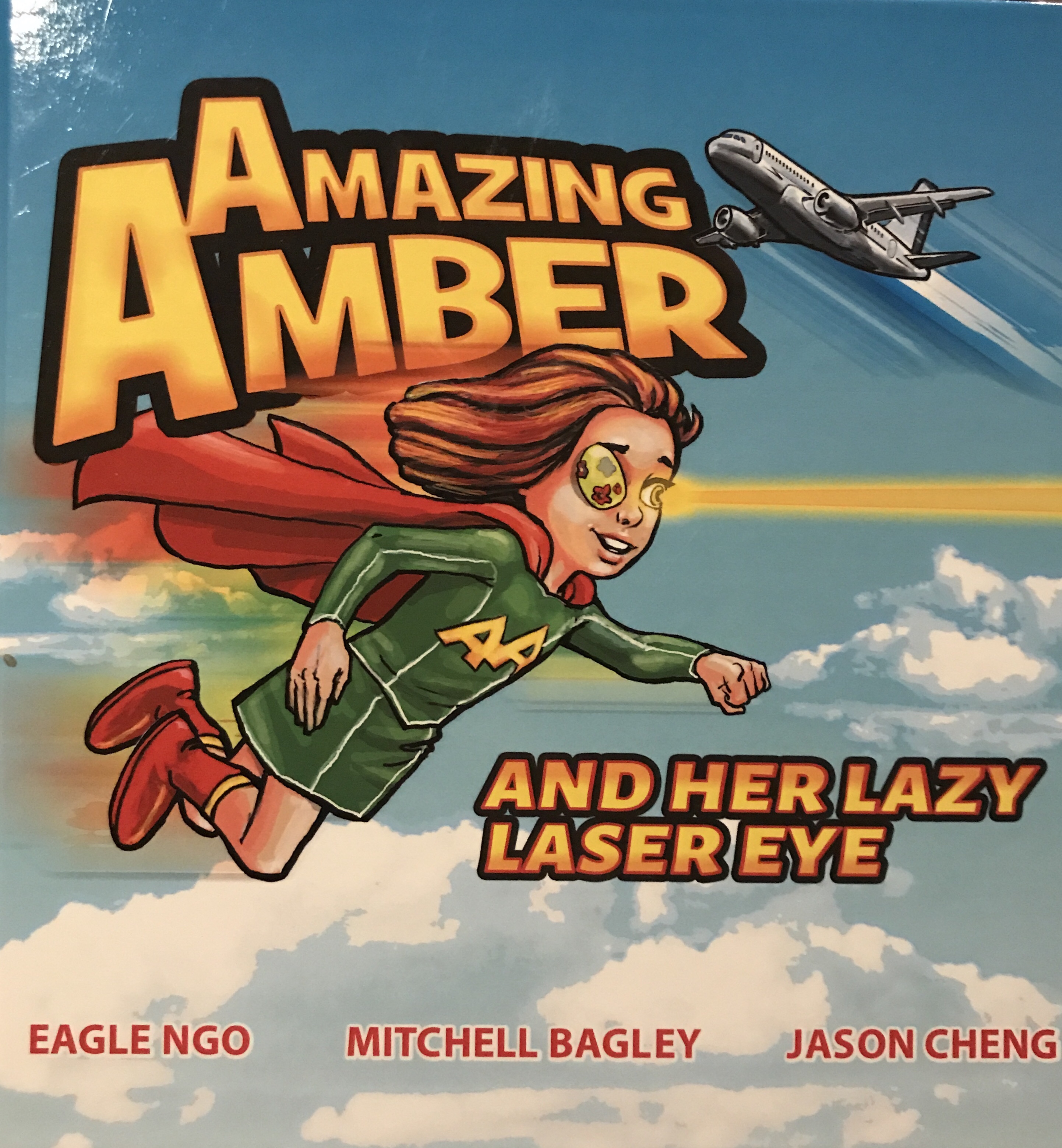
(image description: book cover of “Amazing Amber and her Lazy Laser Eye” by Eagle Ngo, Mitchell Bagley, and Jason Cheng. It features a young superhero, Amber flying through the sky with one eye patched, and they other eye shooting a laser beam.)
The hero of the story, Amber, can fly and shoot things with her laser eye, and uses those powers to help people. Like all good superhero stories, there is a villain as well. In this case, the villain throws pies at innocent bystanders. Amber shoots the pies down with her laser eye, but when the villain creates a machine that can launch two pies at once, she learns that only one of her laser eyes works. She visits an eye doctor, who tells her that she has lazy eye. She wears a patch over her strong laser eye and practices using her other eye until it becomes just as strong. Using both eyes together, she’s able to defeat the villain and save the day!
(image description: a page from the book showing three children looking up in a tree, where Amber has flown up to retrieve a frisbee. The text says, “But most of all, she loves to help people.”)(image description: a page from the book showing a young boy with a taunting smile who is launching pies with a pie-launching machine. The text says, “But most of all, he likes to throw pies.”)(image description: a page from the book showing a bear who is an eye doctor, standing in front of a vision chart. The text reads, “‘You have a lazy eye,’ Dr Teddy tells Amazing Amber. ‘Cover your strong eye with a patch, and then your eyes will become a match.”)
Review
I really enjoyed and appreciated this book. The metaphor of a superhero who needs to strengthen her laser eye works well in the story and kids who need to patch for amblyopia will find her easy to relate to. There is no teasing in the book, or scenes of Amber disliking her patch, though patching is shown as hard work that takes time. The story is fun and funny and easy to follow. There are not a lot of books out there for kids who patch, so this is a welcome addition!
The illustrations by Alecksis Vladimir are bright and colorful and reminiscent of comic books, as is befitting a superhero tale. Amazing Amber is a collaboration between Eagle Ngo, a year -12 student from Brisbane, Mitchell Bagley, an orthoptist, and Dr. Jason Cheng, a Sydney-based ophthalmic surgeon. It is available in print and ebook.
The book is listed as being for grades Kindergarten – 6th grade. I think the book would work well for kids age 4 – 8. The text is not too dense, and the book can be read in one sitting. It would be an excellent book to read out loud to a class to help other children understand why their friend and classmate wears a patch.
Give Away
Updated March 4, 2019: Congratulations to Rachel who was selected from the commenters as the winner of the book give away!
Since Zoe is done with patching, I would love to give my review copy to someone else who would enjoy it. To enter, leave a comment about what super powers your child would want. I will randomly select a commenter to receive the copy on Monday, March 5, 2019. Make sure you leave your email address when you comment so that I can contact you if you’re selected.
With Valentine’s Day just around the corner, For Little Eyes and @patchwithgushave teamed up to share our favorite printable Valentine cards and coloring pages to celebrate children with vision needs! What’s even better is that these fun, inclusive designs are all FREE!
Valentine’s Day isn’t just about romantic love. This holiday reminds us to celebrate friendship and our unique personalities through self-love while offering praise and thanksgiving to those who make a positive difference in our lives. Be sure to visit the links below to download our favorite FREE vision-themed Valentine’s Day printables. These cards and coloring pages are perfect for upcoming Valentine’s Day parties and class card exchanges.
You can download and print any of the following files with your home computer or have them professionally printed at your favorite local printer or office supply store. We recommend printing with full-color laser ink on white cardstock paper for the best results!
From Eye Power Kids Wear
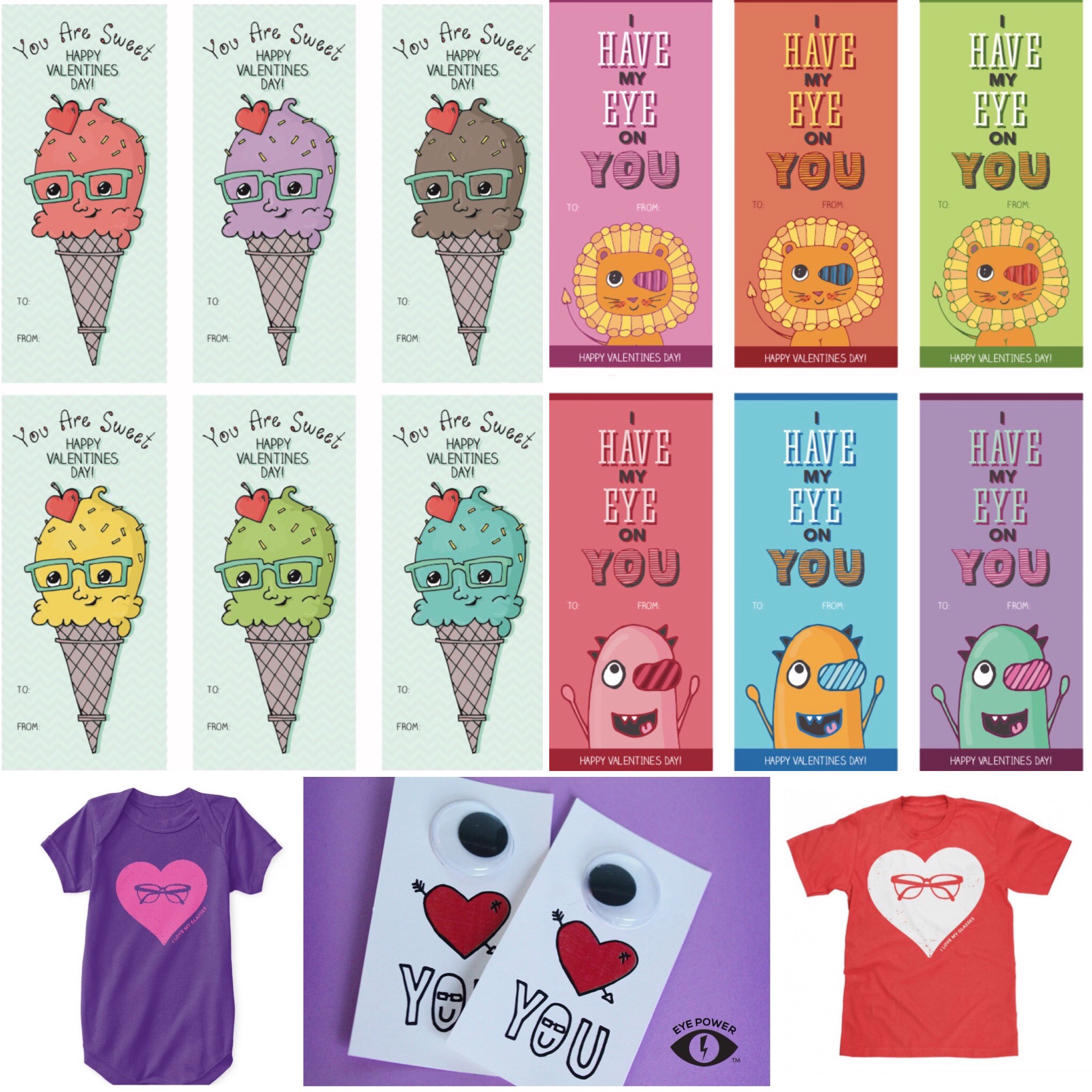
Eye Power Kids Wear valentines that say “I’ve got my EYE on you!” and lollipop valentines.
Valentines from Eye Power Kids Wear that say “You are sweet” and “I have my eye on you” and an eye, a heart and the word you, and children’s shirts with glasses in a heart.
Coloring pages from Eye Power Kids Wear featuring an ice cream cone that says “You are sweet” and a page of cute monsters that say “Happy Valentines Day”
Also, be sure to check out the “I love my glasses!” shirt and dozens of t-shirts and onesies that promote awareness and help kids feel more confident in their eyewear at EyePowerKidsWear.com.
From Ahoy Amigo
Valentines from Ahoy Amigo that say “I’ve only got eyes for you” and “You’re pawsome” with matching t-shirts.
“You’re Pawsome” and “I’ve only got eyes for you” Valentine’s Day cards! Keep these modern and monochrome OR let you child customize the designs by coloring the designs themselves! Coordinating “You’re pawsome” t-shirts and raglans are also available for purchase at AhoyAmigo.com.
More free printables
Valentines that say “I think you are SPECtacular” on them
“I think you are SPECtacular” valentines (you provide the plastic glasses to go with them) from Smashed Peas & Carrots.
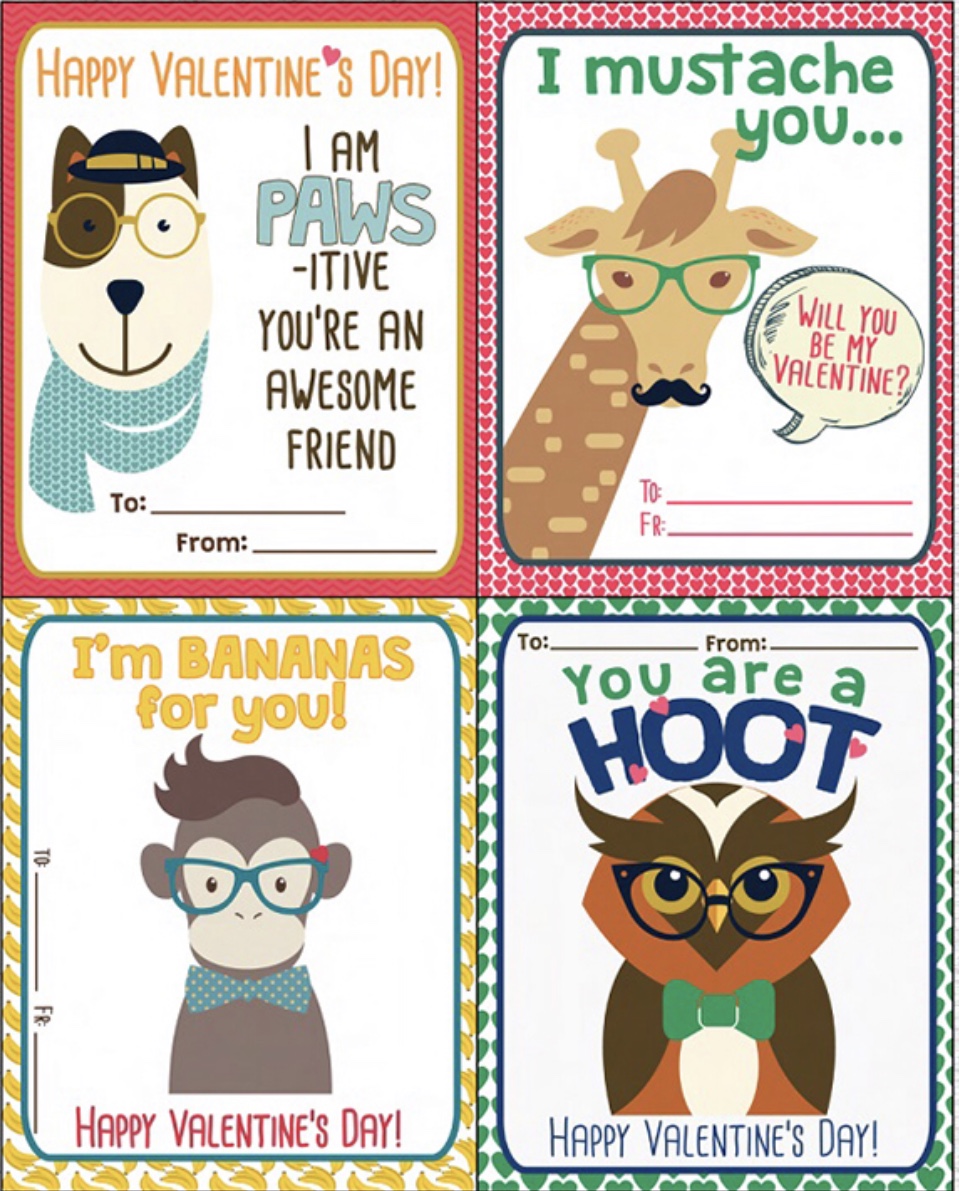
Valentines featuring animals wearing glasses that say “I’m paws-itive you’re an awesome friend,” “I mustache you… will you be my valentine,” “I’m bananas for you,” and “You are a hoot.”
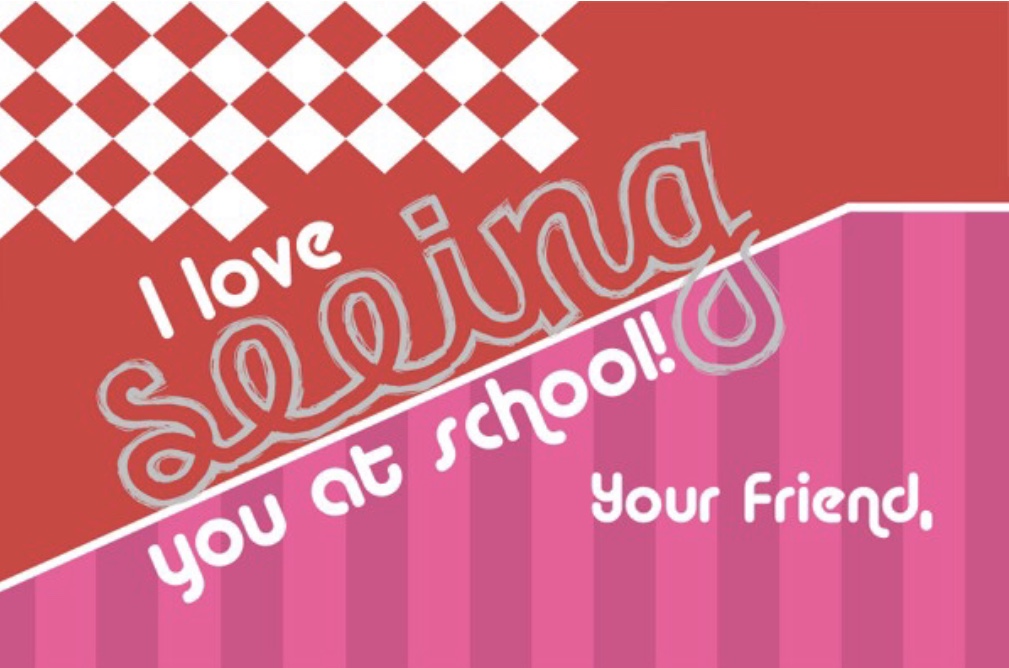
Valentine that says “I love seeing you at school!”
Your child can celebrate their vision and Valentines day with these “I love seeing you at school” cards from Makely (you can choose to pair them with plastic glasses, or use them as is).
Valentines that read “Our future’s so bright, we gotta’ wear” with plastic heart-shaped sunglasses.
“Our future’s so bright” cards from My 3 Monsters (add your own heart-shaped sunglasses)
Valentines that read “Hey, Valentine. You are pretty spec-tacular!” with paper heart glasses
Valentines that read “love must be your superpower ’cause you’re a super friend!”
While these superpower valentines from Free to be Kids may not be a glasses- or patching-related design, we believe all of our kids are superheroes and wanted to include them too!
For more holiday patching fun and to read tips and tricks for successful patch therapy, be sure to follow our patching journey with Gus on Instagram @patchwithgus.
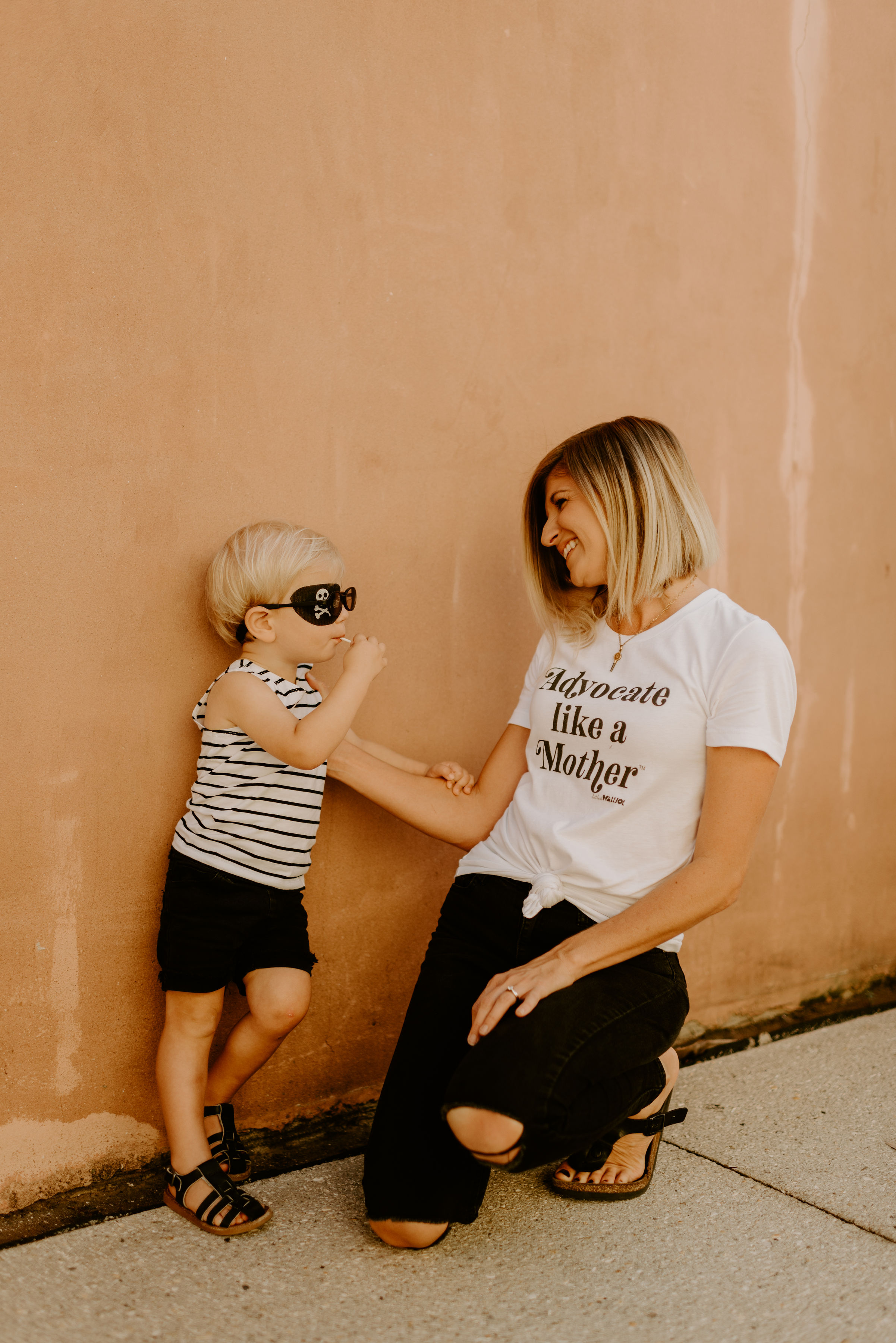
Photo of Gus and mama, Carrie Groleau in Advocate Like a Mother shirt
Huge, huge thanks to Carrie from @patchwithgus for pulling all these great valentines together!





 Download our new printable guide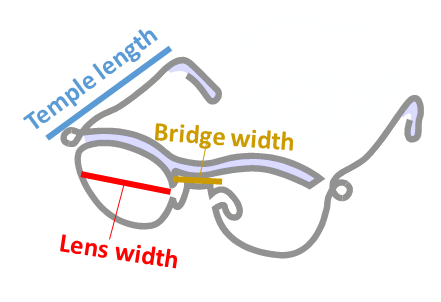















![[Image description: page from the book with a teacher looking concerned at Sammy, a young boy in a superhero cape and glasses. Sammy looks sad as he walks away. Text on the page reads, "My parents make me wear my glasses to school. Miss May, my teacher stares at me. She can't recognize me either. 'Who's this handsome boy?' I don't even tell her it's me, Sam. No one sees who I am anymore."]](https://forlittleeyes.com/wp-content/uploads/2019/07/img_1225.jpg)









 For Little Eyes