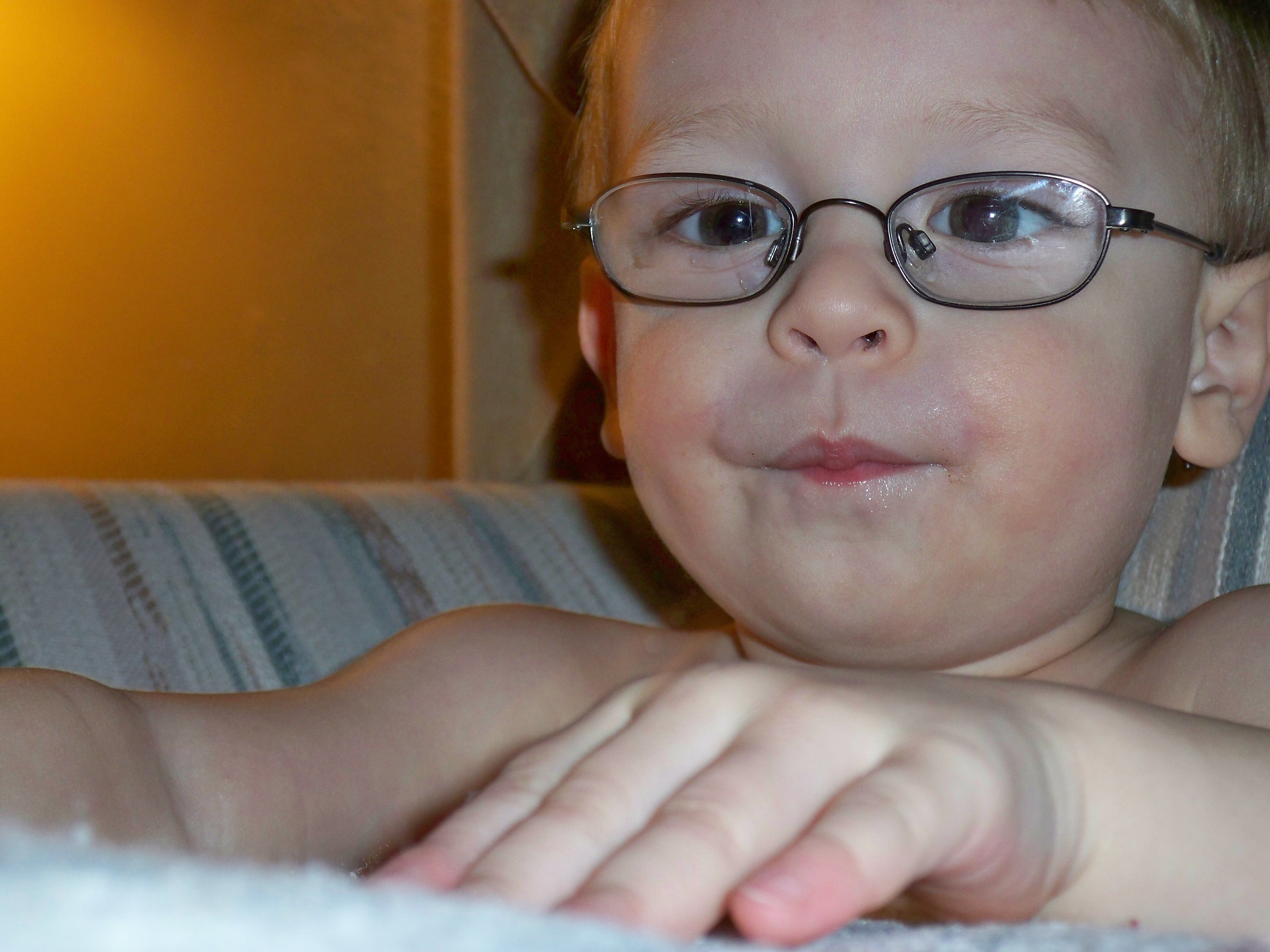
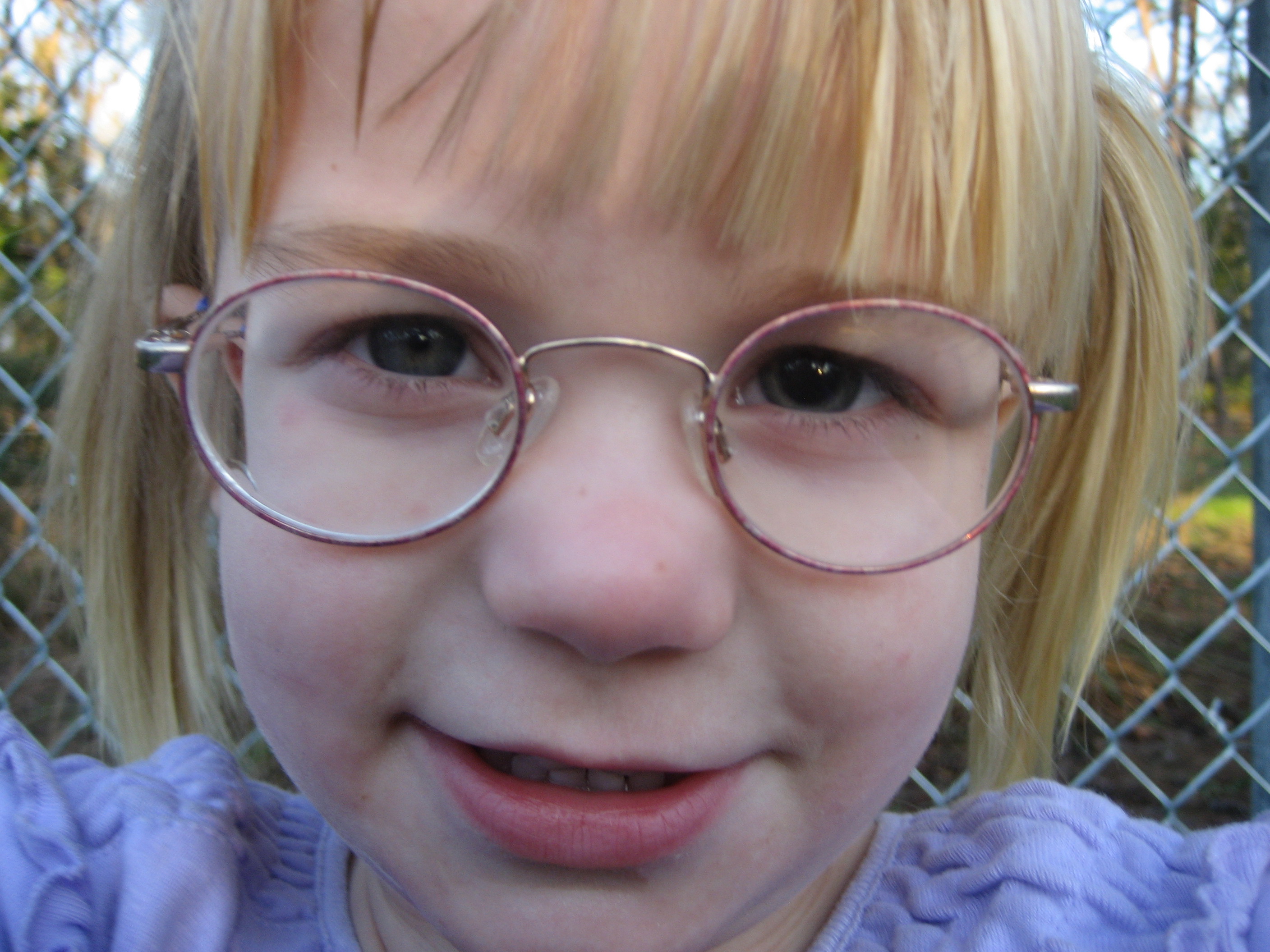
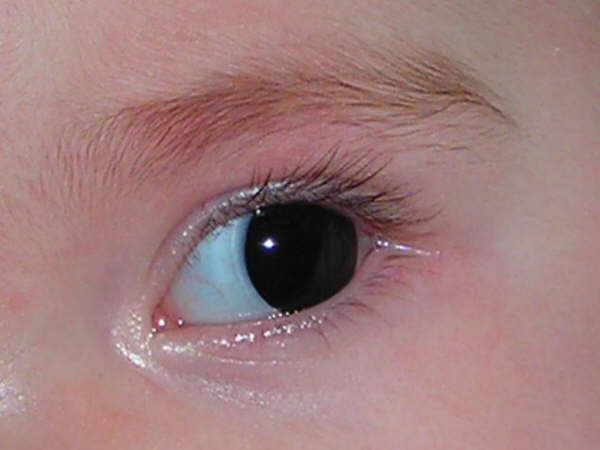
Interview with Chelsea, part I: Growing up with glasses

Chelsea has worn glasses since she was 2, and has graciously agreed to answer some questions about growing up with glasses.  The second part of her interview on doing vision therapy is here.  You can read more of her writing on her blog, Roots and Rings. – Ann Z

~ ~ ~

Ann: You write that you’ve worn glasses since you were 2, do you remember getting glasses?  If so, what was that like?

Chelsea: I do not remember getting glasses. It’s all I’ve ever known. I hear stories from my parents about when they found out. It sounds a lot like many of you. They were devastated. They cried and felt awful for me. My mom said she went home from the doctor and turned on the TV. There was a special about a little girl with leukemia. She then decided she’d be thankful for my health and realized my issues were minimal.

Ann: Were there any things that your parents did to make wearing glasses more fun, or at least bearable?

Chelsea:
My mom says I never fought it as a baby. She thinks that I felt better because I could see so I just never tried to take them off. One I was old enough, they let me pick the glasses I wanted. (I guess I can only blame myself for the nerdy glasses I chose!)

Also, they let me complain. They knew that being a little kid with glasses sucked! They knew it was a pain when I played games or went swimming. And they let me complain and told me that when I was old enough, I could get contacts and it would get much easier. If I thought that having glasses was the worst thing in the world, they sympathized with me. They’d tell me that they were sorry and they knew I hated it. But they’d also always tell me how beautiful and smart I was and that my glasses do not define me.

Ann: Any things that you wish they had done?

Chelsea:
There was nothing they could have done differently.

Ann:
I notice that Zoe has started pointing out people and animals that aren’t wearing glasses (yes, that means she points out nearly every animals, “kitty cat, no glasses.”)  Do you remember noticing other people who didn’t wear glasses and thinking it was strange that you wore glasses when they didn’t?

Chelsea: I don’t remember that young. I remember that none of my friends had glasses. I didn’t think that was fair. But I think I understood pretty early on that my eyes were different than most people. I had an older brother who didn’t wear glasses so my parents were able to explain it to me easily. God made us all different.

Ann: You’ve mentioned how much better glasses are for kids nowadays, any pictures of you as a kid in glasses that you’d like to share?  (Obviously only if you want to).

Chelsea: Of course!  [photo will show up once Chelsea gets to a scanner – Ann Z]

Ann: How bad was the teasing (tell it to us straight, even though I think this may be the question I fear the most).

Chelsea: Kids can be mean. I remember never being the “popular girl” in elementary school and the boys never liked me. I blamed my glasses. (Whether or not this is true, who know?!) I honestly can only remember one time that I was really hurt. My best friend’s older brother called me ‘four eyes’. He and his friend were picking on us, trying to make us mad. I remember crying. His mom made him apologize and he told me he never meant to hurt my feelings, he was just playing. I know this was true. But that didn’t make it hurt less. Coming from someone who I was so close to is what was so scarring.

I’d like to think that the normal ways kids are affected by this are just by people ignoring them. If a kid doesn’t understand why someone wears glasses or why their eyes look so big, they’ll probably just ignore him/her and not be their friend. I doubt many people are picked on physically or teased verbally.

Although maybe they are. And maybe I was. Kids bounce back. Of course it leaves a few scars along the way, but we adapt. And honestly, I’m a better person today because of it. I never teased anyone because I knew they could easily tease me back. I am confident and know my worth. And I know my worth does not depend on my physical appearance. The bottom line: Your child should not be defined by his/her eyes. Do not focus on them or he/she will focus on them.

Ann: Thank you so very much, Chelsea!
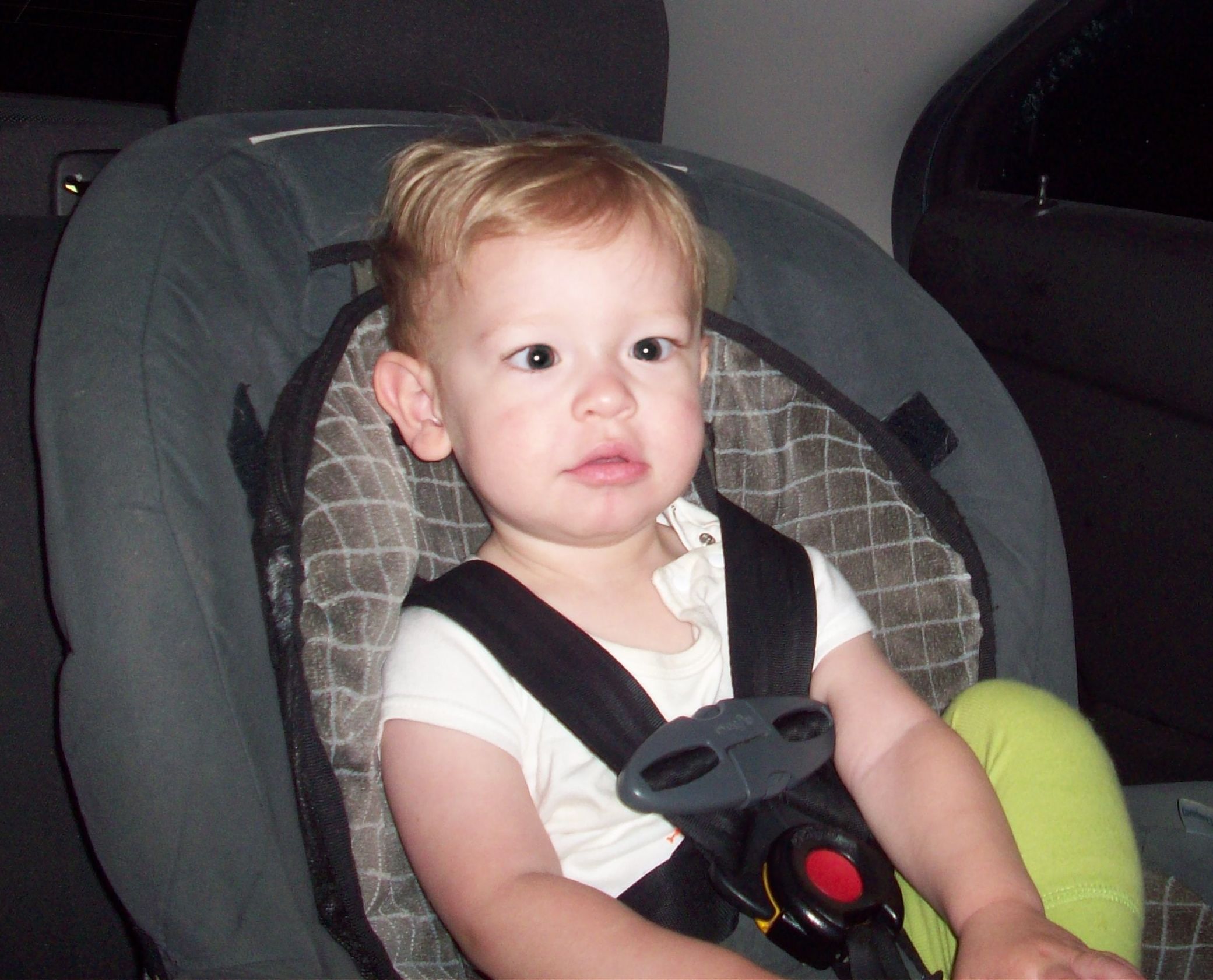
update on Braden – before and after surgery pictures

Linda wrote to me to ask that I share some new pictures of Braden.  As she said, when she was researching Braden’s strabismus surgery, she scoured the web for pre and post surgery pictures.  (She wrote in August about their journey to finding the right eye doctor for Braden).

Braden shortly before his surgery
Braden, post surgery
Braden, post surgery - look at those straight eyes!

the eye doctor video game

Chris found this post at Baby Toolkit and passed it along.  It’s a story about how one set of parents used their young son’s love of video games to make the first eye doctor appointment less scary, and even fun: Slightly skewed perception: Scoring at the Eye Doctor, the “video game”.  I think it’s pretty brilliant.

when you’ve just found out your young child needs glasses

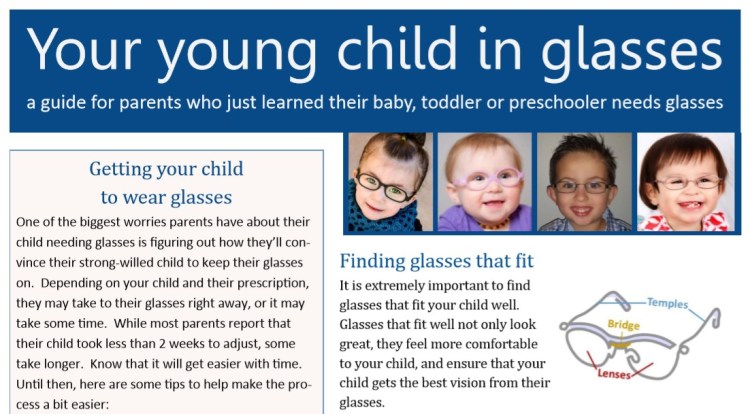
thumbnail of a pdf "your young child in glasses"

Our guide pulls together the most important advice and information for parents with young kids in glasses in an easy to read 2 pg guide.


Updated November 23, 2015

This post is for anyone who just found out their young child (baby, toddler, or preschooler) will need glasses and did what I did – hit the Internet hard and did some serious googling. Learning that your child will need glasses, and possibly have other vision issues is a really difficult thing.  It can be quite lonely, as most of us had never known any other kids as young as ours who needed glasses.  Luckily for us, the Internet has made distance irrelevant, and we’ve been able to connect with other parents going through the same issues.  I’m hoping this guide can provide a bit of comfort and help at least with the glasses aspect.

Feeling upset, worried, and guilty

I’ve heard from so many parents that they were overwhelmed and upset at the news.  I know I was, and it didn’t help that I was angry at myself for being upset, too – I wear glasses, and have for most of my life, so it didn’t seem right that it would upset me to learn Zoe would need them.  Plus I was filled with worry: worry about buying new glasses, worry that Zoe would have life-long vision problems, worry that I wouldn’t be able to keep them on her, worry that she would forever be known as the “girl in glasses.”  Don’t try to suppress your worries, but do know that it gets better, and know that you’re doing the right thing for them in helping them develop good vision.

Many parents end up feeling guilty: that they didn’t notice early enough, or that they might be somehow responsible for their child’s vision problems.  There is already enough guilt in this world, and in this case you can let it go.  The signs can be very difficult to catch, especially with young children who are not yet, or only just becoming verbal.  They’ve never known any difference in how they see, so they are not likely to complain.  The vision problems are almost always the result of genetics, natural variations, or premature birth.  In other words, not your fault.  At all.

Finding a doctor

You will be taking your child to their eye doctor a lot in the next few years.  You’ll probably be there at least every 6 months, and quite possibly more often than that.  Because of this, it is vital to find a doctor that you trust and who works well with your child.  While many of us are very happy with the first doctor we visit, many have gone to 2, 3 or even 4 doctors to find one who will work for them.

You may also want to bring another adult with you, especially to the first few appointments.  That way one person can watch and comfort your child, while the other person focuses on the information from the doctor.  You’ll be getting a lot of information and you want to be able to focus on it, but your child is likely to be upset by the appointment, especially if they have their eyes dilated.

Getting the glasses

There are more and more options for glasses for young kids, but they’re not always available at every store.  Ask around at different eye glasses shops to find out what kind of selection they have, and what their experience is fitting frames to small faces.  You will be in for adjustments a lot, so you want to be sure they’re used to seeing small children.  Also ask about warranties, for both the frames and the lenses.  The frames can get bent, or broken.  The lenses will get scratched quite quickly.  And your child’s prescription may change multiple times in a year.  Find out if the glasses place will cover frames breaking, lenses being scratched and prescription changes.

Getting the glasses to stay on

Many places will tell you that once your child realizes that they see better with their glasses, they’ll be much more likely to leave them on, and even ask for them first thing in the morning.  And that’s true, but the trick is getting through that initial stage when they don’t want  these funny things sitting on their face.  Every child is different, some will take to their glasses immediately, while others fight tooth and nail for months.  We recently did a poll on how long it takes kids to wear their glasses reliably, about 65% were wearing them well in a week or less, but more than 15% of the kids take longer than a month before they’ll wear them reliably.  Odds are your child will surprise you and take to their glasses quickly, but if they don’t, know that you’r not alone in your struggles.

While there are a lot of strategies to get your child to leave their glasses on, the key seems to be to stay calm and positive (which is easier said than done) and consistent about keeping them on (ok, this is also easier said than done).  When your child takes them off, put them back on with a smile, but don’t make a big deal about it.  If they are really fighting or upset, set the glasses to the side for a few minutes until your child calms down and try again.  You’ll also want to have activities on hand when you put those glasses on.  Boredom and glasses do not mix!

You might also want to check out some of the books that are out there about kids in glasses.  For some kids, reading books about a specific situation can really help them understand what’s going on.

Other people’s reactions

You will get comments about your child’s glasses.  It’s uncommon to see a young child in glasses, but glasses are common enough that I think people feel comfortable asking about them.  Luckily, the comments are nearly always positive ones, though you’ll become practiced at answering the questions of how you knew your child needed glasses, and how doctors can figure out the prescription for children so young.  As for other kids, your child probably won’t have to put up with mean comments from kids just yet.  You’re more likely to have to deal with other kids trying to take the glasses out of curiosity, or asking their own parents if they can have glasses.  There has also been some research that found that most school-age kids don’t believe that glasses make other kids less attractive or less athletic, only that they’re likely to think kids with glasses are more honest (read the post about that study).  There has also been some research that finds (surprise, surprise), that having a child in glasses is much harder on parents than it is on kids.  Of course this doesn’t mean your child will immune from being teased about their glasses, but it sounds as though the unattractive, unathletic, nerd stereotype is perhaps fading.

Final thoughts

No one who has been here will tell you that this is easy, but you are not alone in this.  Remember that you are doing the absolute best thing for your child and his or her vision by getting them treated early.  We hope you’ll stick around and read a few of the stories here and introduce yourself and join in.  We’ve all learned so much from each other.  Best of luck all around.

  • Check out the In the beginning… categories for more stories from parents about finding out their child needs glasses.
  • Join our facebook group.  Really.  It’s an amazing group of parents going through the same thing you are.  There’s a lot of support and helpful information shared in that group.
  • Have more questions?  Check out our Frequently Asked Questions page for more specific questions and answers.
I selected this post to be featured on my blog’s page at Medical Blogs.

It’s not easy to treat with Atrophine drops, but worth the effort.

It is not easy to put eye drops into a wriggling 2 year old who is screaming “NO MOMMY IT HURTS.” We have it down to an art. She chooses the “treat” for being brave. My hubbie and I both wash our hands. Then I pick Elly up and sit on a chair. I hold her arms down and pull the bottom of her eyelid down, while my husband holds the top of her eyelid up and puts a drop in. Screaming for 2 seconds follows, then Elly sits up and says, “I’m ready for my treat.”

2 months after starting atropine drops, I felt like I lost my child. Elliana was a sweet adventurous, kind little girl. The drops made her clingy, fussy, and scared. She stopped sleeping through the night and had frequent tantrums. I addressed these concerns both with our PO and the vision specialist from the school from the Deaf and Blind. They both talked about trauma. The treatment our PO chose for Elly’s condition is to make the vision in her strong eye weak (drops) or not at all (patching) Because she could see with her strong eye before, the treatment was in a nutshell, taking her vision away. For any child or adult this would be a traumatic experience. Each person deals with trauma in their own way. I think it was about 6 weeks into the atropine drop treatment where I thought, “there is no way I can do this anymore.” I talked about these concerns with the PO and staff. They told me that most parents stop treatment because it is difficult. As the parent, it is up to me whether or not to implement the treatment plan. I can continue drops and have her vision keep improving, find a way to keep the patch on, or I can give up and let stay visually impaired for the rest of her life.

For us, we felt it was important to work through all of this for the chance at her vision improving. We have acknowledged and are teaching her how to work through her newfound fears of sirens, being alone, and the dark. We have also worked at teaching her ways to calm her body when upset; deep breaths, yoga, hugging a lovey, and rocking with mommy. I will also continue to ask questions and make use of all the resources available. Our next appointment is Tuesday and I will ask about the contact lens and if it would be an option for Elly. It also sounds hard, but I am open to new challenges if they will be better for Elly.

Not all days are peachy, but it has been over 3 months since she began the eye drops. She is now sleeping through the night again. I can also tell her focus has improved as she is holding books and other objects further away from her eyes (about 6 inches away as opposed to 2) We are having less tantrums and her vision in her right eye has improved significantly. It’s not easy, but knowing that as parents we are trying everything in our power to strengthen and improve her vision, it’s worth it.
1jan09-163

blog-keeping updates

Couple of quick updates.  First off, I’ve finally gotten around to getting the domain littlefoureyes.com.  So now the title and URL of the blog match, which should be a lot easier to remember and quicker to type.  Any old links or bookmarks should still work, though if you’re subscribed through an RSS reader, you may want to update the feed (http://littlefoureyes.com/feed).  Secondly, I’ve started putting together an Amazon.com store for the site.  I’ve tried to include items that would be useful or fun for someone with a young kid in glasses.  Check it out, and let me know if there are other items you think would make sense to include.  Finally, I’m working on a large post specifically aimed at parents who have just found out their child needs glasses.  If there are topics or advice that you would give parents at the very beginning of the glasses game, leave me a comment!

vision acuity simulator

This comes via Bright Eyes News (where I get almost all my vision-related news): an online vision acuity simulator – you can enter a prescription and see a simulation of what a vision chart would look like to someone with that prescription who isn’t wearing glasses.  [Updated 3/1/2009:   As Annie notes in the comments, the simulator will only show prescriptions between -5 and +5, any worse and you’ll get a note that it’s beyond simulation range.] As anyone who’s read this blog for a while knows, I’m fascinated by learning more about what Zoe sees.  But nearly as interesting as the simulation were the following disclaimers:

  • The magnitude of the optical aberration (how blurry the image gets) depends on the width of the eye’s pupil, which changes all the time.
  • The brain and vision-related neurons make a lot correction work in creating an illusion of a sharp image with clear edges.
  • A positive spherical diopter [farsightedness] in prescription can be cancelled by the eye’s own lens, but with a constant load on the ciliary muscle.

Basically, this means that what the simulation shows for Zoe is not necessarily what she perceives when she isn’t wearing her glasses.  For one, her brain is correcting some of the image, but more importantly, because of her accomodative esotropia, she can cross her eyes to compensate for some of the blurriness, it just means that if she does that, she’ll see double, and eventually her brain will turn off the input from one eye leading to amblyopia.  (Many thanks to Dr. Bonilla-Warford of Bright Eyes news for helping me make sense of this).

simulation of what Zoe might see without her glasses, using +4 and +4.25 as the prescription.  From www.billauer.co.il/simulator.html
Simulation of what Zoe might see without her glasses, using +4 and +4.25 as the prescription. From http://www.billauer.co.il/simulator.html

eye doctor visits

Another question from a reader – how often does your child go in for eye appointments?  I’m well aware that the answers will vary wildly based on how long your child has worn glasses, and what their specific eye problems include.  Still, I think it would be interesting to hear what the range is – and helpful for people trying to figure out how much to budget for eye appointments.

occluding lens for patching

This post comes from Danielle, who’s daughter, Mia, had a cataract in one eye.   If you’re new, you may also want to read Mia’s story and update. – Ann Z

Our daughter Mia just received an occluding contact lens that she will use as a means for patching her left eye. She began wearing a patch when she was 2 months old and once she turned 3 months old we began having problems with her screaming and rubbing the patch until she was able to remove it. We have tried stronger adhesive patches that caused a rash on her face and was starting to remove her eyebrow. Her PO suggested makeshift arm splints and we flat out refused to restrain our daughter. After we exhausted most of our options, and with consistent nagging and persistence, we finally got her the black occluding contact lens.

Mia wearing the occluding lens

The lens is just like a regular contact lens and needs to same care. When the contact lens is in her eye it completes occludes her good eye and works exactly like a regular patch. Our daughter was born with a unilateral cataract so when she patches her good eye it must be completely occluded; we could not use atropine drops as a method for patching. Mia received her lens yesterday and we began using the lens this evening. We were able to get over 2 hours of straight patching in; which is the longest she has had her eye consistently patched since she was about 3 months old. Mia is really good with people fiddling in her eye so she was pretty good for us when we put the lens in, however it took 5 tries before we got the lens in her eye. She also has brown eyes so the lens is not very noticeable.

If there are any parents that are having as much problems as we have had, please ask your doctor about the black lens. I have read up on the occluding lens and I have heard that the success rate is much higher than a regular patch.

close up of the lens on Mia's eye

Introducing Chelsea

I ran across Chelsea’s blog, Roots and Rings, this weekend (apologies for not posting earlier, I later got hit by a nasty trojan requiring the reformatting of my laptop – the two incidents are completely unrelated, I promise), and I was instantly hooked.  Chelsea is not just a good writer who is fun to read, she is someone who started wearing glasses at 2 to correct her crossed eyes and farsightedness.

In the first post of hers that I came across, There are no words, she talks about what it meant to grow up always having worn glasses and to have always wanted, but never have had, good vision.  In that post, she talks about planning for lasik surgery, it has since been postponed due to her amblyopia.

Since that post, she’s started vision therapy and patching each night.  Her posts about that, starting with this one here, A little therapy never hurt anyone, are also extremely interesting, especially if you’ve ever wondered what amblyopia and patching might be like.

I found myself very drawn to Chelsea’s posts because they give some insight into what Zoe is going through today and what the future might hold for her (with the obvious caveat that no two people’s experiences are exactly the same).    Zoe’s getting more verbal, but I still find myself wanting to ask her, “but what do you see?  What is it like without your glasses?  Do you ever wonder why your friends don’t wear glasses?  Is there any way I can explain it to you?”

Luckily, Chelsea has agreed to an interview about what it was like growing up with glasses, what vision therapy is like for her today, and any other questions we have.  That’s where you come in, do you have any questions you’d like to ask someone who has worn glasses since toddlerhood?

Poll – sunglasses

What do you all do for your kids when it’s sunny out (it’s hard for me to imagine such a thing right now, but I’m sure it’ll happen here sometime)?

(This question came in as a suggestion from the little four eyes facebook group.  On facebook?  Join us!)

dreaming of little four eyes

I had a dream last night that we decided to have a little four eyes meet-up in Australia.  There were a whole bunch of us with our kids (in their glasses) about to head out into town, but then we ended up taking a train to South America.  Dreaming about meeting you guys and going somewhere warm.  Not too hard to figure that one out.

I do get together regularly with Ann W and her kids and tomorrow,  Zoe and I get to meet Amomofelly and Elly tomorrow since they’re in town visiting family.   I wonder if we’ll get any comments on two two-year-olds with glasses.

exams under anesthesia (EUA)

There’s been some discussion in the comments about exams under anesthesia, or EUAs, which are pretty much what they sound like: an exam of your child’s eyes while your child is under anesthesia.  They are often done for pediatric IOP (intraocular pressure) examinations, or if a patient is unable to tolerate a complete eye exam within an outpatient clinic setting (American Optometric Association, Pediatric Eye and Vision Examination (pdf), pg. 20, 27 ).

We’ve never had to do an EUA with Zoe, so I’m borrowing (with permission) Danielle’s notes from her comments.  Her daughter has had multiple EUAs.  If anyone else has experiences or thoughts to add, please do.  I’ve also added a few links at the end of this for more information. – AnnZ

They always schedule EUAs in advance and they are classified as surgery because your child will be put under anesthesia.  The hospital where the exam is scheduled will follow the same procedure as if your child was having surgery.  You should get a packet with pre-surgery guidelines and requirements.   Some hospital require a pre-op check up and others don’t.  Our daughter has had an EUA at Boston Children’s and at Mass Eye & Ear and both hospitals have different pre-surgery requirements. We always take our daughter for a pre-op check up with her pediatrician to ensure she is fine before she is put under anesthesia, even if the hospital does not require a check up.  This helps give us peace of mind knowing she has been cleared by her doctor.

When you go in they will have surgery prep that takes about 30 minutes when they will weigh your daughter, take her vitals and receive all of her medical information/history.  Try to take toys and other items that will comfort your daughter.  Mia’s last EUA (at 5 months) was the first time they allowed 1 parent in the operating room while she was being put under. This was a first for us, it was so hard leaving the room, when I looked back she looked so limp and lifeless, it was so scary and heart wrenching.  They will most likely have 1 parent in the room for your daughter.  At Boston Children’s they do not allow a parent in the operating room until your child is 10 months old and up, they told us that before 10 months old children really do not have separation anxiety. Be prepared, we were not and it was so hard seeing her put under, the anesthesiologist told me that it is much harder for the parents than it is for the child.

Links to more information about EUAs:

new banner

I’m thrilled to unveil our new banner for the little four eyes site, by Scott Donaldson!  I had been looking for a new header image for a while because as this site has grown, I don’t think of Zoe as the face of little four eyes anymore.  She’s just one of many beautiful kids who happens to wear glasses.  And that’s what I wanted to convey with the new banner – that there are many little four-eyed kiddos.  As it turns out, Scott started wearing glasses when he was 5, so he had a fun take on my request for a banner that depicted young kids in glasses just being kids.  Watch for more of his little four eyed characters to show up throughout the site in the coming weeks.

Your 4-eyes is BEAUTIFUL

Live with Regis and Kathy are doing a Beautiful Baby contest in connection with Parenting Magazine.  As I was glancing at their entries already posted, I was very disappointed.  Our children are severely underrepresented.  I did not see ANY babies and toddlers with glass.  And our children ARE in my opinion the cutest darn kids in the world!  SO, send those pictures of your beautiful 4-eyes in.  The deadline is 5ppm on the 13th.  They want a close up facial shot that shows their personality.  http://bventertainment.go.com/tv/buenavista/regisandkelly/index.html